A commercial chocolate fountain earns its keep on a busy event floor, but only if it keeps running clean and reliable from one booking to the next. Chocolate fountain maintenance is what separates a smooth, glossy cascade from a sticky, clogged unit that lets a service down mid event. This guide covers the post event cleaning routine, the hygiene standards commercial equipment needs to meet, common problems and quick fixes, and a simple servicing schedule that protects your investment. The steps apply whether you run standard chocolate fountains, cascade chocolate fountains, or a tall multi flow chocolate fountains unit.
Key Takeaways
Daily post event cleaning prevents flow problems and keeps equipment within food safety standards.
Most flow and motor issues trace back to buildup, the wrong chocolate viscosity, or a skipped cleaning step.
A logged maintenance schedule extends the working life of your dispenser, filling pump, and fountain motor.
Why Daily Cleaning Protects Flow Quality and Food Safety
A fountain that runs every day at a hotel breakfast counter or a wedding season venue sees chocolate residue build up fast inside the auger and tiers. Left uncleaned, that residue thickens, slows the flow, and eventually clogs the chocolate dispenser and the chocolate filling pump that push chocolate up through the unit. Beyond flow quality, chocolate contact equipment is a food safety category, and consistent cleaning is how commercial kitchens meet the food safety standards that hotels, caterers, and venue operators are expected to follow.
This is not a once a week task for equipment in commercial use. If your fountain runs at multiple events in the same week, or sits on a continuous service counter, plan for cleaning after every single use. It takes far less time to wipe down and rinse a fountain immediately after service than to clear hardened chocolate from an auger the next morning.
The stakes are different depending on where the unit lives. A hotel breakfast counter running the same fountain every morning needs a strict daily routine simply because of how often it operates. An event caterer moving a unit between weekend bookings needs a routine that works fast, since there is often only a short window between pack down and the next setup. High footfall counters at malls or entertainment venues sit somewhere in between, running for long stretches during peak hours and needing a mid shift check as well as an end of day clean.
The Post Event Cleaning Routine, Step by Step
The routine below applies across the range, from a compact CF15 tap chocolate fountain to a large multi flow unit. Power down and let the unit cool fully before touching any part. Drain remaining chocolate back into storage or discard it per your kitchen’s hygiene policy, then detach the auger, tiers, and bowl for separate washing away from the electrical base.
Hand wash every removable part in warm water with a food safe detergent, rinse thoroughly, and wipe the motor housing with a damp cloth only, since it should never be submerged. Air dry all parts completely before reassembly, since damp surfaces left overnight encourage bacterial growth. For a full walkthrough of every piece of equipment on a dessert counter, including bottle warmers and waffle plates, see our complete catering equipment checklist.
Common Chocolate Fountain Problems and Quick Fixes
Most flow problems come down to three causes: leftover residue, incorrect chocolate viscosity, or a blocked pump inlet. If flow slows or turns uneven, the fix is usually a thorough auger clean and a check on whether the chocolate used meets fountain grade viscosity. Improper chocolate tempering before pouring is a common cause of splashing and uneven coating on the tiers.
If the motor runs but chocolate stops moving, power down immediately, remove the tiers, and clear any residue blocking the pump inlet on the chocolate dispensing equipment. Unusual motor noise or a drop in filling pump performance after months of heavy use is a sign to stop and call a technician rather than keep running the unit. The same buildup and viscosity issues that affect fountains also apply to other counter equipment such as bottle warmers and waffle plates, which need the same discipline around daily cleaning.
Preventing Problems Before They Start
Most of the issues above are easier to prevent than to fix mid event. Rinse the auger the moment service ends rather than letting chocolate sit and set overnight. Check chocolate viscosity before every fill rather than assuming the batch is right, since even a small temperature swing during storage can thicken it past fountain grade. Keep a spare auger and dispenser seal on hand for high volume venues, since a five minute swap during a changeover is far less disruptive than pausing service entirely to clean a blocked part.
Staff training matters as much as the equipment itself. A team that knows the correct shutdown, cool down, and cleaning order will avoid most of the damage that comes from rushing a teardown while the unit is still warm or skipping the drain step before disassembly.
Servicing, Parts, and When to Call a Technician
Day to day cleaning covers most issues, but internal components like the motor and heating element need periodic professional servicing, particularly for units in heavy commercial rotation such as hotel breakfast counters or venues running multi waffle machines and a double multi waffle unit alongside the fountain. Keep original documentation and part numbers on hand so replacements match your exact model.
If you are unsure whether a problem needs a technician or a simple clean, get in touch with our team before attempting a repair on your own. Attempting electrical repairs without training risks both safety and your warranty coverage.
Keep a record of every service visit, including the date, the part replaced, and the technician’s notes. This history is useful for warranty claims, and it also helps you spot a pattern if the same fault keeps recurring on one unit, which usually points to a deeper issue than a single worn part.
Building a Maintenance Schedule That Protects Your Investment
A simple log, even a shared spreadsheet, is enough to track cleaning dates, any issues spotted, and servicing history across your equipment. Pair it with a stocked spares kit and a clear point of contact for repairs. Venues running multiple stations, from single bottle warmer setups up to double bottle warmer, triple bottle warmer, or full quad bottle warmer lines, benefit most from a written schedule since it is easy for a single unit to get missed during a busy week.
A well maintained fountain also protects the dessert pairings built around it. If your counter also serves premix based desserts, our dessert spread board ideas post has practical layout tips, and our wholesale catering premix buying guide covers sourcing at scale.
It also helps to standardise the routine across every unit if you run more than one fountain or counter station. When every team member follows the same checklist regardless of which model they are working on, cleaning quality stays consistent even during staff turnover or busy seasonal periods when temporary event staff are brought in.
Conclusion
Chocolate fountain maintenance is not complicated, but it has to be consistent. A short post event cleaning routine, an eye for the early signs of flow or motor trouble, and a simple written schedule are enough to keep a commercial unit running for years of service. Browse the full catalogue or get in touch with our team if you would like guidance on parts, servicing, or choosing your next fountain. A little routine care now saves a much bigger headache mid event later.
A chocolate fountain only looks as good as the chocolate running through it. Choosing the right liquid chocolate for fountains is what separates a smooth, glossy cascade from a clogged pump and a frustrated event team. Whether you run a standard fountain, a cascade model, or a large multi flow fountain, this guide explains what fountain grade chocolate actually means, how to buy it in bulk, and how to keep it flowing all event long.
Key Takeaways
Fountain grade chocolate needs enough cocoa butter to stay fluid, unlike baking chocolate or chips.
Couverture chocolate performs best in a fountain, but well formulated compound chocolate is a practical, lower cost option for daily commercial use.
Consistent viscosity, not just flavor, determines whether your fountain flows evenly or clogs mid event.
What Makes Chocolate Fountain Grade
Not every chocolate bar or chip is built to flow. Fountain grade chocolate is formulated with a higher percentage of cocoa butter, the natural fat that keeps chocolate fluid at a stable serving temperature. Standard baking chocolate is designed to hold its shape, so it seizes and thickens the moment it hits a chocolate fountain auger. When you shop the standard fountain range or a cascade fountain on Justmax, always pair the machine with chocolate rated specifically for fountain use rather than a general purpose bar. This single decision affects presentation more than almost any other purchase you make for the event.
Fountain grade formulations are built around three properties working together: enough fat content to stay liquid, a melting point suited to room temperature service, and a smooth particle structure that will not clog the pump. Cheaper substitutes often fail on one of these even when the flavor tastes fine off the spoon. A chocolate that eats well at room temperature can still separate or thicken once it circulates through a multi flow fountain for two or three hours, so it is worth testing any new supplier on a small batch before committing to a full event order. Ask the supplier directly whether the product is formulated for fountains rather than assuming a general purpose couverture will behave the same way once it is pumped continuously.
Couverture vs Compound Chocolate for Fountains
Real couverture chocolate contains a high proportion of pure cocoa butter and delivers the richest flavor and glossiest finish, but it must be tempered correctly to hold its sheen. Compound chocolate replaces some cocoa butter with vegetable fat, which trades a little flavor depth for a chocolate that flows reliably without tempering, making it a practical choice for high volume commercial use. Many caterers running a multi flow fountain at a busy venue prefer compound chocolate specifically because it holds consistent viscosity for hours, as covered in our guide on how to choose the right chocolate fountain for your event.
Neither option is universally right. A premium hotel banquet or a wedding reception often justifies the extra handling that couverture chocolate demands, because guests notice the difference in gloss and taste. A busy street food counter or a theme park kiosk running a chocolate fountain for hours at a stretch usually gets more value from compound chocolate, since it holds its texture without the operator monitoring temperature every few minutes. Many venues keep both on hand and choose based on the event, rather than committing one way for every booking.
Viscosity, Tempering and Flow Consistency
Viscosity, how thick or thin the melted chocolate is, is the real variable that determines whether a chocolate dispenser or fountain runs smoothly. Chocolate that is too thick strains the chocolate filling pump and produces an uneven cascade, while chocolate that is too thin looks watery and separates. Most fountain grade chocolate is designed to be thinned slightly with a neutral oil rather than water, since water causes chocolate to seize. If you already own a CF15 tap chocolate fountain, check the manufacturer guidance on oil ratio before your first commercial run, and always test viscosity at serving temperature rather than straight out of the packaging.
Temperature control matters just as much as the recipe. Chocolate that is held too hot loses its temper and turns dull or streaky, while chocolate that cools even slightly thickens enough to slow the cascade. Most commercial fountains hold a steady serving range, but the chocolate itself should be brought up to that range gradually rather than melted on high heat and poured in immediately. Rushing this step is one of the most common reasons a fountain that worked perfectly the week before suddenly struggles at a new event.
Sourcing Chocolate in Bulk for Commercial Use
Event caterers and hotels running fountains regularly should think about chocolate sourcing the same way they think about wholesale catering premix or bulk premix ordering: buying in volume lowers cost per event and keeps supply predictable. Look for a liquid chocolate supplier who can confirm cocoa butter content on request, ships in fountain ready packaging, and can support the batch sizes your venue actually uses. Storage matters too. Keep bulk chocolate in a cool, dry space away from strong odors, since chocolate absorbs surrounding smells easily, a basic food safety principle worth building into your kitchen SOP alongside guidance from bodies like FHRAI.
Before committing to a supplier, ask for a sample batch large enough to run through your actual equipment, not just a taste sample. Confirm shelf life once opened, whether the product needs refrigeration in transit, and how consistent the viscosity is from batch to batch. Suppliers who cannot answer these questions directly are a risk for any venue running fountains on a regular schedule, since a single inconsistent batch can affect an entire event.
Matching Chocolate to Your Justmax Equipment
The right chocolate depends partly on which machine you run it through. A small standard fountain for an intimate gathering can handle a slightly thicker pour than a tall multi flow fountain feeding several tiers at once. If your setup uses a separate chocolate dispenser for topping stations rather than a full fountain, as outlined in our catering equipment checklist, you have more flexibility on viscosity since there is no multi tier cascade to maintain. Pair your chocolate choice with the right chocolate filling pump capacity and, for events also serving warm beverages or sauces, complementary gear like a bottle warmer rounds out a complete dessert station. For guidance tailored to your exact setup, contact the Justmax team.
It helps to think of chocolate and equipment as one purchasing decision rather than two separate ones. A venue building out a full dessert station, similar to the setups covered in our catering equipment checklist, should plan chocolate sourcing at the same time as ordering waffle plates or a double multi waffle machine, since chocolate is often the ingredient that ties the whole counter together. Ordering chocolate as an afterthought, once the equipment has already arrived, is a common reason new dessert stations underperform in their first few events.
Conclusion
Choosing the right liquid chocolate for fountains is not just a flavor decision, it is an operational one. Cocoa butter content, tempering, and viscosity together decide whether your fountain runs beautifully or needs constant troubleshooting mid event. Start with fountain grade chocolate rated for your machine, buy in a volume that matches your event calendar, and store it properly between uses. Ready to pair the right chocolate with the right equipment? Browse the Justmax shop or get in touch for a recommendation suited to your venue. A little extra care at the sourcing stage pays off in every event that follows.
A chocolate fountain turns a simple dessert table into the centrepiece of an event. Hotels, wedding planners, theme parks and corporate caterers across India now treat it as a standard feature rather than a novelty, because it draws guests, keeps them at the dessert station longer and works for almost any cuisine or theme. This guide covers how a commercial chocolate fountain works, which model fits which venue, what it costs to own one, and the accessories that keep it running through a full event. It is written for procurement teams, event planners and hospitality operators evaluating their first purchase as much as for anyone replacing an existing unit.
Key Takeaways
A commercial chocolate fountain uses a heated basin, an auger and a motor to keep chocolate flowing continuously over tiers.
Standard, cascade and multi flow models each suit a different event size and visual style, from intimate dinners to large-scale hospitality venues.
Buying considerations include flow rate, build quality, total cost of ownership and the supporting accessories a venue needs to run it well.
Fountain grade chocolate, proper cleaning routines and the right accessories matter as much as the machine itself for consistent results.
What Is a Chocolate Fountain and How Does It Work
A chocolate fountain is a tiered appliance that continuously circulates melted chocolate so guests can dip fruit, marshmallows, biscuits or waffle pieces directly from the flow. Unlike a static chocolate fondue pot, a fountain keeps chocolate moving and at a stable temperature for hours, which is what makes it practical for a wedding reception or a full evening of hotel banqueting rather than a short tasting session.
The basic principle has not changed much since the format was popularised, but commercial build quality varies a lot between a budget unit and a purpose built catering fountain. A well built unit keeps the chocolate tempering process stable, which matters directly for how smoothly the chocolate flows and how it looks on camera at a hospitality event.
For most first-time buyers, the appeal is less about the mechanics and more about the guest reaction. A dessert table with a running fountain photographs well, gives guests something interactive to do, and works alongside almost any menu theme, from a corporate product launch to a traditional Indian wedding sangeet. That versatility is why hotels and event companies increasingly treat it as standard equipment rather than a rented novelty for one occasion.
The Motor and Auger System
At the base of every fountain sits a motor driving an internal auger, a spiral screw that lifts melted chocolate from the basin to the top tier. From there, gravity does the rest, letting chocolate cascade back down over each level. The motor needs to run continuously for the length of an event, so motor quality and noise level are worth checking before you commit to a commercial chocolate fountain for regular hospitality use.
A weak or poorly balanced auger shows up quickly at a live event: chocolate stalls partway up the tiers, or the motor strains and gets noisy under continuous load. Commercial-grade units are built with this in mind, using a stronger drive system than consumer or party-rental grade fountains, which is one of the clearest differences between an appliance meant for occasional home use and one meant to run night after night in a hotel kitchen.
Heating and Flow Control
The basin is heated to keep chocolate at a workable viscosity throughout the event. Too thick, and the flow stalls at the top tier. Too thin, and it splashes instead of falling in a clean sheet. Getting the balance right depends partly on the machine and partly on using the right liquid chocolate for fountain use rather than eating chocolate straight off the shelf.
Most commercial fountains include a thermostat that holds the basin within a narrow temperature band once it reaches working heat, so staff do not need to babysit the setting throughout service. It still helps to check the flow periodically, especially in air-conditioned banquet halls where ambient temperature can pull heat away from the outer tiers faster than in a warmer room.
Positioning also affects heat retention. A fountain placed directly under an air-conditioning vent or near an open doorway loses heat faster than one placed in a more sheltered part of the dessert table, which can make an otherwise well-specified unit appear to flow inconsistently through no fault of the equipment itself.
Chocolate Fountain Models: Standard, Cascade and Multi Flow
Justmax sells three broad model families, and each is built for a different kind of event. A standard chocolate fountain suits smaller gatherings and single dessert tables, a cascade chocolate fountain adds a taller, more dramatic tiered look for weddings and premium events, and a multi flow chocolate fountain is built for continuous high-volume service at large venues. Compact tap-style units, like the CF15 tap fountain, work well for smaller counter setups where space is limited.
The right choice depends less on brand preference and more on footfall. A boutique cafe or a small private event rarely needs the same flow rate as a hotel banquet hall running back to back functions, so match the model to expected guest volume rather than buying the largest unit available. Oversizing a fountain for a small event wastes chocolate and counter space, while undersizing one for a large event creates queues at the dessert table and an inconsistent flow that looks worse than no fountain at all.
It is also worth thinking about how the fountain will travel if it needs to move between venues or storage between events. Taller cascade and multi flow units generally need more careful handling and a dedicated storage space, while standard and tap-style units are easier to move and set up quickly for smaller or more frequent bookings.
Who Uses Chocolate Fountains: Hotels, Weddings, Theme Parks and Corporate Events
Chocolate fountains show up across a wide range of hospitality and event settings in India and internationally, and each audience uses them slightly differently. Understanding the use case helps narrow down which model, capacity and accessory set actually makes sense for a specific business rather than buying on assumption.
Retail and eCommerce buyers form a smaller but distinct group, typically home bakers, small event planners or families sourcing a single unit for a private celebration rather than a commercial venue. Their expectations around flow rate and continuous runtime are lighter, so a compact standard model usually covers this segment well without the higher upfront cost of a multi flow unit built for institutional volume.
Hospitality and Hotels
Hotel banqueting and F&B teams add a fountain to buffet spreads, weekend brunches and wedding packages as a guest draw that photographs well and needs comparatively little staff attention once it is running. Pairing it with a dessert spread board or a waffle station built around a commercial waffle maker turns the dessert corner into a full experience rather than a single machine.
For a hotel running multiple event types through the same banqueting hall, a standard or cascade model that can be moved and reset quickly between a corporate lunch and an evening wedding function offers more flexibility than a single oversized unit dedicated to one hall.
Large-Scale Venues and Theme Parks
Theme parks, malls and entertainment venues need equipment that can run for a full day of continuous footfall without losing flow quality. This is where a multi flow model earns its higher price point over a standard unit, since it is built for sustained volume rather than occasional use. Justmax’s approved marketing strategy documents institutional relationships with venues including Warner Bros. World Dubai, Atlantis UAE and Disney Cafe UK, alongside hospitality names like ITC and Taj Hotels in India, which reflects the kind of large-scale, high-footfall demand this category of equipment is built to handle.
Weddings and Corporate Events
Weddings and corporate events sit somewhere in between hotel banqueting and large-scale venues. A single large function rarely needs continuous all-day flow, but the visual impact matters more, which is why cascade models with their taller, more dramatic tiers are a common choice for premium wedding and corporate event packages. Event planners booking equipment for a client typically prioritise presentation and reliability over raw capacity, since the fountain only needs to perform well for a few hours rather than a full operating day.
Corporate events add a different consideration: brand consistency across repeat bookings. A company running an annual product launch or year-end party benefits from owning rather than renting, since the same equipment and setup process can be reused each time without depending on a rental company’s stock availability during peak seasons.
Buying Considerations for a Commercial Chocolate Fountain
Before choosing a fountain, weigh a few practical factors beyond upfront price. These decisions affect how well the unit performs once it is actually running an event rather than sitting in a catalogue photo, and they affect how much staff time and maintenance budget it demands over its working life. Institutional buyers in particular benefit from treating this as a procurement decision with a checklist, rather than an impulse purchase based on a single product photo.
It helps to involve whoever will actually operate the fountain day to day in the buying decision, since kitchen or banqueting staff often notice practical issues, such as how easily a model disassembles for cleaning, that are not obvious from a spec sheet alone.
Capacity and Flow Rate
Capacity determines how long the fountain can run between refills, and flow rate determines how smoothly chocolate moves over each tier at your expected guest volume. A venue running back to back events should look closely at the multi flow range rather than a compact unit built for lighter, occasional use. Underestimating capacity is one of the most common regrets buyers report after their first busy event.
A practical way to estimate flow requirements is to think in terms of guests served per hour rather than total guest count alone, since a slow-moving buffet queue puts less continuous demand on the fountain than a fast-paced cocktail-style event where guests dip and move on quickly.
Build Quality and Food-Safe Materials
Commercial kitchens and hotel procurement teams should confirm the fountain is built from food-safe materials that meet relevant food safety expectations, since the unit is in direct, repeated contact with food served to guests. Checking build standards against guidance from a body like the Bureau of Indian Standards is a reasonable due-diligence step for institutional buyers procuring at scale, and it is worth asking any supplier directly about the materials used in the basin and tiers before signing off on a bulk order.
Ease of disassembly matters just as much as the materials themselves. A fountain that comes apart quickly for cleaning gets cleaned properly and consistently; one that is fiddly to strip down tends to get cleaned less thoroughly over time, which shortens its working life and creates a hygiene risk during high-volume service.
Pricing and Total Cost of Ownership
The sticker price on a chocolate fountain is only part of the real cost. Chocolate consumption, electricity for continuous operation, replacement parts, and staff time for cleaning all add up over a season of regular use. A cheaper unit that needs more chocolate to run smoothly, or that fails after a year of heavy use, often costs more in total than a better-built commercial model bought once.
For businesses weighing rental against ownership, frequency of use is the deciding factor. A hotel or event company running fountains at multiple functions a month recovers the cost of ownership quickly compared to repeated rental fees, and gains full control over scheduling instead of depending on a rental company’s availability during peak wedding or festive seasons.
It also pays to budget for the supporting equipment from the start rather than as an afterthought. A chocolate dispenser and a chocolate filling pump both extend how efficiently a single fountain can run through a long event, which often works out cheaper than buying a second fountain to cover the same volume.
Essential Accessories: Dispensers, Filling Pumps and the Right Chocolate
A fountain rarely runs well in isolation. A chocolate dispenser helps portion chocolate cleanly for refills and side servings, while a chocolate filling pump speeds up topping up the basin during a long event without shutting the fountain down. Our complete catering equipment checklist covers how these accessories fit alongside bottle warmers and waffle plates in a full dessert station setup.
The chocolate itself matters just as much as the machine. Fountain grade chocolate needs the right cocoa butter content and viscosity to flow cleanly, which is a different specification from eating chocolate or couverture chocolate used for confectionery work. Cafes and hotels running a dessert spread board often stock our chocolate spreads alongside fountain chocolate to give guests more than one way to enjoy the same flavour.
Buying a dispenser and pump from the same supplier as the fountain also simplifies servicing, since parts and support come from a single point of contact rather than multiple vendors with different warranty terms and stocking policies.
Some venues also stock a backup supply of fountain grade chocolate on site rather than ordering per event, which avoids last-minute sourcing issues if a function runs longer than planned or an additional station needs to be set up on short notice.
Setting Up and Running a Chocolate Fountain at an Event
Set the fountain up on a stable, level surface away from foot traffic pinch points, and allow enough warm-up time before service starts so the chocolate reaches working temperature and the flow settles. Staff running the station should know how to top up chocolate mid-event using a filling pump without interrupting flow for guests already dipping.
For larger institutional events, it helps to treat the fountain as one station within a wider dessert or catering layout rather than a standalone feature. Pairing it with a bottle warmer for sauces, a waffle plate station, or a double multi waffle machine gives guests more reasons to linger at the dessert corner, which is exactly the effect most hospitality teams are aiming for.
Briefing staff before doors open matters more than most teams expect. Someone should be assigned to watch flow consistency, manage refills, and handle any spillage quickly, since a fountain running unattended for too long is both a hygiene concern and a missed opportunity to keep the station looking its best for photographs throughout the event.
Common Mistakes to Avoid When Buying a Chocolate Fountain
The most common mistake is buying on visual appeal alone without checking flow rate against expected guest volume. A stunning cascade model that cannot keep up with a 300-guest wedding reception looks worse running dry or splashing unevenly than a simpler unit that was correctly sized in the first place.
The second most common mistake is treating chocolate as an afterthought. Using the wrong grade of chocolate, or trying to save money on a cheaper substitute, causes more flow and consistency problems than almost any mechanical issue with the fountain itself. Pairing the right equipment with the right liquid chocolate solves most of the flow complaints first-time buyers report.
Finally, many buyers underestimate cleaning time when planning back-to-back events. Building in a realistic gap for a full strip-down clean, rather than a quick wipe, protects both hygiene standards and the working life of the motor and auger over repeated use.
A less obvious mistake is buying equipment without checking after-sales support. Institutional buyers running equipment several times a month should confirm spare part availability and service turnaround time before purchase, not after a breakdown during a fully booked event season.
Maintenance, Hygiene and Getting the Most from Your Fountain
A fountain that is cleaned properly between uses lasts longer and performs more consistently. Chocolate residue left in the basin or auger housing hardens and affects flow at the next event, so a full strip-down clean after every use is standard practice for hotel and catering teams. Catering operations that run fountains frequently often build this into their standard post-event checklist alongside other equipment care.
A simple maintenance log, noting cleaning dates and any flow issues noticed during service, makes it far easier to spot a developing motor or auger problem before it causes a breakdown mid-event, rather than discovering it for the first time in front of guests.
Training more than one staff member on setup, cleaning and basic troubleshooting also reduces risk. Relying on a single person who knows the equipment well creates a gap on the one night they are unavailable, which is exactly when equipment problems tend to surface.
Conclusion
A commercial chocolate fountain earns its place at almost any hospitality event once you match the right model to your venue size, budget for the accessories that keep it running smoothly, and build cleaning into your standard operating routine. Whether you are outfitting a single hotel banquet hall or a multi outlet catering operation, browse our full chocolate fountain range or get in touch with our team to talk through capacity, pricing and setup for your specific event calendar. A fountain bought with the right model, accessories and maintenance routine in mind pays for itself many times over across a busy events season.
Frequently Asked Questions
Q: What is the difference between a chocolate fountain and a chocolate dispenser?
A fountain continuously circulates chocolate over tiers for dipping, while a chocolate dispenser portions chocolate for refills or plated servings rather than creating a flowing display.
Q: How much chocolate does a commercial chocolate fountain need?
Capacity depends on model size and guest count. Smaller standard units need less than a multi flow fountain built for continuous high-volume hospitality service across a full event.
Q: Can a chocolate fountain run for a full day event without stopping?
Yes, with regular topping up using a chocolate filling pump and periodic checks on flow and temperature throughout service.
Q: What type of chocolate works best in a fountain?
Fountain grade chocolate with the right cocoa butter content flows more smoothly than standard eating chocolate or unmodified couverture meant for moulding.
Q: Do hotels need a different fountain model than a small cafe?
Usually yes. Hotels running frequent events benefit from a multi flow fountain, while a cafe with lighter footfall can manage well with a standard model.
Q: How often should a chocolate fountain be cleaned?
After every event, with a full strip-down clean of the basin and auger to prevent hardened residue from affecting flow at the next use.
Q: Is a chocolate fountain suitable for outdoor events?
Yes, provided it is placed on a stable surface away from direct sun and wind, which can affect chocolate temperature and consistency during service.
Q: What size chocolate fountain is right for a wedding?
Most weddings suit a cascade fountain for its taller, photogenic tiers, sized to expected guest count and dessert table layout.
Q: Can a chocolate fountain be paired with other dessert equipment?
Yes. Many hotels pair a fountain with waffle stations or bottle warmers, covered in our catering equipment checklist, to build a fuller dessert corner.
Q: Where can institutional buyers source a chocolate fountain in bulk?
Businesses ordering multiple units or planning wholesale catering equipment purchases can contact Justmax directly to discuss institutional pricing and requirements.
A chocolate fountain only looks as good as the flow behind it, and that flow depends on a component most guests never notice: the chocolate filling pump. This is the part that draws chocolate from the base and pushes it steadily up through the tower, keeping every tier coated without gaps or splutters. In this guide, we explain what a chocolate filling pump does, why consistent flow matters for presentation and food safety, and what to check before you add one to your setup.
Key Takeaways
A chocolate filling pump draws and recirculates chocolate so the fountain never runs dry between tiers.
Consistent pump flow protects both presentation quality and food safety at busy events.
Flow rate, cleaning ease, and compatibility with your fountain model are the main things to check before buying.
What a Chocolate Filling Pump Actually Does
A chocolate filling pump sits at the base of the fountain, drawing melted chocolate from the reservoir and pushing it up through the central column. From there, chocolate spills evenly over each tier before returning to the base, where the pump draws it back up again. This continuous cycle is what makes a chocolate fountain look like a steady cascade rather than an occasional dribble.
The same core mechanism supports a standalone chocolate dispenser as well, where the pump feeds a controlled tap rather than a full tower. Whether you run a standard fountain, a multi flow fountain, or a tap style unit such as the CF15 tap chocolate fountain, the pump is the working heart of the equipment, and it is worth understanding on its own terms rather than as an afterthought to the fountain itself.
Gravity alone cannot keep a tall tower coated once chocolate cools and thickens even slightly, which is why the pump has to work continuously rather than in short bursts. Taller units place more demand on the pump because chocolate has to climb further before it reaches the top tier, so the motor and impeller inside the pump need enough headroom to keep pace without straining. Smaller countertop units place less demand on the same mechanism, but the underlying principle, drawing chocolate up and letting it fall back into a shared reservoir, stays the same across every size of fountain Just Max manufactures.
[Alt: Just Max chocolate dispenser, a related product that shares the same pump mechanism] | File: inline-1-chocolate-dispenser.png
Why Consistent Flow Matters for Presentation and Food Safety
A fountain that flows unevenly is more than a cosmetic problem. Gaps in flow expose chocolate to open air for longer, which speeds up cooling, thickening, and surface skinning. That affects taste, texture, and how the display looks to guests browsing a catering buffet or a hotel dessert station.
There is also a food safety angle. A pump that recirculates chocolate reliably keeps the product moving and at a consistent temperature, which lowers the risk of chocolate sitting stagnant at the base for extended periods. Venues that follow food safety best practice treat pump reliability as part of their hygiene routine, not a separate mechanical concern. This is especially relevant for hotels and event caterers running a fountain for several hours at a stretch, where a weak or failing pump can quietly undermine an otherwise well planned dessert station.
Guests also judge a dessert station on how it looks the moment they walk up to it, and a fountain with visible dry patches or a slow trickle reads as poorly maintained even if the chocolate itself is perfectly good. For hotels competing on presentation and for caterers building a reputation through repeat corporate and wedding bookings, a pump that keeps the display looking full and glossy throughout the event is a small mechanical detail with a direct impact on guest impressions and repeat business.
How a Filling Pump Fits Into a Fountain or Dispenser Setup
Most commercial chocolate equipment is built around the pump rather than the pump being an add on. A cascade fountain and a multi flow fountain both rely on the same principle of continuous circulation, just at different scales and tower heights. Larger installations, of the kind used at theme park food courts or big hotel events, place extra demand on the pump because more chocolate has to travel a longer path without losing pressure.
This is why buyers should never treat the pump as a generic spare part. A pump sized for a small chocolate dispenser will not necessarily suit a tall multi tier fountain, and mismatching the two is one of the more common causes of uneven flow reported by first time buyers. If you are researching equipment for an event stall or a hotel buffet, it helps to review our guide to choosing a chocolate fountain alongside this pump specific breakdown, since the two decisions are closely linked.
The pump also interacts with the rest of a dessert station rather than working in isolation. A venue running a fountain next to a bottle warmer or a multi waffle machine needs every piece of equipment pulling reliably at the same time during peak service, so a pump that struggles under load can create a bottleneck for the whole station, not just the fountain itself.
[Alt: Infographic showing how a chocolate filling pump works] | File: infographic-1-how-filling-pump-works.png
What to Check Before You Buy a Chocolate Filling Pump
Flow rate is the first thing to confirm. A pump needs enough output to keep every tier of your specific fountain, whether that is a compact standard fountain or a tall multi flow unit, evenly coated without lagging. Motor duty rating matters just as much: a motor built for continuous commercial service will outlast one designed for occasional home use, particularly for hotels and caterers running events back to back.
Ease of cleaning is often overlooked at the point of purchase but becomes a daily frustration if ignored. Look for a pump assembly that strips down quickly for washing between services, since chocolate residue left in a pump housing is both a hygiene risk and a common cause of clogging. Finally, confirm compatibility with your existing or planned chocolate fountain model before buying, and check that the manufacturer offers servicing support and replacement parts, since a pump is a wear component that will eventually need attention.
Noise level is worth a mention too, since a pump running close to guests at a plated event or an indoor wedding reception should not compete with conversation. Ask for a demonstration where possible, and compare warranty terms across suppliers rather than assuming all commercial pumps carry the same coverage. A slightly higher upfront cost for a pump with a longer warranty and readily available spare parts usually works out cheaper than repeated downtime on a budget unit during your busiest booking months.
[Alt: Infographic showing what to check before buying a chocolate filling pump] | File: infographic-2-buying-checklist.png
Maintaining Your Chocolate Filling Pump for Reliable Service
A well maintained pump is the difference between a fountain that performs reliably for years and one that needs early replacement. Rinse the pump housing after every service while chocolate is still workable, and run a full strip down clean on a weekly basis for units in regular commercial use. Pair this with the same care you would give the rest of your equipment lineup, from waffle plates to a bottle warmer, where scheduled cleaning is what protects the investment over its working life.
If you are setting up a full dessert station rather than a single fountain, our catering equipment checklist covers bottle warmers, waffle plates, and dispensers alongside the pump considerations covered here. For a wider view of how Just Max equipment fits into a commercial kitchen, browse the full range in our shop or get in touch with our team for guidance on sizing a pump to your specific fountain.
Keeping a simple maintenance log, noting the date of every deep clean and any flow issues spotted during service, makes it far easier to spot a pump that is starting to wear out before it fails mid event. This small habit costs almost nothing in time but protects you from the worst case scenario of a pump giving out midway through a wedding reception or a hotel’s peak dinner service, when there is no time to source a replacement.
Conclusion
A chocolate filling pump is a small component with an outsized effect on how a fountain performs. Get the flow rate, build quality, and cleaning routine right, and the rest of the display takes care of itself. If you are speccing equipment for an upcoming event or a permanent dessert station, contact the Just Max team for help matching a pump to your fountain, or explore our full range of commercial chocolate fountains and accessories to plan your setup from the ground up.
Frequently Asked Questions
What does a chocolate filling pump do in a chocolate fountain?
It draws melted chocolate from the base reservoir and pushes it up through the tower, then recirculates the chocolate that falls back down. This keeps every tier coated in a steady, continuous flow.
How is a chocolate transfer pump different from a regular water pump?
A chocolate transfer pump is built to handle thick, viscous liquid chocolate rather than thin liquids, with wider channels and food grade materials that resist clogging and are safe for direct food contact.
Can the same chocolate pump equipment work for both a fountain and a dispenser?
Often yes, since a fountain and a chocolate dispenser share the same core pumping principle. Confirm flow rate and fitting compatibility with the specific unit before assuming interchangeability.
Why does my fountain flow become uneven over time?
Uneven flow usually points to a pump losing pressure, chocolate residue building up in the housing, or chocolate that has thickened past a workable tempering consistency. Regular cleaning resolves most cases.
How often should a commercial chocolate fountain pump be cleaned?
Rinse it after every service while chocolate is still workable, and run a full strip down clean at least weekly for units in regular commercial use, more often during high volume event seasons.
What flow rate should I look for in a fountain filling pump?
Flow rate should match your fountain’s tower height and tier count. Taller multi flow fountains need higher output than a compact standard model to keep every tier evenly coated without lagging.
Does pump quality affect food safety at events?
Yes. A reliable pump keeps chocolate moving and at a consistent temperature, reducing the time chocolate sits stagnant, which matters for hygiene at events run by hotels and professional caterers.
Where can I buy a replacement chocolate filling pump in India?
Just Max supplies filling pumps sized for its own fountain range, along with bottle warmers such as the quadruple bottle warmer for wider dessert station needs. Contact the team to confirm the right pump for your model.
Is a stronger pump always better for a chocolate fountain?
Not necessarily. A pump that is too powerful for a small fountain can cause splashing and waste, while one that is undersized causes lag. Matching pump output to fountain size gives the most reliable result.
Can I buy chocolate filling pumps and premix supplies together for a new setup?
Yes, buyers setting up a new dessert station often source pumps alongside bulk ingredients. See our guide on wholesale catering premix ordering for the supply side of the equation.
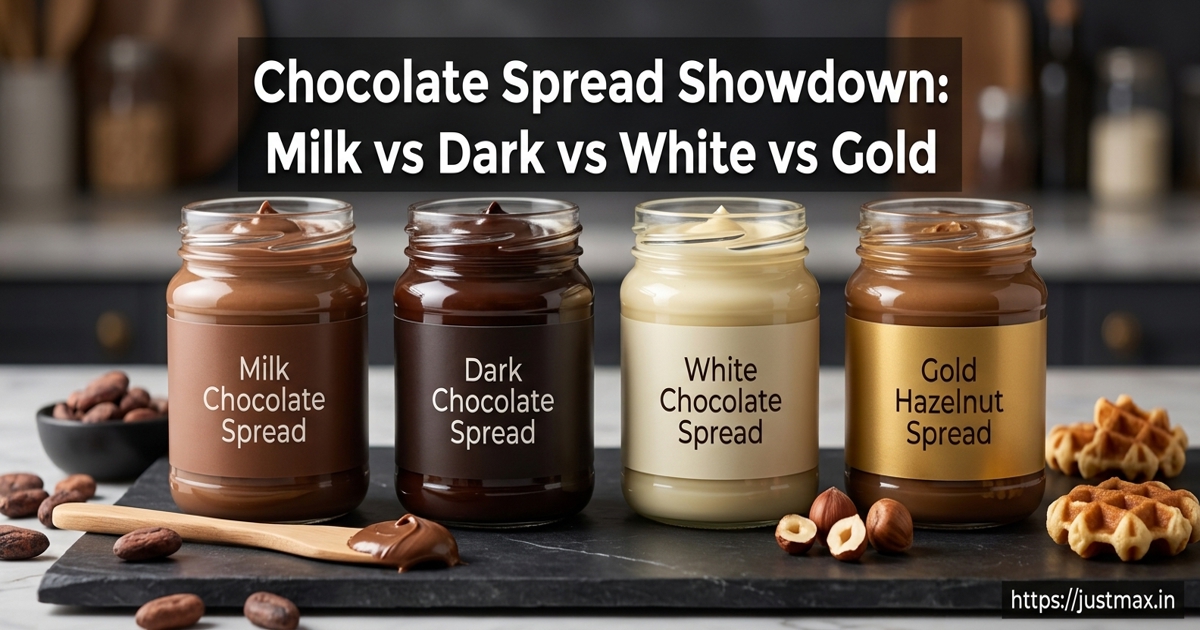
Chocolate spread is one of the most versatile ingredients a professional kitchen can stock. Whether you run a cafe, a catering operation, or a dessert stall, the variety you choose directly affects flavor, presentation, and customer satisfaction. With so many options available, including milk, dark, white, and the premium Gold line, making the right call can feel overwhelming. This guide breaks down each variant clearly so you can match the right chocolate spread to the right dish and boost sales at every turn.
Key Takeaways
Milk chocolate spread suits everyday desserts and family-friendly menus with its creamy, sweet profile.
Dark Chocolate Spread delivers depth and sophistication, making it ideal for premium and adult-oriented dessert offerings.
The Gold line, including Milk Chocolate Spread Gold and Hazelnut Spread Gold, offers elevated richness for upscale menus and event catering.
Choosing the right spread variant can increase average order value and improve repeat customer rates.
What Makes Each Chocolate Spread Different?
The core difference between spread variants lies in their cocoa content, sweetness level, and texture. Milk chocolate spread is blended with milk solids, giving it a lighter, creamier consistency that melts smoothly. Dark Chocolate Spread uses a higher percentage of cocoa with less sugar, producing a more intense, bittersweet taste. White chocolate spread contains no cocoa solids at all, relying instead on cocoa butter, sugar, and milk for its pale color and sweet, buttery flavor. The Gold variants take any of these base profiles and enhance them with premium ingredients, richer emulsification, and a more refined finish suited for commercial use.
Understanding these differences is not just about taste. It is about knowing which spread performs best during service, which one holds up under heat, and which one photographs best for your menu boards and social media content.
Milk Chocolate Spread: The All-Rounder for Everyday Menus
Milk chocolate spread is the most widely used variety in commercial kitchens across India. Its balanced sweetness and smooth texture make it a reliable topping for waffles, pancakes, crepes, and toast. It pairs well with fruits, nuts, and whipped cream, making it a flexible base for multiple menu items. For caterers serving families or large mixed groups, this variant guarantees broad appeal without polarizing any segment of the audience.
The Milk Chocolate Spread Gold from Just Max takes this reliability up a notch. It delivers a creamier mouthfeel, a richer cocoa note, and a glossy finish that elevates even a simple waffle plate into something that looks and tastes premium. If you are looking to understand how this spread pairs with popular dessert applications, the guide on why milk chocolate spread is the perfect companion for waffles, pancakes, and desserts covers practical pairings in detail.
Dark Chocolate Spread: The Premium Pick for Discerning Tastes
Dark chocolate spread is the choice for operators who want to signal quality and sophistication. Its higher cocoa content produces a deeper, more complex flavor that works exceptionally well with savory-leaning desserts, espresso-based drinks, and high-end pastry presentations. Customers who appreciate single-origin coffee or artisan chocolate will gravitate toward dark spread options naturally.
From a commercial standpoint, Dark Chocolate Spread commands a higher perceived value on menus. Listing it as a premium option alongside a standard milk variant allows you to create a tiered pricing structure that boosts average transaction size. It also performs beautifully as a dipping sauce when warmed in a chocolate dispenser, creating a dramatic presentation that encourages repeat orders. For more inspiration on building premium dessert offerings using dark spread, visit the blog on dark chocolate spread for premium dessert menus.
When to Use Dark Chocolate Spread vs Milk Chocolate Spread
Use Dark Chocolate Spread for adult dessert menus, upscale event catering, and coffee shop pairings.
Use milk chocolate spread for family events, children’s menus, and high-volume waffle or pancake stations.
Mix both variants to create a marble-effect presentation that adds visual drama at minimal cost.
Consider the heat resistance of each variant when using with fountain or dispenser equipment.
White Chocolate Spread: The Wildcard That Stands Out
White chocolate spread occupies a unique position in the market. It contains no cocoa solids, which gives it a mild, vanilla-forward sweetness that acts as a neutral canvas. This makes it an excellent partner for bold toppings like berries, matcha, or salted caramel. In a competitive cafe environment, offering white chocolate spread as a differentiated option signals creativity and menu breadth to customers who have seen milk and dark spread everywhere.
White spread also works well in layered dessert constructions where color contrast is important. Think of a crepe folded over a white chocolate base with fresh strawberries and a dark chocolate drizzle on top. The visual contrast drives social sharing, which is valuable organic marketing for any food business. According to research published by the Journal of Sensory Studies, visual appeal significantly influences dessert purchase decisions in commercial settings, reinforcing why spread variety and presentation matter.
The Gold Line: Where Everyday Quality Becomes a Competitive Edge
The Gold line represents the top tier of the Just Max spread range. These are not everyday commodity products. They are formulated specifically for professional use, with improved texture stability, a richer flavor profile, and a more consistent pour at commercial temperatures. The Gold variants are designed to perform reliably under the demands of a busy catering or restaurant kitchen.
The Hazelnut Spread Gold variant deserves special attention. Hazelnut and chocolate is one of the most beloved flavor combinations globally, and the Gold formulation delivers this pairing with a smoothness and intensity that basic hazelnut spreads cannot match. For food businesses looking to differentiate their waffle or pancake menus, incorporating a Gold-tier hazelnut spread as a featured offering can significantly increase table spend. The blog on Hazelnut Spread Gold as a premium addition to Just Max spreads provides a detailed look at what makes this variant stand apart from standard options.
Gold Line vs Standard Spreads: Key Differences at a Glance
Texture: Gold line spreads offer a finer, more emulsified consistency that coats surfaces evenly without pooling.
Flavor depth: Richer cocoa and nut notes that remain stable even after heating or refrigeration cycles.
Shelf performance: Formulated for commercial shelf stability, reducing waste in high-turnover environments.
Menu positioning: Allows operators to justify premium menu pricing with a visible quality difference customers can taste.
Choosing the Right Spread for Your Business Model
The right chocolate spread choice depends on your menu positioning, your customer base, and your operational setup. A high-volume street food stall benefits most from a reliable milk chocolate spread that is easy to apply, cost-effective, and broadly loved. A boutique cafe or events catering company gains more from the Gold or dark variants, which support premium branding and allow higher menu price points.
Consider also the equipment you are using. Spreads applied through a dispenser or chocolate fountain behave differently from those used for direct spreading. Thicker Gold variants may need slight warming for optimal flow through dispensing equipment. Pairing the right spread with the right delivery method, such as a standard chocolate fountain, ensures consistent results and reduces product waste during service.
According to industry data from the Euromonitor International food and beverage reports, chocolate-based spreads continue to see year-on-year growth in the Indian food service sector, driven by rising cafe culture and increasing demand for dessert-focused menu items. Stocking multiple spread variants positions your business to capture this growing demand across different customer segments.
Conclusion: Match Your Spread to Your Menu Strategy
Every variant of chocolate spread serves a purpose. Milk spread anchors everyday menus with consistent, crowd-pleasing flavor. Dark spread elevates the perceived quality of your dessert offerings. White spread adds creative versatility and visual contrast. The Gold line, covering both Milk Chocolate Spread Gold and Hazelnut Spread Gold, delivers the professional-grade performance that serious food businesses need to stand out. Choosing thoughtfully across these variants is not just a product decision. It is a menu strategy that directly impacts customer satisfaction and revenue. Explore the full Just Max spread range and contact the team to find the right variants for your operation.
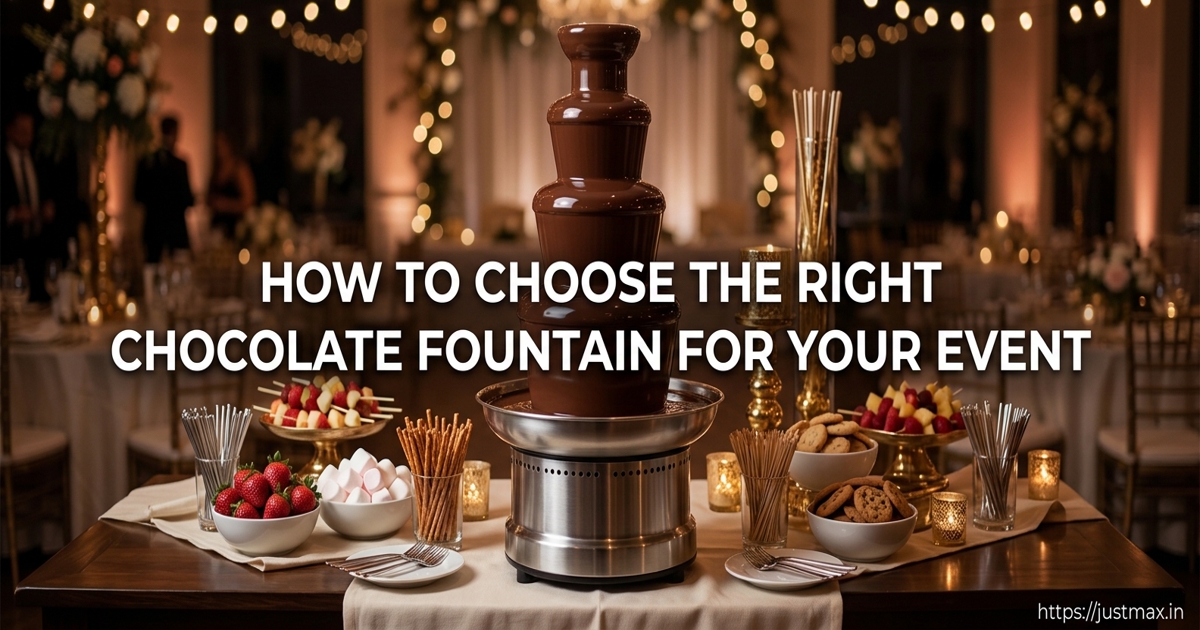
A chocolate fountain is one of the most visually striking dessert features you can offer at any event. Whether you are planning a wedding, corporate gathering, or large catering setup, choosing the right chocolate fountain requires careful thought. The wrong model can mean poor flow, difficult cleaning, or equipment that simply cannot handle your crowd size. This guide walks you through every factor that matters, so you can invest with confidence and deliver a flawless experience every time.
Key Takeaways
Choosing the correct chocolate fountain size depends directly on your event scale and guest count.
A chocolate fountain cascade model suits medium events and delivers elegant, continuous flow with minimal maintenance.
A chocolate fountain multi flow unit is built for high-volume catering where multiple streams are needed simultaneously.
Just Max offers a full range of fountain equipment designed for professional catering use in India.
Why the Right Chocolate Fountain Model Matters for Caterers
Not all chocolate fountain units are built the same. A fountain that works beautifully at a small birthday party can struggle at a 500-guest wedding reception. Professional caterers need equipment that delivers consistent flow, handles commercial-grade chocolate, and can run for several hours without issues.
Buying the wrong model leads to real problems: uneven chocolate distribution, overheating, mechanical breakdowns mid-event, or a fountain that looks too small for the venue. Understanding the differences between available models helps you avoid these costly mistakes and serve your clients better on every occasion.
Understanding Chocolate Fountain Types: Cascade vs. Multi Flow
The two most common professional formats are the chocolate fountain cascade and the chocolate fountain multi flow. Each is designed for a different type of event and service volume.
What Is a Chocolate Fountain Cascade Model?
A chocolate fountain cascade creates a smooth, continuous curtain of chocolate that flows down tiered levels. This design is elegant, visually appealing, and ideal for medium-scale events such as weddings with 100 to 300 guests or semi-formal corporate dinners. The Sq2 Cascade Chocolate Fountain from Just Max is a strong example of this format. It delivers steady flow, fits well in standard venue spaces, and is straightforward to clean after the event. The cascade style also works well for buffet setups where guests dip fruits, marshmallows, and other items directly under the falling chocolate.
What Is a Chocolate Fountain Multi Flow Model?
A chocolate fountain multi flow unit takes capacity up a level. These machines push chocolate through multiple channels or outlets, producing several streams at once. This format is designed for large-scale events: trade shows, mass catering operations, large weddings, or public events with 500 or more guests. The Sq5 Multi Flow Chocolate Fountain is built for exactly this purpose. Multiple guests can access the fountain at the same time without congestion, and the machine maintains consistent output even during peak service periods. If your catering business handles large events regularly, a multi flow model is a smart long-term investment.
Key Factors to Consider When Choosing a Chocolate Fountain
Beyond the basic model type, several other factors should guide your decision. Use this checklist before making any purchase.
1. Event Size and Guest Count
Start with the number of guests you typically serve. A small or standard fountain is appropriate for intimate gatherings of up to 150 people. For events between 150 and 400 guests, a cascade model handles the volume well. Beyond that, a multi flow model or even multiple fountains running in parallel is the right approach. Always size up slightly rather than down. Running a fountain at its maximum capacity continuously puts wear on the motor and heating elements, shortening the equipment lifespan.
2. Chocolate Volume Capacity
Each fountain has a minimum and maximum chocolate capacity. This is usually measured in kilograms or liters of melted chocolate the bowl can hold at one time. A standard unit might hold 3 to 5 kg, while professional cascade models can handle 8 to 12 kg, and multi flow models may accommodate 15 kg or more. Always verify the capacity against your expected usage. Running out of chocolate mid-event is a service failure that reflects poorly on your catering brand.
3. Motor Strength and Heat Control
Motor power determines how smoothly and consistently the chocolate flows. A weak motor produces uneven curtains, dripping instead of a clean sheet of chocolate. Good heat control keeps the chocolate at the right viscosity throughout the event. Look for models that offer adjustable temperature settings. This is especially important in India’s variable climate, where ambient temperature can affect how quickly chocolate cools or thickens. According to FSSAI guidelines, food held for service must be maintained at consistent temperatures to ensure safety and quality.
4. Build Material and Durability
For commercial catering, stainless steel construction is the standard. It is food-safe, easy to sanitize, and resistant to rust and damage from heat. Avoid units made from lightweight plastics if you are running events regularly. Plastic components crack under repeated heating cycles and are harder to clean thoroughly. Just Max fountains are built for professional use, with durable materials that meet the demands of ongoing catering operations.
5. Ease of Cleaning and Maintenance
After every event, the fountain needs to be fully disassembled and cleaned. Models with fewer parts and smooth surfaces are significantly easier to maintain. Check whether the auger (the spiral component that lifts chocolate upward) is removable and dishwasher-safe. A fountain that takes two hours to clean will cost you in labor time over the course of a busy catering season. Ease of maintenance should be a primary factor, not an afterthought.
6. Footprint and Portability
Consider where the fountain will be used. Indoor banquet halls, outdoor marquees, and compact venue spaces all have different space constraints. A fountain with a wide base may not fit easily on a narrow buffet table. Portable, lighter units with carrying cases are easier to transport between venues. If your catering team travels frequently, weight and pack-down size matter considerably.
Comparing Just Max Chocolate Fountain Models
Just Max offers several professional chocolate fountain options suited to different event scales. Here is a quick comparison to help you navigate the range:
Sq1 Standard Chocolate Fountain: A reliable entry-level unit for smaller events and private functions. Compact, easy to operate, and well-suited for caterers just adding fountain service to their menu. See the Sq1 Standard Chocolate Fountain for full specifications.
Sq2 Cascade Chocolate Fountain: A mid-tier cascade model ideal for weddings and medium corporate events. Smooth flow and elegant presentation.
Sq5 Multi Flow Chocolate Fountain: The high-capacity option for large events requiring simultaneous multi-stream service. Built for volume and durability.
Leaf Cascade Chocolate Fountain: A visually distinctive design that adds a premium look to any dessert station. View the Leaf Cascade Chocolate Fountain product page for more.
Browsing the full Fountains category on the Just Max website gives you a complete overview of available models with specifications for each.
Pairing Your Fountain with the Right Chocolate
The fountain model is only part of the equation. The chocolate you use directly affects how well the fountain performs. Professional fountain chocolate must have a high cocoa butter content to flow smoothly without clogging the auger. Standard bar chocolate or cooking chocolate is too thick and will cause the fountain to stall or overflow unevenly.
Just Max also supplies premium chocolate spreads that can complement your fountain station as a dessert pairing option for guests. Pairing a fountain with dark chocolate spread uses for professional kitchens can elevate the overall dessert offering and give guests more ways to enjoy rich chocolate flavors. According to the International Cocoa Organization, properly tempered chocolate with adequate fat content is essential for smooth dipping consistency in fountain applications.
Conclusion: Choose the Right Chocolate Fountain and Elevate Every Event
Selecting the right chocolate fountain is a decision that affects your service quality, your brand reputation, and your bottom line. Match the model to your event scale, prioritize motor strength and build quality, and factor in cleaning time and portability. Whether you need a compact standard unit, an elegant chocolate fountain cascade for weddings, or a high-output chocolate fountain multi flow for large catering operations, Just Max has a model built for the job. Visit the Just Max Appliances section to explore the full range of professional catering equipment and find the unit that matches your operational needs. Contact the Just Max team for guidance on choosing the right fountain for your next event.
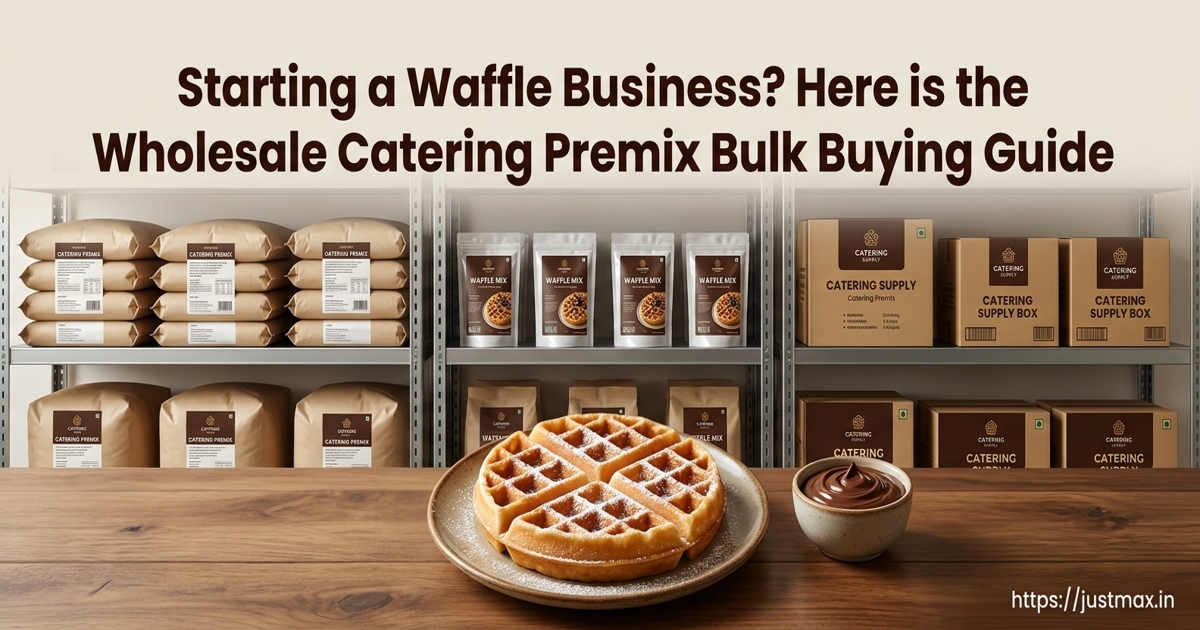
Wholesale Catering Premix Bulk Buying Guide for Waffle Businesses
If you are starting a waffle business or scaling an existing dessert operation, wholesale catering premix sourcing is one of the first and most critical decisions you will make. Getting this right from the start saves money, reduces waste, and keeps your product consistent across every batch. This guide is built specifically for B2B buyers, distributors, and catering professionals in India who want to stock up smart and buy bulk without compromising on quality.
Key Takeaways
Wholesale catering premix buying in bulk reduces per-unit costs and ensures supply consistency for growing food businesses.
Sourcing from reliable bulk churros premix suppliers and waffle mix vendors in India requires checking product quality, shelf life, and minimum order quantities.
Choosing verified catering supplies India partners with after-sales support is key to long-term business stability.
Why Bulk Buying Wholesale Catering Premix Makes Business Sense
Buying wholesale catering premix in large volumes is not just about saving money per kilogram. It is a strategic move that directly impacts your kitchen efficiency and profit margins. When you commit to bulk orders, suppliers often offer better pricing tiers, priority fulfillment, and consistent product batches that match in flavor and texture.
For a waffle business serving high footfall events, cafes, or catering contracts, running out of premix mid-service is a serious operational risk. Bulk buying creates a buffer stock that keeps your operation running without last-minute emergency orders at retail prices. According to FSSAI guidelines, food businesses must also maintain traceability in their ingredient sourcing, which is easier to manage with a single reliable wholesale supplier than with multiple retail vendors.
What to Look for in a Wholesale Waffle Mix Supplier
Not every supplier offering a wholesale waffle mix is a good fit for your business. There are specific criteria you should evaluate before placing a large order. Below is a checklist to guide your supplier selection process.
Minimum Order Quantity (MOQ): Understand how much you need to order per batch and whether it aligns with your storage capacity.
Shelf Life and Packaging: Longer shelf life reduces spoilage losses, especially for seasonal businesses. Packaging should be sealed, food-safe, and clearly labeled.
Product Consistency: Request samples before committing. Flavor and texture should be uniform across different production batches.
Customization Options: Some suppliers allow custom labeling or formulation adjustments for bulk buyers, which adds a competitive edge.
Certifications: Look for FSSAI-certified products and suppliers who follow standard food safety protocols.
Delivery Timelines: Reliable lead times are non-negotiable. Delayed shipments can stall your entire operation.
Just Max offers a range of premix products suited for commercial kitchen use. Their pancake premix guide for commercial kitchens gives a useful reference for understanding what quality benchmarks matter most when evaluating premix products for professional use.
Top Premix Products to Stock When Starting a Waffle Business
A well-stocked wholesale catering premix inventory should go beyond just plain waffle mix. Dessert businesses today are expected to offer variety, and your premix selection directly determines the range of menu items you can serve. Here are the key products worth including in your bulk order.
Waffle and Pancake Premix
This is the core product for any waffle or pancake-focused business. A quality wholesale waffle mix should produce consistent batter that cooks evenly, holds its shape, and delivers the same taste across every serving. Consider stocking both classic and chocolate variants. Just Max offers a dedicated waffle and pancake chocolate premix that is designed for commercial volume use with consistent results.
Churros Premix for Catering Events
Churros have become a high-demand item at events, food courts, and dessert stalls across India. If you are exploring bulk churros premix suppliers, prioritize those who can guarantee texture consistency at scale. The ideal churros premix should produce a crispy exterior with a soft interior, even when prepared in large batches under high-pressure service conditions. Stocking churros premix alongside waffle mix positions your business to serve a wider audience without major equipment changes.
Flavored and Specialty Premix Options
Beyond standard varieties, consider stocking Belgian waffle premix or vanilla-flavored options to cater to premium cafe accounts and upscale catering clients. For businesses targeting cafes and restaurants, having a reliable vanilla waffle premix ready to dispatch can make your offering more compelling to buyers who want consistent branded results.
Pairing Premix with the Right Catering Supplies in India
Wholesale buyers often overlook the importance of pairing their wholesale catering premix orders with the right equipment and toppings. Premix alone does not complete the product. You also need efficient appliances and quality accompaniments to serve a finished dessert that customers will return for.
When sourcing catering supplies India, consider bundling your premix orders with waffle machines, bottle warmers, and chocolate spreads from a single supplier. This simplifies procurement, reduces shipping costs, and ensures product compatibility. For example, pairing a dark chocolate spread with your waffle premix gives customers a premium topping option that drives higher per-unit revenue. You can explore how dark chocolate spread differentiates cafe menus in India and why it is a smart add-on for bulk buyers.
Stocking complementary spreads alongside your waffle mix also means you can offer full starter kits to new cafe clients or event caterers, making your wholesale offer more attractive as a one-stop solution.
Understanding Pricing Tiers and Negotiating Bulk Deals
One of the biggest advantages of sourcing wholesale catering premix directly from manufacturers or authorized distributors is access to tiered pricing. Most suppliers structure their pricing by volume brackets. The more you order, the lower your per-unit cost. Here is a general framework to understand when negotiating bulk deals.
Starter Tier: Suitable for small cafes or new waffle stalls testing a product line. Usually 10 to 25 kg orders per SKU.
Mid-Volume Tier: Ideal for established catering businesses or multi-outlet operators. Orders in the 50 to 100 kg range typically unlock better pricing.
High-Volume Tier: For distributors or large catering companies. Orders above 200 kg often include custom packaging, priority dispatch, and dedicated account support.
Always ask suppliers for a formal price list across these tiers and factor in shipping costs to your location. For buyers in Kerala, Tamil Nadu, or other southern states, proximity to the Just Max warehouse in Alappuzha, Kerala, can significantly reduce logistics costs when placing large orders for catering supplies India.
Industry resources like NFCS India provide useful context on foodservice procurement standards and market sizing for catering businesses in India.
How to Evaluate Product Quality Before Placing a Bulk Order
Quality control is a non-negotiable part of any wholesale buying decision. For wholesale catering premix, the stakes are high because a poor-quality batch can damage your product reputation with dozens of customers at once. Follow these steps before committing to a large order.
Request a sample batch of at least 1 to 2 kg per SKU and test it in your own kitchen under real service conditions.
Check the ingredient list for artificial additives, excessive preservatives, or allergens that may not align with your customer base.
Test the mix-to-water or mix-to-milk ratio for ease of preparation. Products requiring complex preparation steps slow down commercial kitchen output.
Evaluate finished product appearance, texture, and taste after full cooking. Compare across multiple test runs for consistency.
Check packaging integrity. Bulk bags should be resealable or securely sealed to prevent moisture contamination during storage.
Conclusion: Build Your Waffle Business on a Strong Supply Foundation
Sourcing the right wholesale catering premix in bulk is one of the most impactful business decisions you can make when starting or scaling a waffle or dessert operation in India. From selecting reliable bulk churros premix suppliers to bundling your orders with the right catering supplies India, every procurement choice shapes your product quality and profit potential. Focus on supplier reliability, product consistency, and long-term partnership value rather than just the lowest price. Explore the full range of premix products and catering equipment available at Just Max Supplies to find the right bulk buying solution for your business needs.
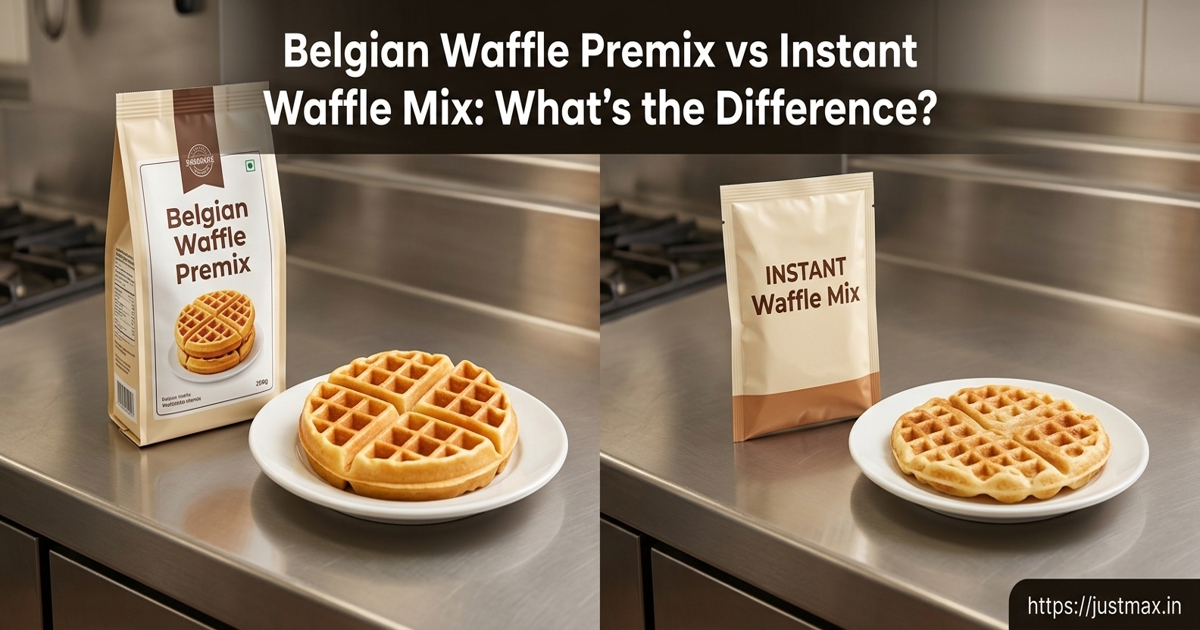
Belgian Waffle Premix vs Instant Waffle Mix: Clearing Up the Confusion
Belgian waffle premix and instant waffle mix are two terms that often get used interchangeably in commercial kitchens, but they are very different products. If you run a cafe, cloud kitchen, or catering business in India, choosing the wrong mix can affect your output quality, consistency, and profitability. This guide breaks down exactly what each product is, how they differ, and which one suits your operation best.
Key Takeaways
Belgian waffle premix is a professionally formulated dry blend designed for high-volume, consistent waffle production in commercial setups, while instant waffle mix is a simplified blend intended for quick, low-effort preparation.
For cafe and catering use, selecting the right mix paired with the correct commercial waffle maker for cafe environments makes a measurable difference in product quality and cost per serving.
Understanding the difference helps you manage ingredient costs, preparation time, and customer satisfaction more effectively across your dessert menu.
What Is a Belgian Waffle Premix?
A Belgian waffle premix is a pre-blended dry ingredient formulation specifically developed to produce authentic Belgian-style waffles. These waffles are known for their deep pockets, crisp exterior, and light, airy interior. The premix typically includes a precise ratio of flour, sugar, leavening agents, and flavor compounds, all calibrated for consistent results batch after batch.
In a commercial setting, this consistency matters enormously. When your kitchen team changes or production volume scales up during peak hours, a well-formulated Belgian waffle premix ensures that every waffle coming off the iron meets the same standard. You simply add water, milk, or eggs depending on the formulation instructions, mix, and pour.
Businesses looking to build a reliable waffle menu will find that a purpose-built premix reduces prep time and training requirements significantly. You can explore how a structured approach to waffle production works in boosting dessert menus with waffle and pancake premix for real business insights.
What Is an Instant Waffle Mix?
An instant waffle mix is a simplified blend that often requires minimal additions, sometimes just water. These mixes are designed for speed and ease. They typically contain pre-activated leavening agents, stabilizers, and sometimes powdered dairy or flavoring to reduce the number of steps involved in preparation.
Instant mixes are popular for home use and small-scale setups where speed outweighs precision. However, they often sacrifice depth of flavor and texture for the sake of convenience. In a busy cafe or catering environment, the simplified formulation may not hold up under high-volume conditions or deliver the premium texture that customers expect from a restaurant-quality waffle.
That said, instant waffle mixes do have a role in specific scenarios such as pop-up stalls, trial menus, or budget-conscious operations where simplicity is the priority over artisan quality.
Key Differences Between Belgian Waffle Premix and Instant Waffle Mix
Understanding the differences clearly helps you make a more informed purchasing decision. Here is a direct comparison across the most important factors for a commercial operation.
Texture and Crumb Structure: Belgian premix produces deep, structured pockets with a crisp shell and soft center. Instant mix tends to yield a denser, less defined crumb due to simplified formulation.
Flavor Depth: Premix formulations are calibrated for a richer, more balanced taste profile. Instant mixes often rely on additives to compensate for fewer base ingredients.
Preparation Steps: Instant mix requires fewer additions, while Belgian premix may call for measured additions of eggs, milk, or butter depending on the product spec.
Shelf Stability and Storage: Both are shelf-stable dry products, but premium Belgian premixes are often packaged for commercial bulk use with longer shelf life when stored correctly.
Scalability: Belgian waffle premix is designed to scale. Consistent batch ratios mean large-volume production remains predictable. Instant mix performs less predictably at high volumes.
Cost Per Serving: While the per-kg price of a Belgian premix may be slightly higher, the consistency and reduced waste often lower the actual cost per sellable waffle.
Which Mix Works Best With a Commercial Waffle Maker for Cafe Use?
The performance of your waffle mix is directly tied to the equipment you use. A commercial waffle maker for cafe environments operates at higher and more stable temperatures than a home unit. This affects how the batter rises, sets, and browns. A Belgian waffle premix is formulated with this kind of heat environment in mind, which is why it produces more consistent results when used on professional equipment.
Instant waffle mixes, which often contain more moisture-retaining agents, can sometimes produce a softer, less crisp output on high-heat commercial irons. This can lead to sticking, uneven browning, or waffles that do not release cleanly from the plate.
If your operation uses a multi-waffle machine setup, matching your batter to the plate style matters too. For example, square, Belgian, or mini formats each interact differently with batter viscosity. Choosing a premix designed for commercial output ensures you get the best results regardless of plate configuration. See the full range of multi waffle machines available for different production needs.
How to Choose the Right Waffle Mix for Your Business
The right choice depends on your business model, volume, and quality expectations. Here is a simple framework to guide your decision.
High-volume cafes and dessert counters: Use Belgian waffle premix for its consistency, scalability, and premium output.
Pop-up stalls and event catering: Instant waffle mix may work if speed and minimal prep are priorities and premium texture is secondary.
Cloud kitchens and delivery-focused brands: Belgian premix is preferred because waffles need to hold their structure during packaging and delivery.
Training and trial menus: Both can work during the testing phase, but transition to Belgian premix before full menu launch for reliable quality.
Businesses that already use a ready-to-use waffle mix for high-volume outlets understand how streamlined operations become when the formulation is right. It removes the guesswork from day-to-day kitchen management and reduces dependence on skilled staff to achieve consistent results.
It is also worth understanding how the choice of waffle mix plays into your overall dessert presentation. According to food industry insights shared by Hospitality Biz India, dessert menu engineering that prioritizes consistency and speed of service drives repeat customer visits in the competitive cafe segment. The right premix is a foundational part of that strategy.
Matching Your Mix to Your Menu Ambitions
Beyond texture and taste, your waffle mix choice shapes your entire menu identity. A Belgian waffle premix gives you a premium base that pairs well with both sweet and savory toppings. This flexibility allows cafes to build signature waffle dishes that stand out. An instant waffle mix, by contrast, offers a neutral, functional base that works best when toppings carry the full flavor story.
If your menu leans toward gourmet or artisan positioning, investing in a proper Belgian premix and the right commercial waffle maker for cafe setups is the logical step. Premium ingredients and equipment together support pricing that reflects the quality you are delivering to customers.
Cafes that have gone deeper into waffle menu development often explore flavored variants to differentiate further. One strong example is the growing popularity of pistachio waffles as a signature item that commands attention on social media and in-store displays.
Conclusion
The difference between a Belgian waffle premix and an instant waffle mix is not just about convenience. It is about the quality standard you want to set for your business. For professional kitchens, catering operations, and cafe brands that care about consistency and customer experience, a Belgian waffle premix is the clear choice. Paired with the right commercial waffle equipment, it delivers reliable results at scale. Explore the full range of catering supplies at Just Max to find the premix and equipment combination that fits your operation best.
Choosing the right chocolate spread for your professional kitchen is more important than most operators realize. The wrong choice can flatten your dessert menu, while the right one can turn everyday items into bestsellers. Whether you run a cafe, a cloud kitchen, or a catering operation, understanding how milk chocolate spread gold, dark chocolate spread gold, and white chocolate spread gold differ will help you stock smarter and serve better. This guide breaks down all three variants side by side so you can make a confident purchase decision. Explore the full range of supplies at Just Max to see how these spreads fit into a broader dessert toolkit.
Key Takeaways
Milk chocolate spread gold delivers a balanced, crowd-pleasing sweetness that works across most dessert applications.
Dark chocolate spread gold offers a rich, intense flavor ideal for professional pastry work and premium menu positioning.
White chocolate spread gold brings a creamy, vanilla-forward profile best suited for delicate desserts and colorful creations.
Understanding the Three Chocolate Spread Variants
Before comparing the three options, it helps to understand what sets each chocolate spread apart at a fundamental level. The cocoa content, sugar balance, and fat structure all influence how a spread performs in the kitchen. These differences are not just about taste. They affect texture, meltability, shelf appeal, and how well a spread layers, pipes, or drizzles on a finished dish.
At Just Max, all three Gold-tier spreads are formulated for professional foodservice use. This means they are designed for consistency under high-volume conditions, not just home use.
How Each Chocolate Spread Differs by Cocoa Profile
The cocoa percentage is the single biggest factor separating these three variants. Milk chocolate spread gold uses a blend of cocoa solids and milk solids to achieve its rounded sweetness. Dark chocolate spread gold leans on a higher concentration of cocoa mass with reduced sugar. White chocolate spread gold contains no cocoa solids at all, relying instead on cocoa butter, sugar, and milk for its flavor. Understanding these foundational differences helps you predict how each chocolate spread will perform across different applications, from simple toast toppings to complex pastry constructions.
Milk Chocolate Spread Gold: The Reliable All-Rounder
Milk chocolate spread gold is the most versatile option in the lineup. It strikes a balance between sweetness and cocoa depth, making it the go-to choice for operations that serve a wide demographic. Children, families, and general dessert lovers tend to gravitate toward this profile because it is familiar and approachable.
In terms of texture, milk chocolate spread gold tends to be smooth and spreadable at room temperature, which makes it easy to apply on waffles, crepes, toast, and pastry bases without warming. It also pairs naturally with fruits like strawberry and banana, as well as with nuts and caramel-based sauces. For cafes looking to simplify their spread selection without sacrificing versatility, this is the most practical starting point.
Best for: Waffles, crepes, pancakes, toast, and pastry fillings
Flavor profile: Sweet, mild cocoa, slightly milky
Pairs well with: Strawberry, banana, caramel, hazelnut, vanilla ice cream
Customer segment: Families, general dessert customers, children
You can review the full product details for the Just Max Milk Chocolate Spread to understand its specifications and packaging options for bulk purchase.
Dark Chocolate Spread Gold: The Premium Kitchen Workhorse
Dark chocolate spread gold is the choice for operators who want to position their menu items in the premium segment. With a higher cocoa content and a more pronounced bittersweet finish, this spread signals quality to food-savvy customers. It works exceptionally well in professional pastry environments where layered flavor complexity matters.
From a culinary standpoint, dark chocolate spread gold holds up well in warm applications. It can be used as a base for ganache-style fillings, a layer between sponge cakes, or a finishing drizzle on tarts and mousses. According to food industry insights from World Cocoa Foundation, dark chocolate continues to grow in consumer preference as awareness of cocoa quality increases globally. This trend makes dark chocolate spread a strong menu investment for forward-thinking operators.
Best for: Tarts, mousse, sponge cakes, ganache bases, gourmet toast
Flavor profile: Bold, bittersweet, deep cocoa with low sweetness
Pairs well with: Orange zest, raspberry, espresso, sea salt, red wine reductions
For a deeper look at how dark chocolate spread performs across different kitchen formats, read about dark chocolate spread for professional kitchens and the range of applications it supports.
White Chocolate Spread Gold: The Creative Canvas
White chocolate spread gold is the most distinctive of the three. Without the cocoa solids present in milk or dark variants, white chocolate delivers a sweet, buttery, vanilla-rich profile. This makes it ideal for visually driven menus where color contrast and delicate flavor layering are priorities.
White chocolate spread gold works beautifully as a base layer on crepes and waffles, where its pale cream color allows toppings like berries, matcha powder, or edible flowers to stand out. It also blends well with flavored spreads, making it a flexible component in multi-spread dessert platters. Patisseries and dessert bars that want to create Instagram-worthy presentations often reach for white chocolate spread as their foundation.
Best for: Crepes, dessert platters, layered pastries, themed seasonal items
Side-by-Side Comparison: Which Spread Suits Your Operation?
Now that each variant is clear, here is a direct comparison to help you match the right chocolate spread to your specific operation type.
High-volume cafe or quick service outlet: Milk chocolate spread gold wins on versatility and customer appeal. It covers the widest menu range without requiring specialized flavor knowledge from staff.
Fine dining or premium dessert bar: Dark chocolate spread gold provides the depth and sophistication that premium menus demand. Its bold profile justifies higher price points on the menu.
Specialty patisserie or themed dessert concept: White chocolate spread gold gives creative freedom and pairs with a broader range of colors and flavors for seasonal or concept-driven menus.
Multi-spread dessert menu: The strongest strategy is stocking all three. Rotating them as feature items or combining them in plated presentations keeps your menu dynamic and gives customers a reason to return.
Each chocolate spread behaves differently depending on kitchen temperature and application method. Understanding this helps avoid common service issues like uneven spreading, separation, or flavor loss.
Chocolate Spread Performance Across Temperature Ranges
Milk chocolate spread gold maintains a consistent spreadable texture across most ambient temperatures, making it the lowest-maintenance option for front-of-house use. Dark chocolate spread gold can become slightly thicker in cooler environments due to its higher cocoa butter and cocoa solid content, so light warming may improve consistency. White chocolate spread gold is the softest at room temperature and should be stored away from direct heat to prevent it from becoming too runny during service.
According to research published by ScienceDirect on chocolate confectionery rheology, cocoa solids and fat content significantly influence spread viscosity, which directly impacts the end-user experience during plating and service. This is worth factoring in when deciding which spread to station at the counter versus in the kitchen prep area.
Pricing Strategy and Menu Positioning
The variant you choose also shapes your pricing strategy. Dark chocolate spread gold, with its premium flavor profile, can justify a higher price tag on individual menu items. White chocolate spread gold, used as an accent or base, adds visual value without dramatically increasing your cost per dish. Milk chocolate spread gold, given its versatility, tends to give the best cost-per-application return across a high-volume menu.
For operations focused on dessert profitability, understanding how each spread contributes to perceived value is just as important as the purchase price. A white chocolate spread gold crepe with seasonal fruit may command a premium price purely on presentation, even if the ingredient cost is modest.
Conclusion: Match Your Spread to Your Menu Goals
The right chocolate spread is not a single answer. It depends on your menu positioning, your customer base, and the dishes you want to feature. If you need reliable versatility, milk chocolate spread gold is your foundation. If you want to signal quality and depth, dark chocolate spread gold elevates your offering. If your strength is visual creativity and flavor pairing, white chocolate spread gold gives you the canvas you need. For most professional kitchens, carrying all three gives you the flexibility to respond to seasonal trends, customer preferences, and new menu opportunities. Explore the full spread range at Just Max and find the right combination for your operation today.
Every cafe owner knows the pressure of keeping a dessert menu consistent, fast, and crowd-pleasing. When we first heard about the Belgian Waffle and Pancakes Premix, we were skeptical. Could an instant waffle mix really deliver the fluffy texture and rich taste that customers expect? We decided to run a proper trial at a working cafe setup and document every step, from mixing the batter to watching customers take their first bite. Here is the full story.
Key Takeaways
The Belgian Waffle and Pancakes Premix delivers consistent batter with minimal prep time, making it ideal for high-volume cafe service.
The Waffle and Pancakes Premix works well on a commercial waffle maker for cafe settings, producing uniform results across batches.
Using an instant waffle mix reduces training time and ingredient wastage significantly while boosting repeat customer orders.
Setting Up the Trial: What We Used and How We Prepared
Before the first pour, we needed the right setup. We used a standard commercial waffle maker for cafe operations paired with the Chocolate Pancake and Waffle Premix and the vanilla variant to compare results side by side. The preparation was straightforward: measure the premix, add water or milk as instructed, and whisk until smooth.
The batter came together in under three minutes. There was no lumping, no over-whisking required, and the consistency was even across both flavors. For a busy cafe morning shift, this kind of simplicity is not just convenient, it is necessary. Staff with minimal baking experience could prepare the batter confidently without supervision. We also found that the premix stored cleanly in its original packaging between uses, requiring no refrigeration in dry conditions, which further simplified the morning setup routine.
The Cooking Stage: Performance on a Commercial Waffle Maker
Using a reliable commercial waffle maker for cafe environments is critical. We paired the premix with the Multi Waffle Machine to test output across multiple plates simultaneously. The batter spread evenly, and the cook time was consistent at approximately three to four minutes per batch.
The waffles came out golden, crisp on the outside, and soft on the inside. There was no sticking to the plates, and the grid pattern was clean and defined. This matters a great deal in a cafe setting where presentation drives social media sharing and repeat visits. The pancake version tested on a flat griddle was equally impressive, producing fluffy rounds with an even rise every time.
How the Belgian Waffle Premix Holds Up Across Multiple Batches
One concern with any instant waffle mix is consistency across batches. When you are serving thirty to fifty covers during a busy brunch window, you need every waffle to look and taste the same. We ran eight consecutive batches using the Belgian Waffle and Pancakes Premix without any notable drop in quality.
The texture stayed consistent, the color remained uniform, and there was no flavor drift between the first and last batch. This kind of reliability is what separates a professional premix from a homemade batter recipe. According to FSSAI guidelines on food labeling and standardization, consistent ingredient ratios in premixes also support better hygiene and portioning standards in commercial kitchens.
Tasting Notes: What the Staff and Customers Said
After cooking, we ran a tasting session with cafe staff first. The chocolate waffle had a deep cocoa flavor without being overly sweet. The vanilla pancake was light, fragrant, and had a pleasant softness. Both held toppings well, whether that was a drizzle from the Chocolate Dispenser or a spread of the Just Max Milk Chocolate Spread.
When we opened the trial to actual customers, the feedback was immediate and positive. Several customers asked if the waffles were made from scratch. One regular noted that the texture was better than a popular dessert cafe down the street. Orders for add-on toppings increased noticeably because the waffle base paired so well with spreads and sauces.
Pairing the Premix With Toppings and Spreads for a Complete Menu
A great waffle is only as good as what goes on top. During the trial, we explored several topping combinations to help cafe owners understand the full menu potential of the Waffle and Pancakes Premix. The results pointed clearly toward chocolate and nut-based spreads as the top performers.
Milk chocolate spread with crushed hazelnuts on the vanilla waffle.
Dark chocolate drizzle and fresh strawberries on the chocolate pancake.
Pistachio spread with powdered sugar on the Belgian-style waffle.
Whipped cream and caramel sauce on a stacked pancake tower.
The premix base absorbed toppings without becoming soggy, which is a key quality marker for any instant waffle mix used in commercial setups. For cafes looking to build a more complete dessert board, pairing this premix with hazelnut spread pairings for pancakes and waffles can significantly elevate the customer experience.
Real Business Impact: Cost, Speed, and Repeat Orders
Beyond taste and texture, the business numbers matter. The Belgian Waffle and Pancakes Premix reduced prep time by roughly sixty percent compared to making batter from individual ingredients. Wastage dropped because the premix only requires liquid addition, and there are no leftover raw components to manage.
From a cost perspective, buying a premix in bulk eliminates the need to separately purchase flour, leavening agents, sugar, and flavoring powders. When we broke down ingredient costs per serving, the premix came out more economical per portion than assembling the same batter from scratch, especially when factoring in the cost of occasional spoilage of perishable raw ingredients. For a cafe producing fifty to one hundred waffle servings per day, these savings compound meaningfully over a month of operations.
Training a new staff member to produce consistent waffles and pancakes took less than thirty minutes. That kind of operational efficiency has a direct impact on labor costs and service speed during peak hours. Industry research on the Indian foodservice sector, as tracked by sources like the National Restaurant Association of India, consistently highlights operational efficiency as a top priority for growing cafe businesses.
Repeat order rates for the waffle and pancake items increased noticeably during the trial week. Customers who tried the product once came back specifically for it. That kind of loyalty is difficult to build with an inconsistent homemade recipe.
Storage, Shelf Life, and Practical Handling for Cafe Kitchens
One often overlooked advantage of using a quality instant waffle mix in a cafe is how straightforward storage and shelf life management becomes. Unlike fresh batters that must be used within a few hours, the dry Belgian Waffle and Pancakes Premix can be stored in a cool, dry place for an extended shelf life. This makes it easy to maintain stock without worrying about daily perishability.
Portion control also becomes more precise. Each serving requires a measured scoop of premix plus a fixed volume of liquid, which means waste from over-preparing batter is virtually eliminated. Staff can prepare only as much batter as needed for the current service window, reducing both food waste and kitchen clutter. For cafes operating across multiple shifts, this flexibility in batch sizing is a genuine operational advantage that homemade recipes rarely offer.
Is the Belgian Waffle and Pancakes Premix Right for Your Cafe?
If you run a cafe, a dessert counter, or a cloud kitchen, the Belgian Waffle and Pancakes Premix is worth serious consideration. It performs reliably on any standard commercial waffle maker for cafe setups, reduces your dependence on skilled baking staff, and delivers a product that customers genuinely enjoy. The premix also works well for cafes looking to expand their menu without increasing kitchen complexity.
The Belgian Waffle and Pancakes Premix passed every test we put it through. It mixed quickly, cooked evenly on a commercial waffle maker for cafe environments, held up across multiple batches, and most importantly, customers loved it. As an instant waffle mix designed for commercial use, it strikes the right balance between quality and convenience. If you are a cafe owner evaluating your dessert menu options, this premix is a practical, high-performing addition. Explore the full range of waffle and dessert solutions on the Just Max Blog and find the right fit for your kitchen setup.