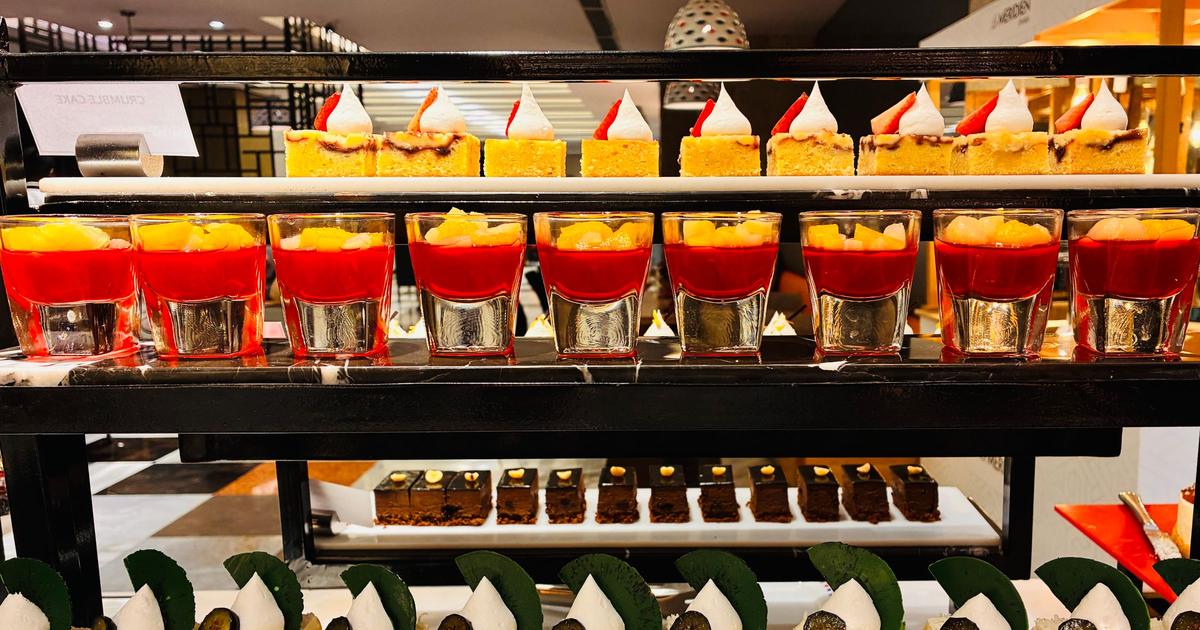
The right dessert catering supplies decide whether your live counter delights guests or stalls halfway through the evening. Indian weddings, hotel banquets and corporate events now expect theatre at the dessert table. Guests want warm waffles, flowing chocolate and fresh crepes made in front of them.
This guide maps the full stack a caterer needs. It covers equipment, holding tools, consumables, supplier choice, power, staffing and service. It draws on what we have learned at Just Max, an Indian manufacturer since 2002, supplying caterers from our factory in Kerala.
Key Takeaways
- Dessert catering supplies fall into three groups: live service equipment, holding and dispensing tools, and consumables such as premixes, spreads and liquid chocolate.
- Choose catering equipment for events by event type, menu and power availability, not guest count alone.
- Buying professional catering equipment directly from a manufacturer gives you spares, service and consistent consumables from one source.
What Dessert Catering Supplies Include
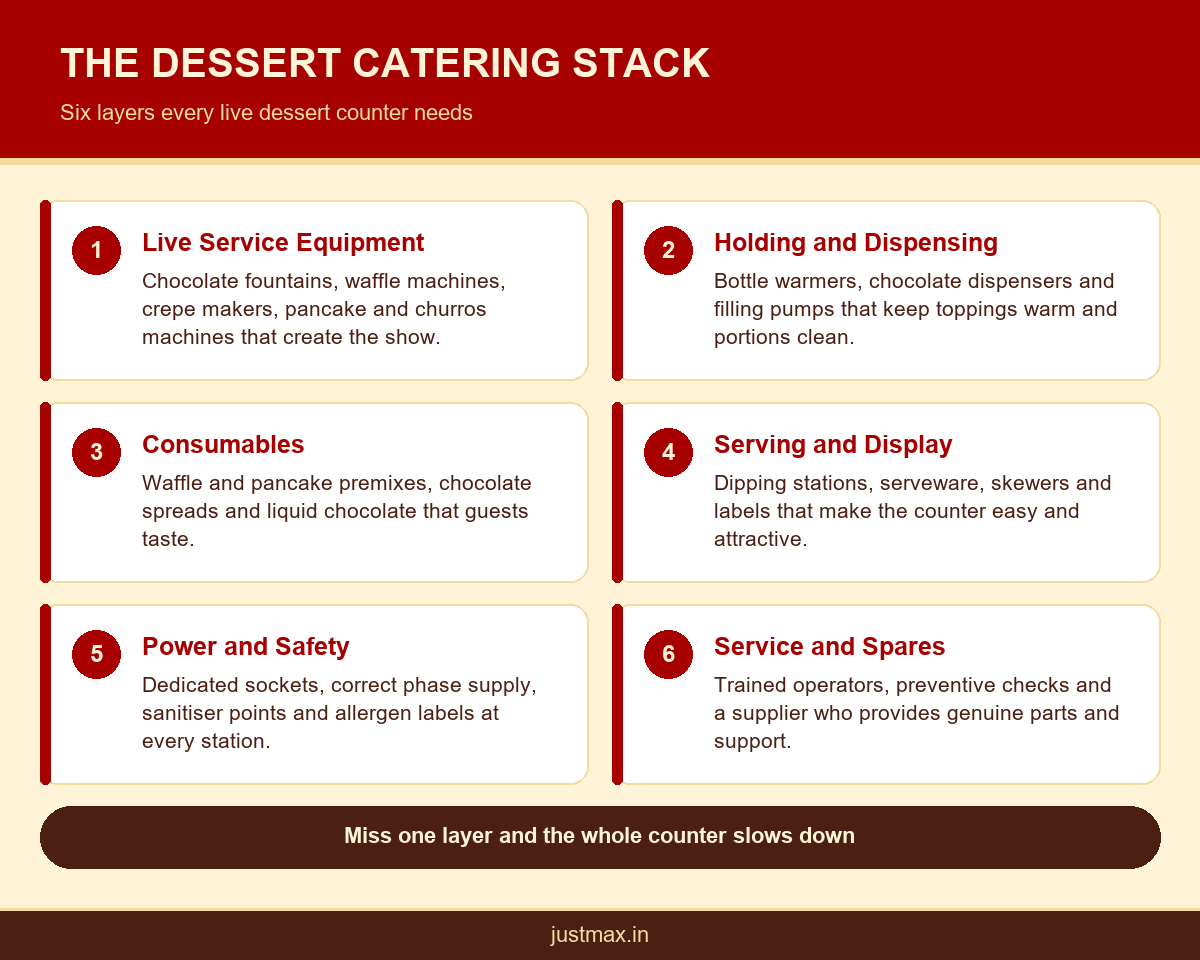
Every dessert counter runs on the same three layers. First come the machines that create the show. Next come the tools that keep food warm and flowing. Last come the consumables that guests actually eat. Miss one layer and the whole counter suffers.
Think of your counter as a small kitchen that happens to be on stage. It needs the same reliability as a restaurant line, plus the polish of a display. That is why dessert catering supplies deserve the same careful planning as your main course setup.
Catering in India has shifted from plated sweets to interactive dessert stations. That shift changes your shopping list. You now need dependable dessert catering equipment that runs for hours, stays hygienic and looks good in front of guests.
Live Service Equipment
This is the equipment guests watch. A chocolate fountain range remains the classic centrepiece for weddings and banquets. Waffle machines, crepe makers, pancake machines and churros machines add made to order variety. Each machine needs a trained operator, a stable table and a clear queue path. Pick one hero station and support it with one or two faster stations.
Holding and Dispensing Tools
Holding tools keep sauces, spreads and liquid chocolate ready between orders. Bottle warmers hold squeeze bottles at serving temperature. Chocolate dispensers and filling pumps portion chocolate cleanly without spills. A dipping station lets guests dip fruit, marshmallows or biscuits without a full fountain. These tools look small, yet they protect speed and hygiene during the rush.
Consumables
Consumables are what guests taste. Waffle and pancake premixes give consistent batter at volume. Chocolate spreads such as milk, dark, white, hazelnut and pistachio become toppings and fillings. Liquid chocolate feeds fountains and dispensers. Buying consumables from the same source as your equipment keeps flavour and performance predictable at every event.
Serving and Display Essentials
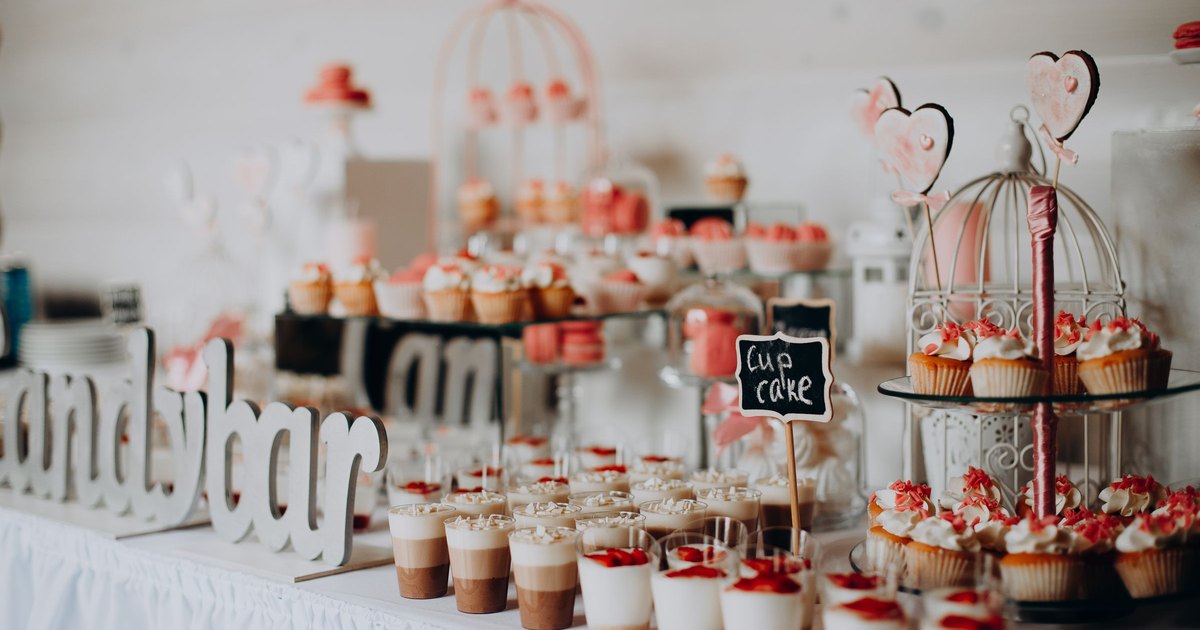
The final layer is presentation. Skewers, cups, plates, napkins, topping bowls and clear labels shape how guests experience your counter. A neat display with labelled toppings looks premium and speeds up decisions in the queue. Many caterers spend heavily on machines and then lose the effect with mismatched serveware. Treat display items as part of your dessert catering supplies, not an afterthought.
Quality across all four layers should match. A premium fountain paired with weak chocolate disappoints guests. Excellent premix served from a slow, uneven machine creates long queues. When you plan a counter, check that every layer supports the others. That balance is what separates a memorable dessert station from an ordinary one.
Choosing a Supplier for Catering Supplies in India
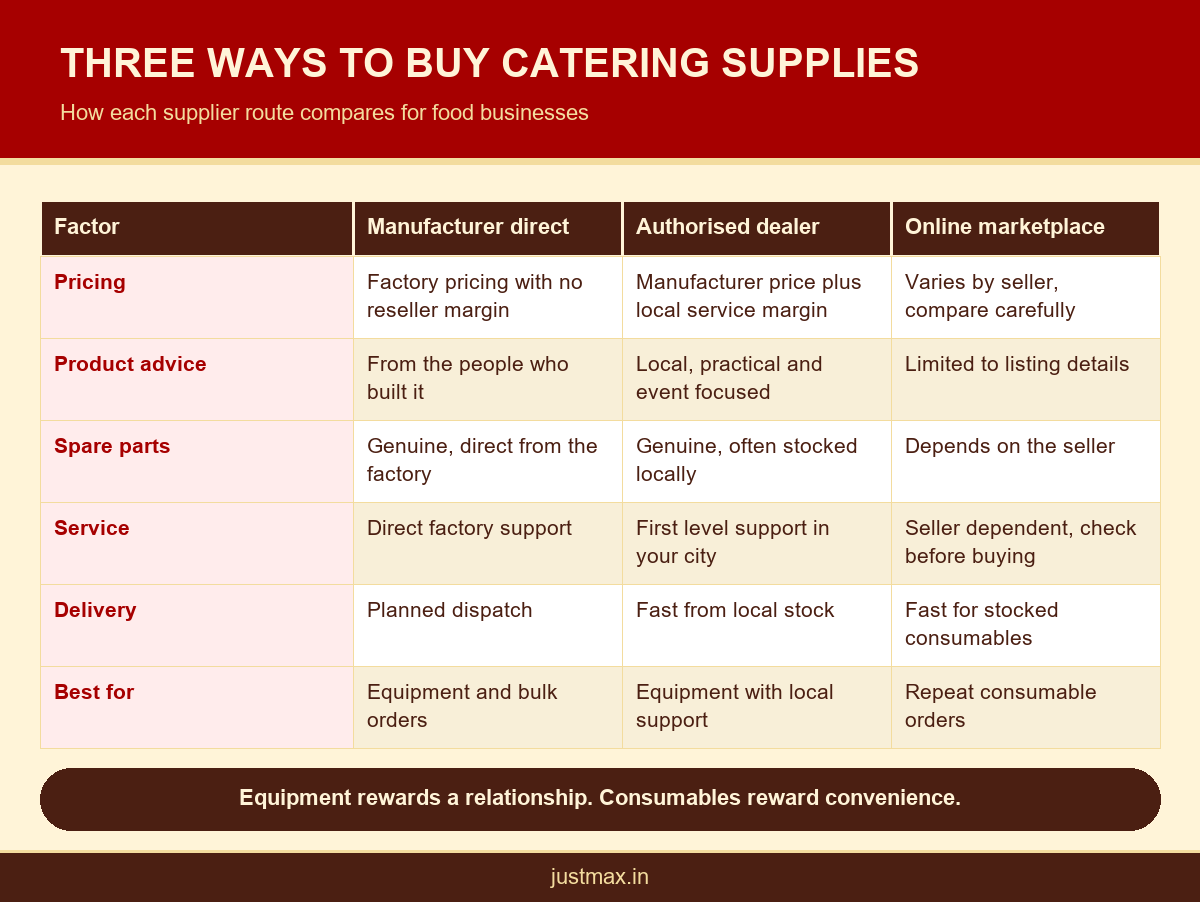
Caterers usually buy catering supplies in India through three routes. Each route suits a different stage of business. The wrong route can cost you far more than the price difference on day one.
Manufacturer Direct
Buying directly from a manufacturer gives you factory knowledge, genuine spares and direct service. You can match machines with compatible consumables. You also get guidance on model selection before you buy. This route suits caterers who run events every week and cannot afford downtime.
Distributor or Dealer
A local distributor offers quick delivery and a familiar face in your city. Good dealers stock spares and arrange demos. Ask whether the dealer is authorised by the manufacturer and who handles repairs. Just Max also works with partners through its distributor network, which combines local reach with factory support.
Online Marketplace
Marketplaces list many sellers with fast price comparison. They work for small accessories and one off purchases. For professional catering equipment, check who provides installation, spares and service after the sale. A low listing price means little if a machine fails in wedding season with no service partner.
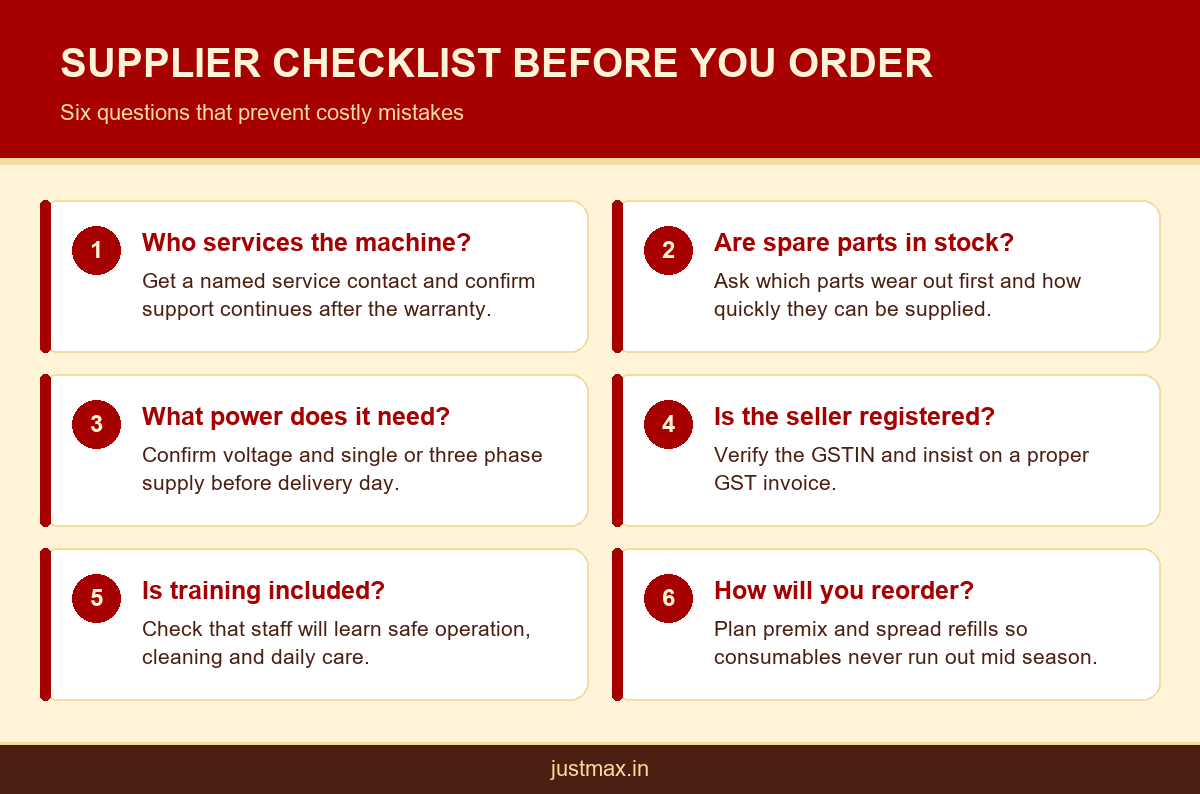
Whichever route you choose, ask four questions. Who services the machine? How fast do spares arrive? Are consumables tested with the equipment? Is the supplier still around in five years?
Look Beyond the Purchase Price
The cheapest quote rarely gives the lowest total cost. A machine that breaks during a reception costs you the booking, the client relationship and future referrals. Add up the real cost of ownership before you decide. Include spares, service visits, consumable compatibility, energy use and expected working life. When you compare catering supplies India wide on these terms, a dependable manufacturer often works out cheaper over a few seasons.
Also check paperwork. Ask for a proper tax invoice with GST details, a user manual and clear warranty terms. Corporate and hotel clients increasingly ask caterers about equipment safety and hygiene. Clean documentation helps you answer those questions with confidence. Sourcing catering supplies in India from an established supplier makes that paperwork simple.
Sizing Catering Equipment for Events by Type and Guest Count
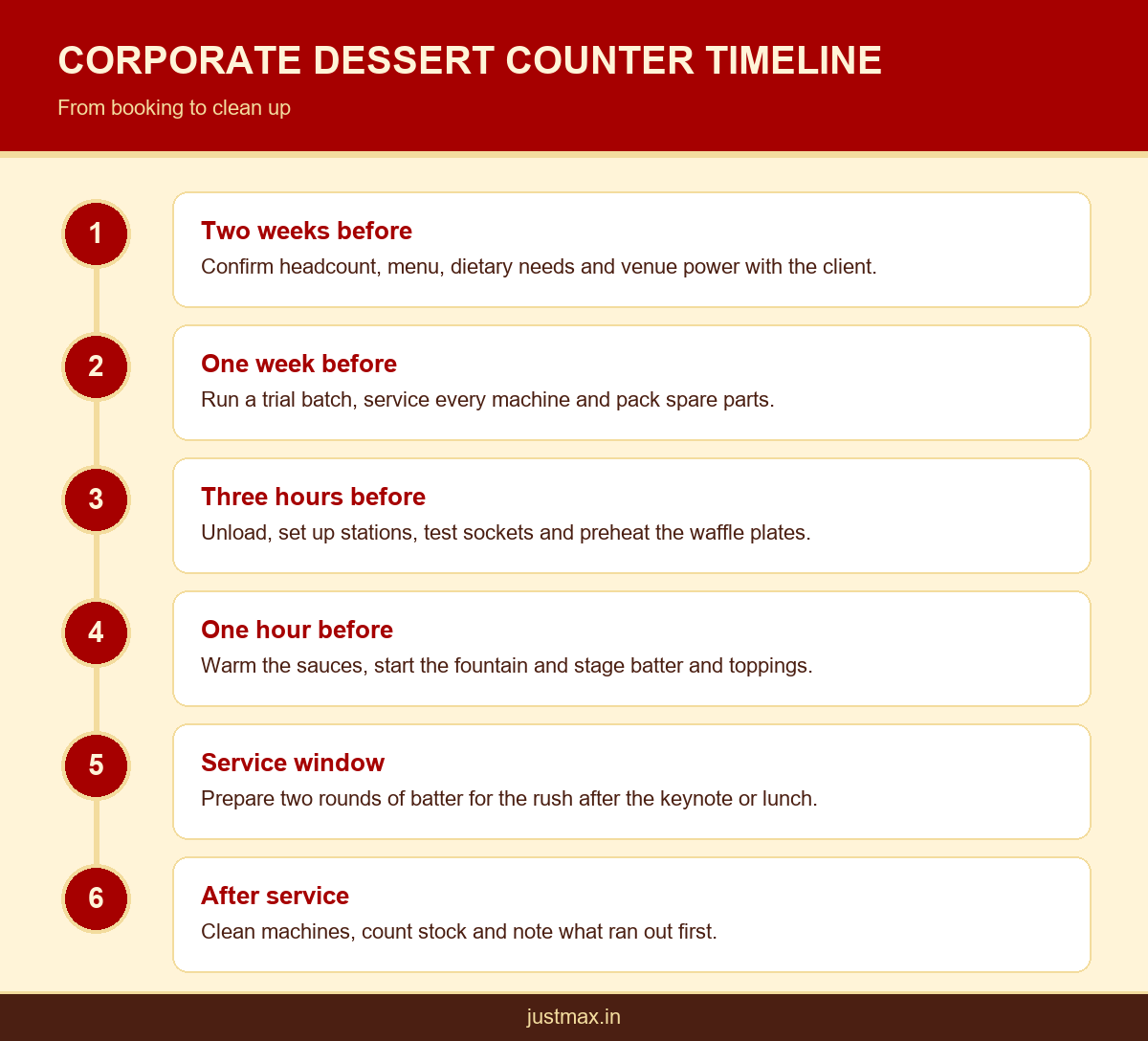
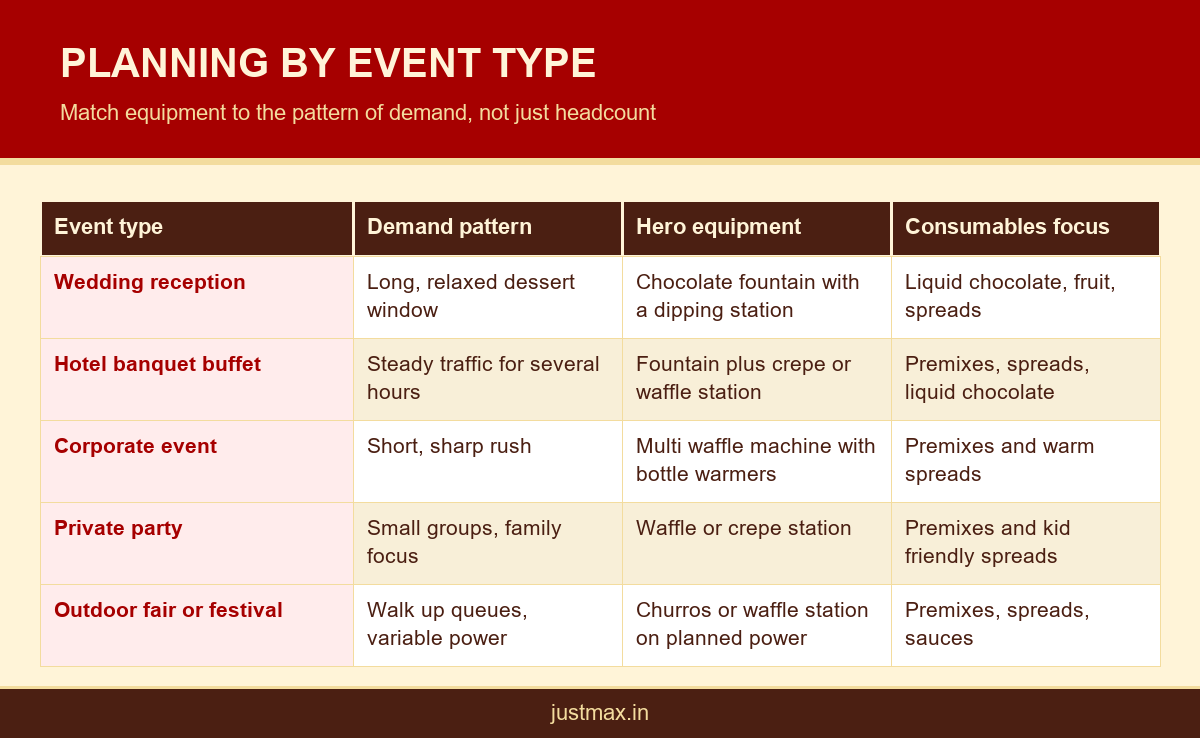
Guest count matters, but event type matters more. A wedding reception has a long, relaxed dessert window. A corporate lunch has a sharp twenty minute rush. A hotel buffet runs for hours with steady traffic. Your catering equipment for events should match the pattern of demand, not just the headcount.
Weddings and Receptions
Weddings reward showpiece stations. Guests linger, take photos and return for second helpings. A chocolate fountain with a dipping station creates the focal point, while a waffle or crepe station adds hot, made to order variety. Plan for a long service window and keep extra consumables close to the counter.
Hotel Banquets and Corporate Events
Hotel banquets need equipment that runs cleanly for hours and fits the venue’s standards. Corporate events are different. Guests arrive together, eat quickly and return to sessions. Speed beats spectacle here. A multi waffle machine with warm spreads in bottle warmers serves many guests in a short window without long queues.
Private Parties and Outdoor Events
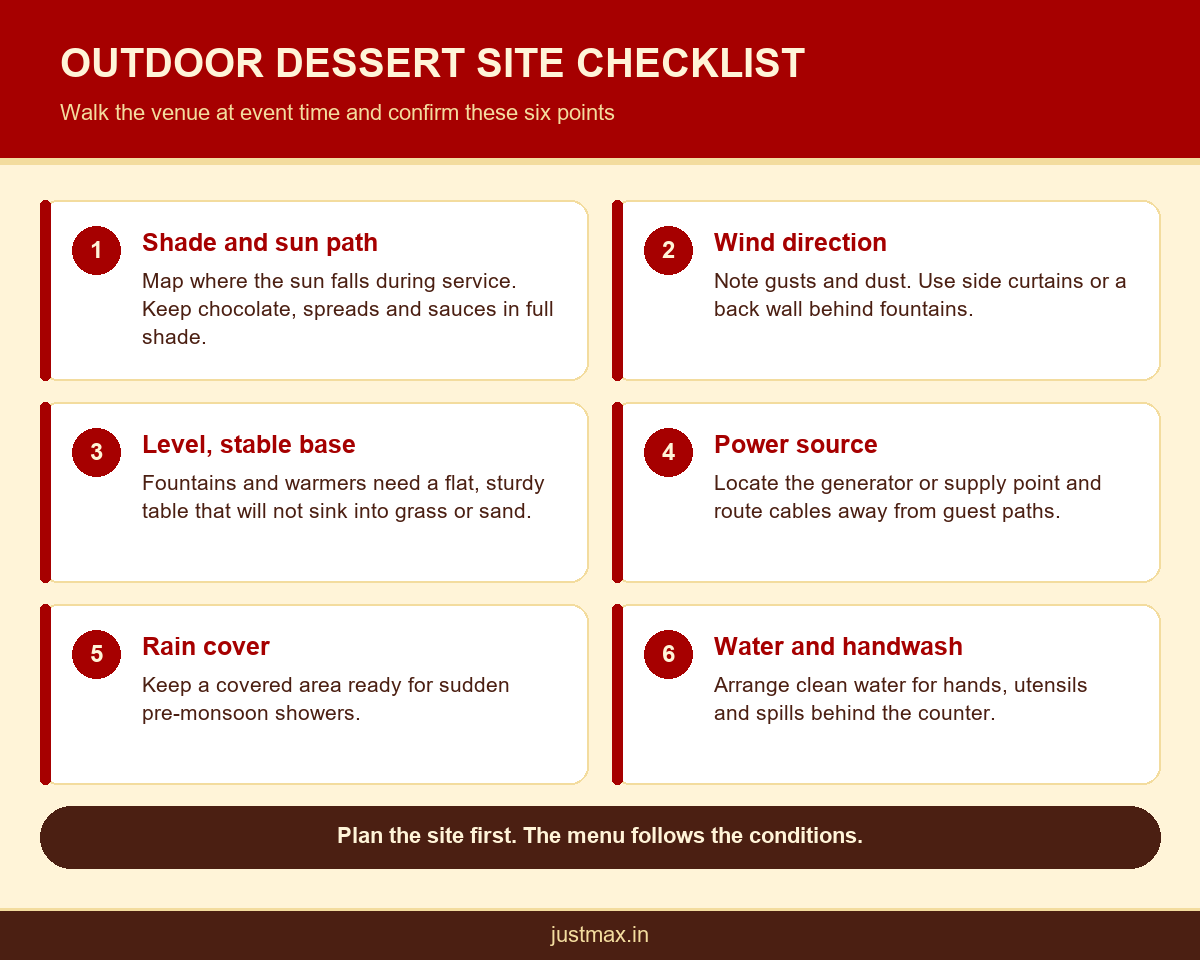
Birthdays and family functions suit compact setups that one operator can manage. Outdoor fairs and lawn events bring their own challenges, from heat to uncertain power. Choose robust machines, confirm the electrical supply in advance and shade every station from direct sun.
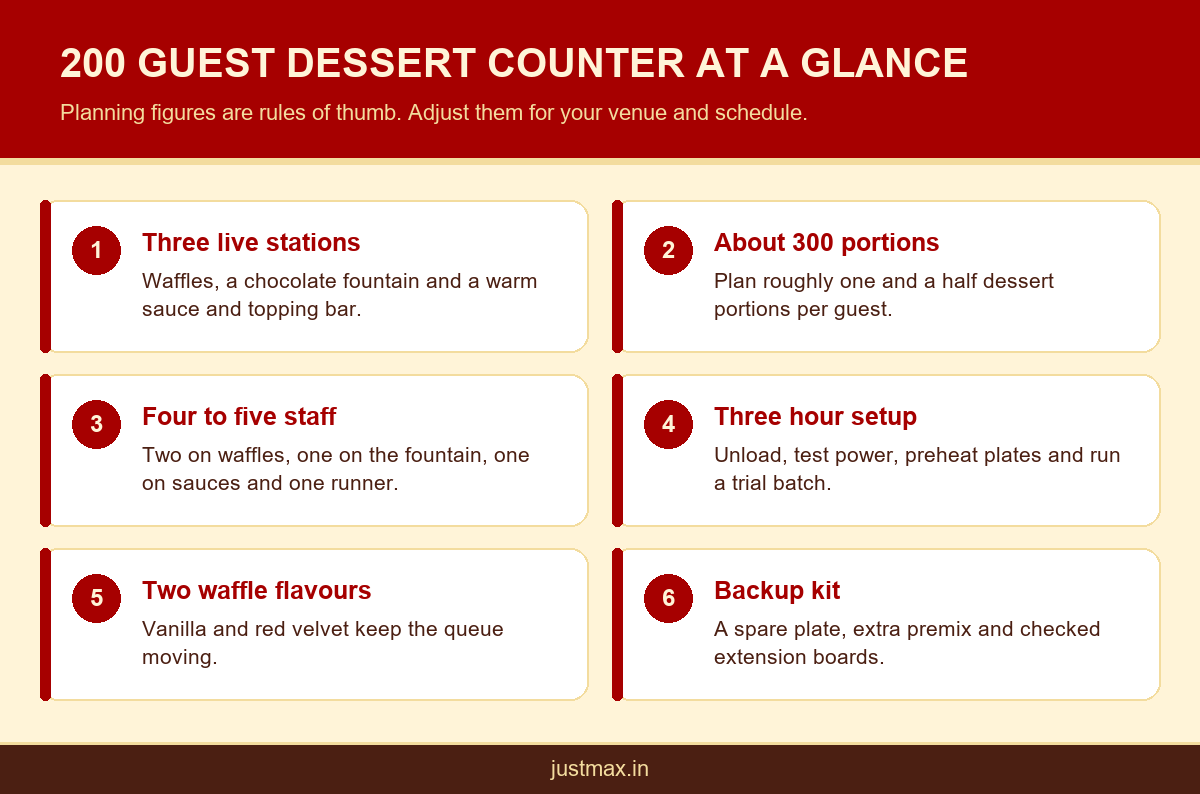
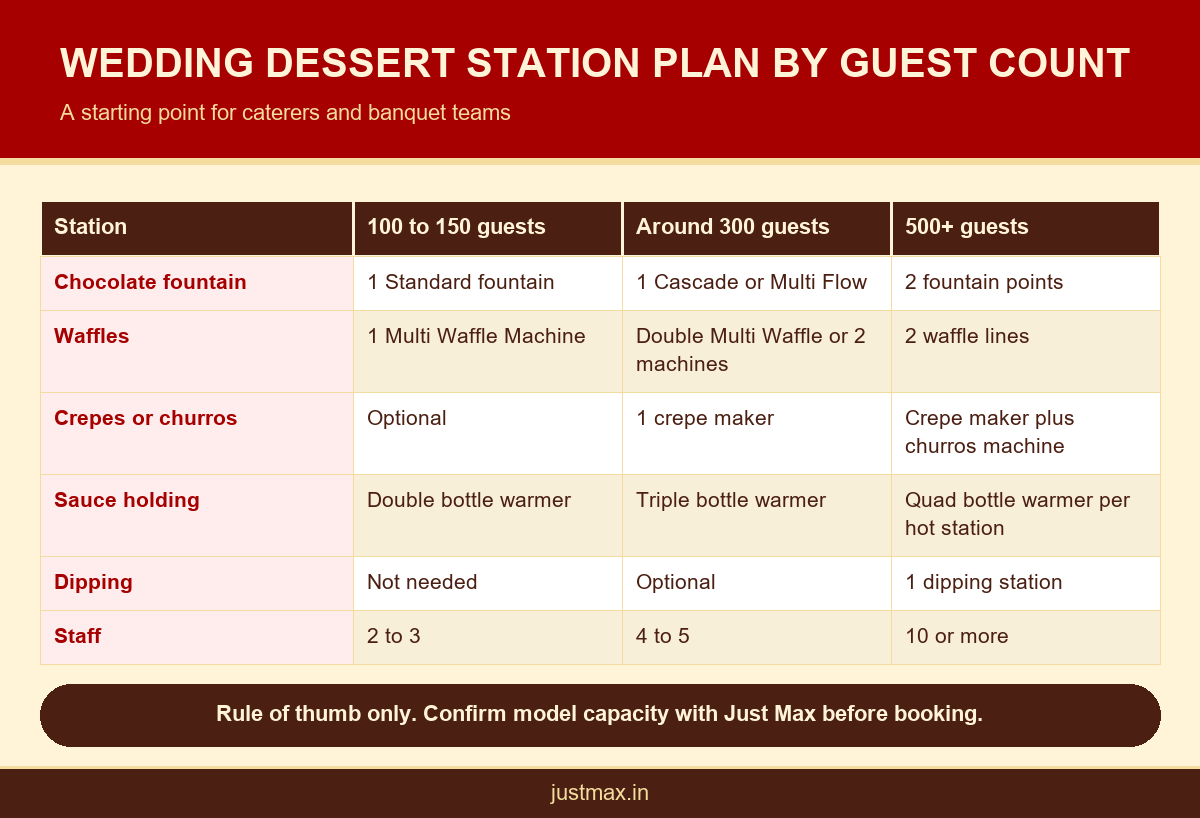
Use the table below as a starting point. These are planning rules of thumb from common event formats, not fixed numbers. Adjust them to your menu, service style and venue.
| Guest count |
Live stations (rule of thumb) |
Planning note |
| Up to 150 |
1 hero station plus 1 support station |
A fountain or waffle station with a dipping station works well. |
| 150 to 400 |
2 to 3 stations |
Split demand across a slow showpiece and a fast made to order station. |
| 400 and above |
3 or more stations with a backup unit |
Keep a spare machine and extra consumables on site for peak periods. |
For weddings, remember that Indian wedding celebrations often run across several functions. One kit may serve a sangeet, a reception and a lunch. Plan cleaning and refill time between functions. Our complete catering equipment checklist lists the smaller items caterers often forget.
Power, Space and Staffing for Live Dessert Stations
Most dessert counter failures happen behind the table, not on it. A tripped circuit, a cramped corner or an untrained helper can ruin a premium setup. Plan these three basics before you confirm any booking.
Power
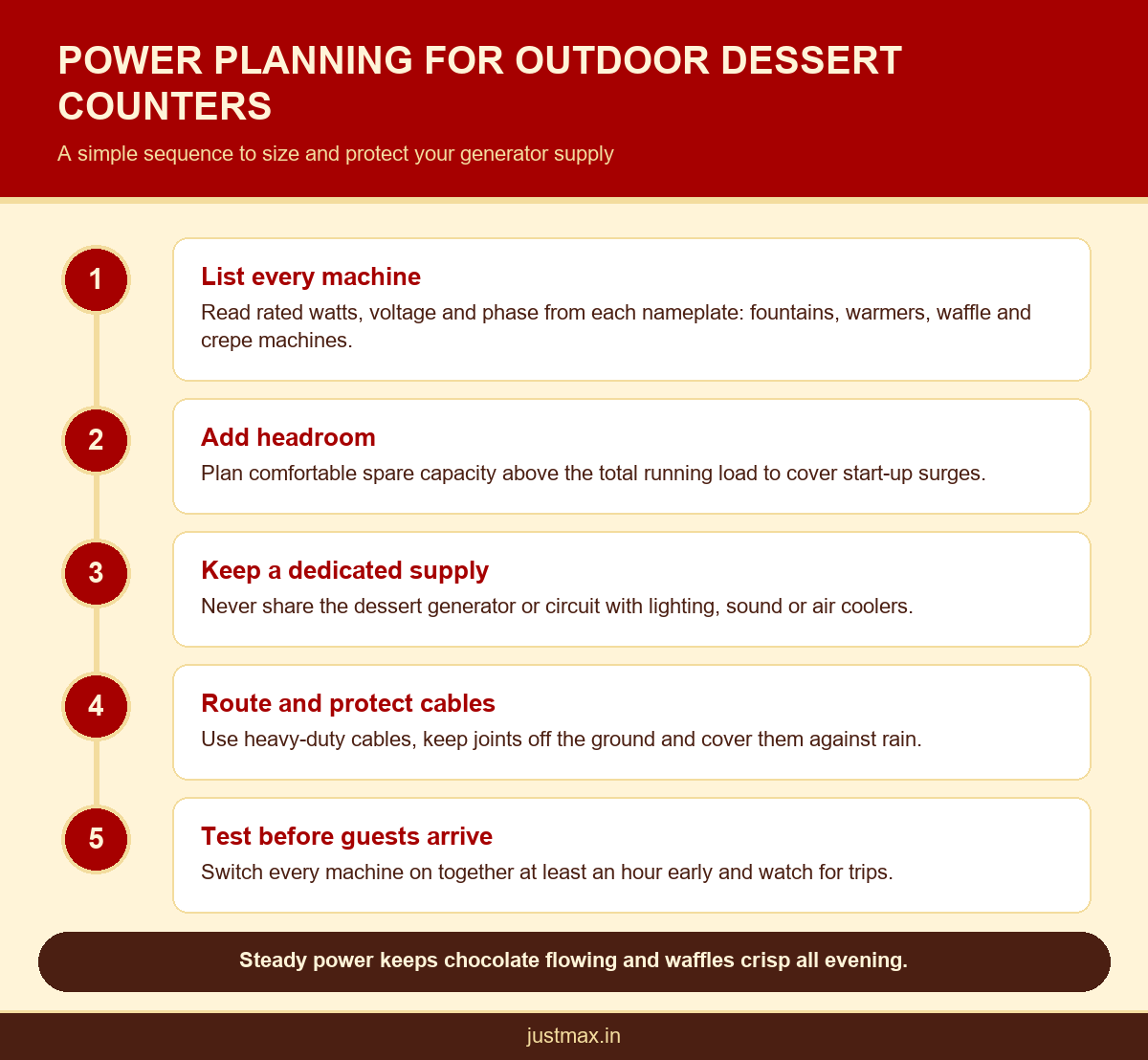
Check the electrical rating of every machine against the venue supply. Heavier equipment such as a commercial churros machine runs on three phase power, which many banquet halls provide but many lawns do not. Ask the venue for dedicated sockets for each heating unit. Avoid running several heating machines on one extension board. Outdoor events usually need a generator sized by an electrician.
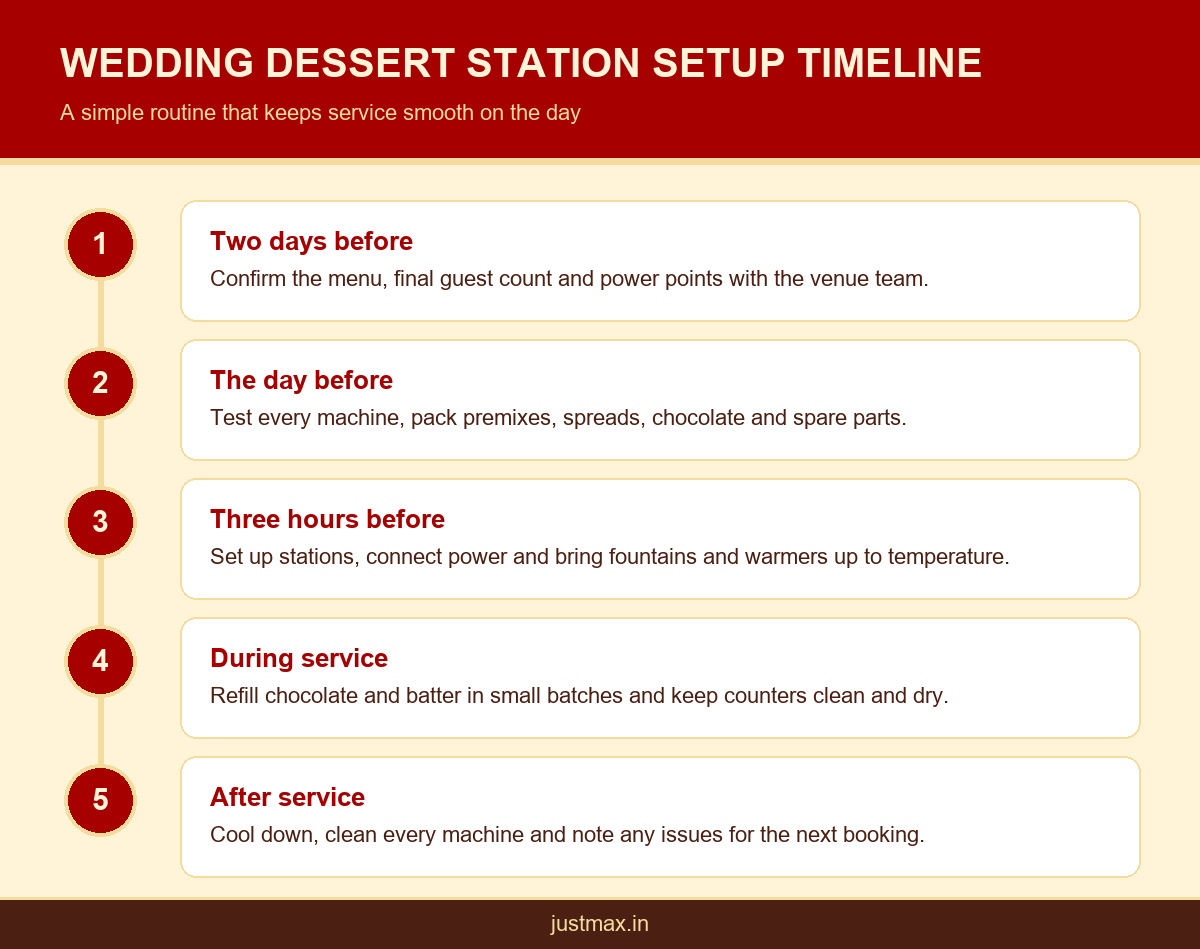
Allow time for machines to heat up. Waffle plates, crepe plates and fountains all need a warm up period before the first guest arrives. Switch on in a planned sequence rather than all at once, which reduces the chance of tripping the supply. Keep a list of each machine’s power needs in your event file so venue teams can prepare the right points.
Space
Each live station needs room for the machine, a prep surface, a consumables shelf and a safe operator zone. Guests need a clear path to queue and step away. Keep fountains away from fans, air conditioning vents and direct sun, since moving air disturbs the chocolate curtain. Place heavy machines on sturdy tables that will not shake.
Staffing
Every live station needs at least one trained operator. Busy stations need a second person to plate, refill and clear. Train your team on start up, cleaning and basic fault checks. Practising good mise en place before guests arrive keeps service calm during the rush.
Before every new venue, run a quick site check with the event manager. A short list saves you from surprises on the day.
- Confirm the number, location and rating of power points near the dessert area.
- Ask whether a generator backup is available and what load it supports.
- Check the floor surface, table strength and access route for heavy equipment.
- Find the nearest water point and wash area for cleaning between functions.
- Agree set up and breakdown times so your team is not rushed.
Consumable Planning: Premixes, Spreads and Liquid Chocolate
Equipment draws the crowd, but consumables decide repeat bookings. Guests remember taste, texture and consistency. Running out of batter or topping midway through an event damages your reputation more than any machine fault.
Start with a dependable batter base. Ready to use waffle and pancake premixes in Vanilla, Chocolate (Brownie) and Red Velvet give consistent results with minimal prep on site. Your team only adds water or milk as directed, which removes guesswork in a busy event kitchen.
Next, build a topping menu. A small range of chocolate and nut spreads covers most guest preferences. Milk Choco and Hazelnut suit wide audiences. Dark and Pistachio add a premium note. White Choco works for colour and contrast. Keep spreads in warm squeeze bottles so they flow evenly onto waffles and crepes.
Finally, plan liquid chocolate for fountains and dispensers. Use chocolate formulated for fountain flow. Thick or ordinary chocolate can clog pumps and break the curtain. Carry at least one spare pack beyond your estimate, because demand rises when guests see a flowing fountain.
Estimate quantities from your own records rather than guesswork. After each event, note the guest count, menu, service window and how much of each premix, spread and chocolate you used. Within a few events you will have reliable usage figures for every format. Those numbers make your quotes more accurate and stop you from over buying or running short.
Think about menu combinations too. A waffle with hazelnut spread, a crepe with milk chocolate or a red velvet pancake with white chocolate drizzle all use the same small range of dessert catering supplies. Fewer, versatile consumables mean simpler stock, faster training and less waste.
Storage matters as much as quantity. Store premixes in sealed containers away from humidity. Keep spreads in a cool, dry place before service. Follow FIFO so older stock is used first. For a wider view of base ingredients, see our guide to essential bakery and dessert products.
Food Safety and Licensing for Dessert Caterers
Hygiene is part of the experience. Guests watch you prepare food, so every glove, spatula and surface is on display. Strong hygiene habits protect guests and protect your brand.
In India, food businesses, including caterers, need registration or a licence from the Food Safety and Standards Authority of India. You can check the category that applies to your business and apply through the FSSAI FoSCoS portal. Keep a copy of your licence at the counter for corporate and hotel clients who ask for it.
The WHO guidance on food safety highlights simple habits that matter at events. Keep clean and separate raw and ready foods. Hold foods at safe temperatures. Use safe water. For live dessert stations, that translates into a few practical rules.
- Clean and sanitise contact parts before every event, not just after.
- Use separate utensils for each spread and topping to avoid cross contact.
- Label nut based spreads such as Hazelnut and Pistachio clearly for guests with allergies.
- Discard chocolate that has run in a fountain for a full event rather than reusing it.
- Keep a hand wash point or sanitiser at every station.
Fountains need the most care because chocolate sits in moving parts. Follow a proper routine for cleaning a commercial chocolate fountain after each event so residue never builds up.
Train every operator on these rules, including temporary helpers hired for peak season. Put a short hygiene checklist inside each equipment case so it travels with the kit. When a client’s event manager walks past your counter, a clean, organised station tells them more about your standards than any brochure. Hygiene is also a selling point. Mention your licence and cleaning routine in proposals, especially for hotels, hospitals, schools and corporate campuses.
Why Post-Sales Service Matters in Peak Season
Indian catering runs on seasons. Wedding months, festival weeks and year end corporate parties bring back to back bookings. A single machine fault during that window can cost several events, not one.
This is where post-sales service earns its value. Ask any supplier how quickly they respond, whether spares are stocked and who trains your staff. Just Max offers life-long post-sales service on its equipment, backed by its own factory in Mavelikara and an office in Kakkanad. That means genuine parts and technicians who know the machines.
Preventive care reduces emergencies. Schedule a check of your heating elements, motors and seals before each peak season. Keep a small kit of common spares such as fuses and seals. Record every service visit so you can track the health of each machine. Caterers who treat equipment as a long term asset spend less on repairs and lose fewer bookings.
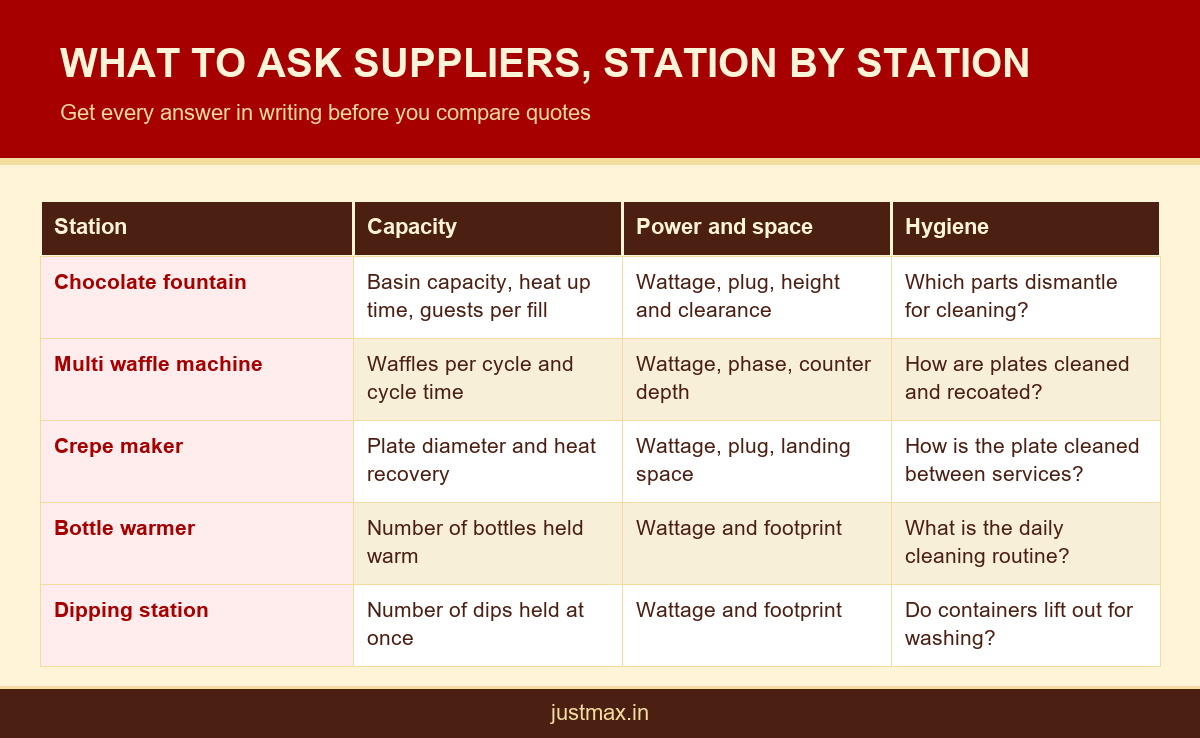
Ask suppliers practical service questions before you buy. Can a technician visit your city, or will the machine travel back to the factory? Are common spares such as heating elements, motors and seals kept in stock? Is operator training included at handover? Clear answers to these questions matter more than a small discount, because they decide how quickly you recover when something fails mid season. Among the catering supplies India buyers compare, service support is the one that protects revenue most directly.
Service also covers consumables. A supplier who makes both machines and premixes can troubleshoot batter, chocolate flow and temperature together. That single point of contact saves time when something goes wrong minutes before guests arrive.
Finally, keep your own records. Note the purchase date, model and service history of every machine. Good records help you plan replacements, claim warranty support and value your equipment if you ever upgrade. They also show clients that you run a professional, well maintained operation, which supports premium pricing for your dessert catering supplies and services.
Building Your Dessert Catering Kit Step by Step
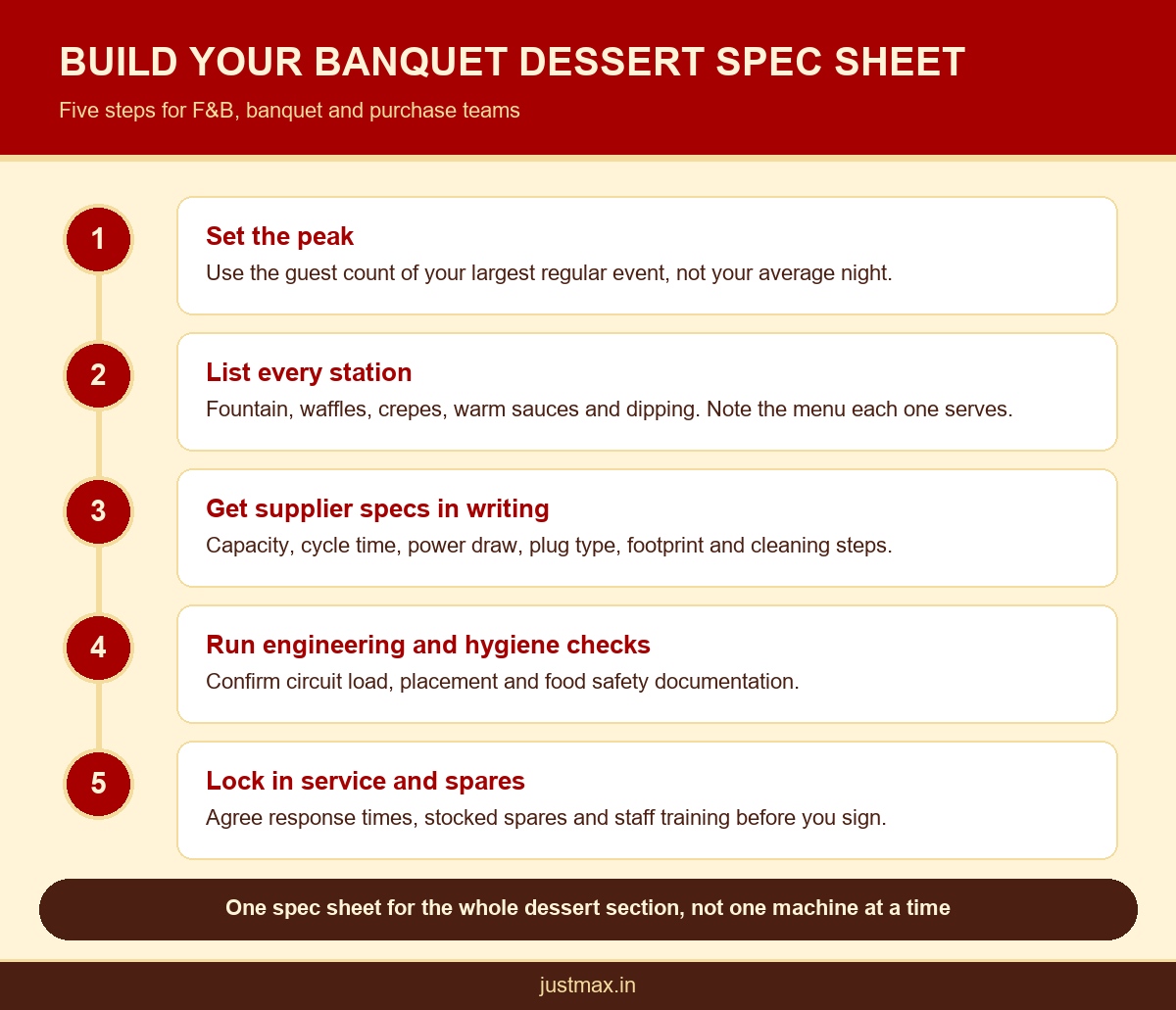
You do not need to buy everything at once. Most successful caterers start with one strong station and grow their kit as bookings increase. Follow a simple sequence so each purchase supports the next.
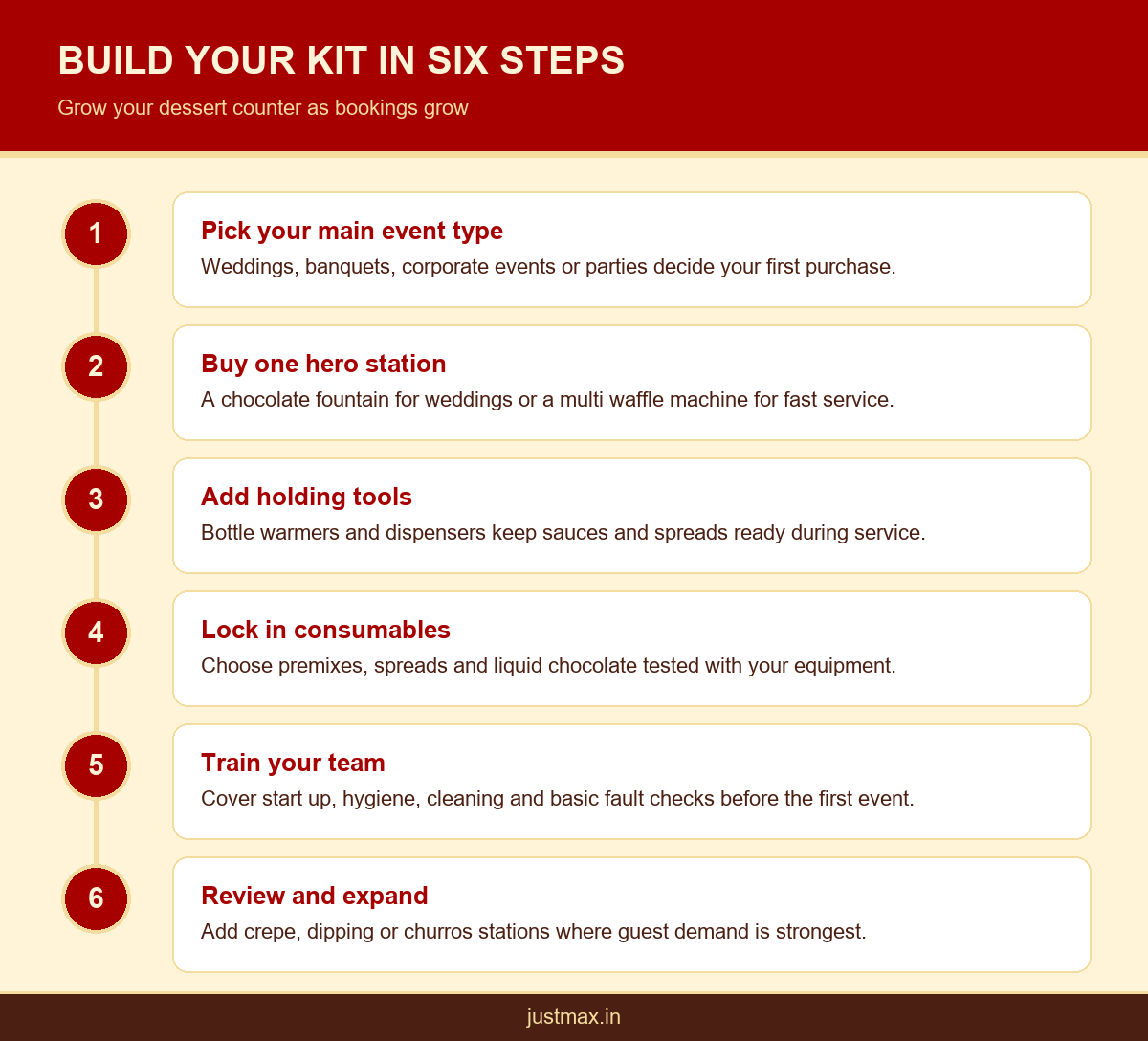
Begin with a showpiece that suits your main event type. Fountains suit weddings and banquets. A multi waffle machine suits corporate events and parties where speed matters. Add a warm sauce and spread station next, since bottle warmers support almost every live format.
As demand grows, add variety. A 40 cm crepe maker brings a European feel to brunches and receptions. A compact dipping station works where space is tight. Each addition should share consumables with your existing kit so your stock stays simple.
Review your kit after every season. Note which stations drew the longest queues and which sat idle. Invest in what guests love and retire what they ignore.
Budget in phases. Plan your first season around one or two stations and the consumables to support them. Reinvest profits from those bookings into the next station. This approach keeps cash flow healthy and lets real guest demand guide each purchase. It also gives your team time to master each machine before adding another.
If you supply other caterers, cafes or event companies in your region, consider a dealership. Distributing professional catering equipment and consumables can become a second income stream alongside your own events. Ask the manufacturer about territory, support and training before you commit.
Conclusion
Great dessert catering supplies combine dependable machines, smart holding tools and consistent consumables. Choose equipment by event type, plan power and staff early, and buy from a supplier that services what it sells. Start with one hero station and build from there.
Ready to plan your next season? Talk to the Just Max team about equipment, premixes and spreads for your events, or message us on WhatsApp at +91 88480 43729.
Frequently Asked Questions
What dessert catering supplies does a new caterer need first?
Start with one live showpiece such as a chocolate fountain or waffle machine, a bottle warmer for sauces, and reliable consumables like premixes and spreads. Add more stations only after bookings justify the extra investment and staff.
How many dessert stations should I plan for a wedding?
As a rule of thumb, plan one hero station plus one support station for up to 150 guests and two to three stations for larger receptions. Adjust for menu length, service window and the number of functions.
Do caterers in India need an FSSAI licence?
Yes. Caterers need FSSAI registration or a licence depending on turnover and scale. Apply through the FoSCoS portal and keep the certificate handy, since hotels and corporate clients often ask for proof before confirming a booking.
Is it better to buy catering equipment from a manufacturer or a dealer?
Manufacturers offer genuine spares, direct service and matched consumables. Authorised dealers add local reach and quick delivery. Avoid sellers who cannot confirm who will service the machine after purchase, especially just before the busy wedding season.
What power supply do commercial dessert machines need?
Smaller units run on standard single phase sockets, while heavier machines such as commercial churros machines need three phase power. Always check each machine’s rating against the venue supply and never overload a single extension board with heaters.
Which chocolate works best in a chocolate fountain?
Use liquid chocolate formulated for fountain flow. Ordinary chocolate is often too thick and can clog the pump or break the curtain. Fountain chocolate keeps a smooth, glossy curtain flowing throughout a long wedding or banquet.
How should I store premixes and spreads between events?
Store premixes in sealed containers in a cool, dry place away from humidity. Keep spreads closed and away from heat. Use older stock first and check dates before every event to maintain consistent quality and flavour for guests.
Can I buy Just Max consumables online?
Yes. Premixes and spreads are available through the Just Max online shop with direct checkout and delivery. For bulk or recurring catering orders, contact the team for guidance on quantities, delivery and seasonal supply planning.
What makes a dessert counter look premium at events?
A premium counter combines live theatre, clean presentation and smooth service. Use a flowing fountain or made to order station, matching serveware, labelled toppings and trained staff. Browse the Just Max event gallery for setup inspiration.