Categories
Uncategorized

Bottle Warmer for Parties and Dessert Service: Sizing Guide

Choosing a bottle warmer for parties and dessert counters looks like the least interesting decision on an equipment
list, and it is quietly one of the most consequential. A warm waffle finished with a cold, stiff sauce is a worse
product than a plain one served properly, and guests notice without being able to explain why. This guide covers how
many wells you actually need, what holding temperature does to a sauce, and how to size the unit to your menu rather
than to your counter.

Key Takeaways

  • Count your distinct sauces at peak, then add one well. That is your capacity, not the number you use on a quiet
    Tuesday.
  • Holding temperature changes viscosity, which changes pour speed and portion consistency during a rush.
  • This is the cheapest piece of equipment on a dessert counter and one of the most visible in the finished plate.

What the unit does and why it matters

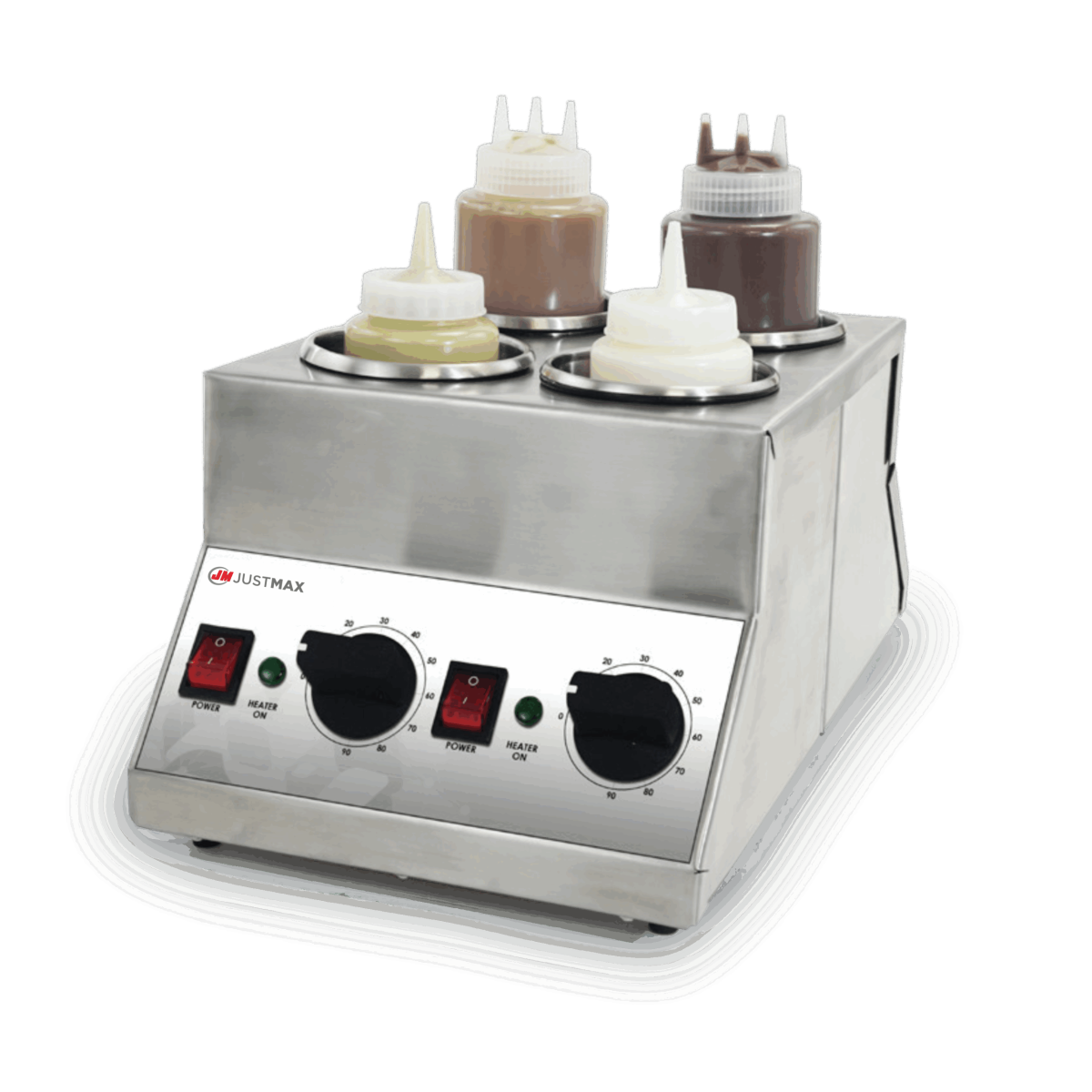
A warmer is a heated block with wells that hold squeeze bottles at a steady serving temperature. That is the whole
machine. What it changes is pour behaviour: a chocolate or nut spread at room temperature is thick, slow and
inconsistent out of a nozzle, while the same product held warm flows evenly and portions the same way every time.

The knock on effects are larger than they sound. Consistent pour means consistent portion, which means predictable
food cost per dessert. Faster pour means shorter service time at the finishing step, which is usually the actual
bottleneck on a dessert counter rather than the cooking. And warm sauce on warm food simply tastes better, which is
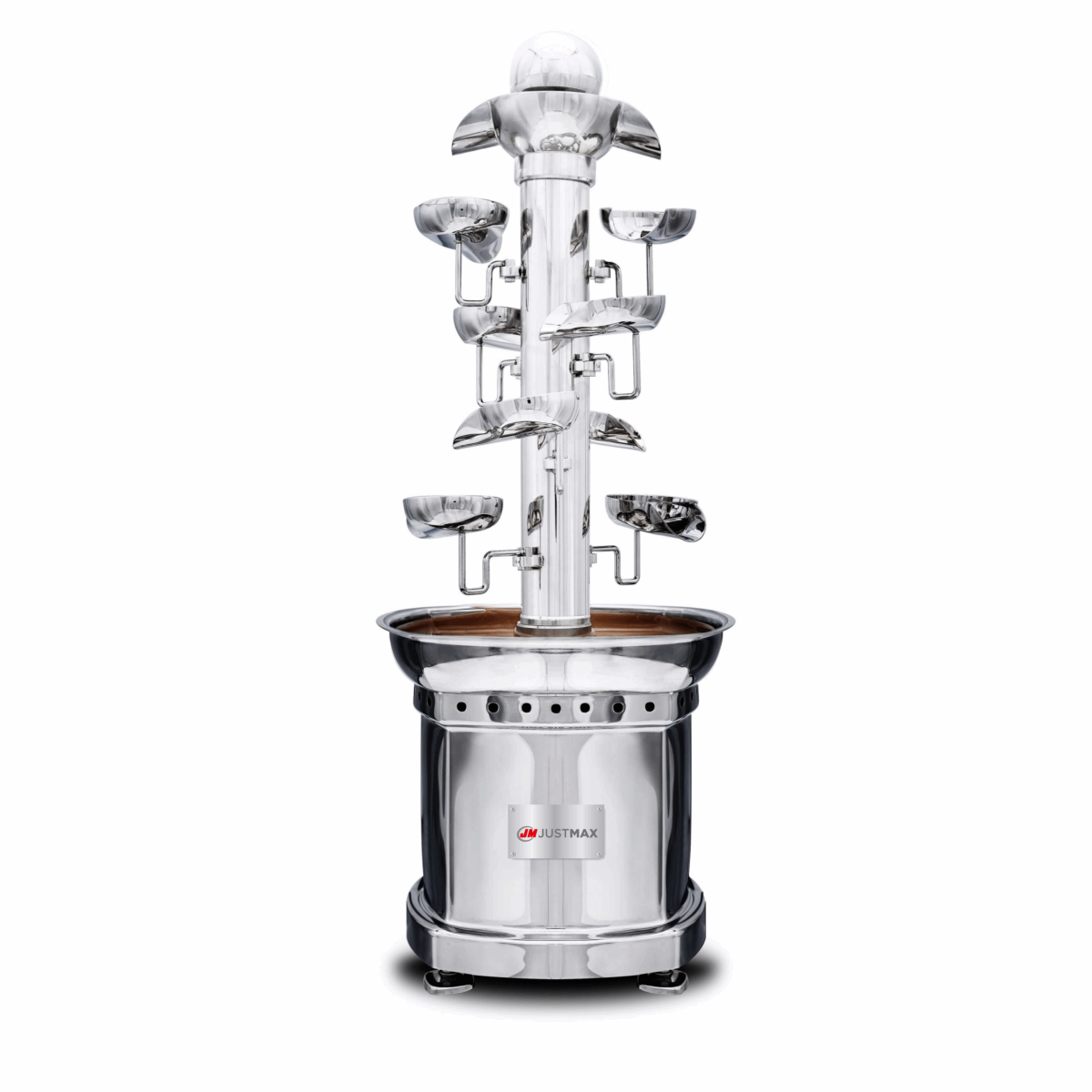
the part that brings customers back. The
warmer range covers single up to quadruple
capacity.

There is a presentation argument too. A cold spread dragged out of a bottle tends to sit on the plate as a lump rather
than a line, so plating suffers as well as speed. Anyone building a dessert counter around photographs, which most now
are, will find this piece of equipment does more visible work than its cost suggests.

For mobile and event work the case is stronger still, which is why a bottle warmer for parties is usually the first
thing an experienced caterer packs. Outdoor service is where ambient temperature works hardest against you, and a
sauce that pours perfectly in a warm kitchen turns solid in an evening breeze. Holding equipment is what makes the
same menu deliverable in both settings.

Sizing by menu, not by counter space

The sizing question is not how much room you have. It is how many distinct sauces your menu carries at the same time,
at your busiest service, plus one spare well for a seasonal item or a refill bottle waiting to come up to temperature.

Work it through honestly. A counter running one chocolate sauce needs a single well unit. A counter with chocolate and
a nut spread needs a double. Add a white chocolate or caramel and you are at a triple. Menus running a full spread
selection, which is common once a venue starts upselling toppings, need the
quadruple unit and will still occasionally
wish for a fifth well.

The spare well matters more than operators expect. Without one, refilling means either running a sauce out mid service
or dropping a cold bottle into a well and waiting, and the second option produces exactly the inconsistent pour the
machine exists to prevent.

Size for the menu you intend to sell rather than the one you have today. Warmers are cheap relative to almost
everything else on a dessert counter, and buying one well short is the commonest regret, because it silently caps how
many topping options you can offer at once.

Well Count by Topping Menu

Live sauces at peak Unit to specify Typical menu
One Single well A single chocolate sauce on waffles or crepes
Two Double well Chocolate plus one nut spread
Three Triple well Chocolate, nut spread and a white or caramel option
Four or more Quadruple well A full spread selection with active topping upsell

Without a spare well, refilling means either running a sauce out mid service or waiting on a cold bottle.

Holding temperature and product behaviour

Different products want different holding conditions, and treating them identically is the commonest mistake.
Chocolate based spreads become fluid and pour cleanly when held warm but scorch and separate if held too hot for too
long. Nut based spreads such as hazelnut and pistachio tolerate warmth well and benefit noticeably from it, since they
are stiff at room temperature.

Two operating rules cover most of it. Bring bottles up to temperature before service rather than during it, and do not
hold product warm overnight or across multiple days, because repeated warm and cool cycles degrade both texture and
flavour. Decant what you will use in a service and keep the bulk container cool.

Which products you hold is a menu decision as much as an equipment one. The
spread selection behaves differently by type, and
venues building a topping menu will find our note on
dessert spread boards and counter design
a useful companion to this piece.

Watch for separation as your early warning sign. A spread that has been held too hot for too long starts to show oil
at the surface, and once that happens the texture will not recover in the bottle. Treat it as a signal to lower the
holding setting rather than to stir harder.

Hygiene, cleaning and event use

Because warm product sits in an open bottle for hours, this is a genuine food safety touchpoint rather than a trivial
one. The standard duties apply: hold current registration through the
FSSAI licensing portal, and follow the hot holding and hygiene practice set
out in the
Food Safety and Standards regulations.

Practically, three habits carry the risk. Empty and wash bottles at the end of every service rather than topping up a
part used bottle the next day. Wipe nozzles regularly through service, since a crusted nozzle both looks poor and
holds residue. And keep the wells themselves dry and clean, because spills that bake onto a heated block are difficult
to remove later.

For event and outdoor party use, add one more consideration: power. A warmer needs a reliable circuit for the whole
event, and a unit that loses power halfway through service leaves you with four bottles of cooling sauce and no quick
recovery. Confirm the supply at the venue rather than assuming, and read our
event equipment checklist
when planning a full mobile setup.

Allergens deserve a mention in a multi well unit. Nut and milk based spreads sit side by side, and while each stays in
its own bottle, shared nozzles or a wiped cloth passed between them will transfer traces. Keep cloths and utensils
separate per bottle and state the position on the menu.

Event work adds a transport consideration as well. Bottles travel better empty than full, and filling on site from a
sealed bulk container is both safer and less messy than carrying warm product across town. Build that into the pack
down routine rather than improvising it at the venue.

Bottle choice is a small decision that affects everything downstream. Use bottles rated for the temperature you are
holding at, with nozzles sized for the product rather than whatever came in the box. A nozzle too narrow for a nut
spread turns every portion into a struggle, and a nozzle too wide makes portion control impossible.

Label every bottle, including the date it was filled. In a four well unit running similar looking dark spreads, an
unlabelled bottle is a guaranteed mistake at some point during a busy service, and a date lets anyone on the team see
at a glance whether something should have been emptied at the last close.

Service and Cleaning Routine

  1. Bring bottles to temperature before service opens, never during it
  2. Decant only what the service needs and keep bulk containers cool
  3. Check each nozzle flows cleanly before the first order
  4. Wipe nozzles at intervals through service to stop residue building
  5. Keep a spare well free so a refill can warm without interrupting service
  6. Watch for oil separating at the surface; lower the setting rather than stirring harder
  7. Keep cloths and utensils separate per bottle to avoid allergen transfer
  8. Never hold product warm overnight or across multiple days
  9. Empty and wash every bottle at close rather than topping up tomorrow
  10. Keep wells dry and clean; baked on spills are hard to remove later

Conclusion

Specifying a bottle warmer for parties or a permanent dessert counter comes down to one honest count: how many sauces
are live at your busiest service, plus one. Get that right, hold each product at a sensible temperature, wash bottles
nightly, keep utensils separate per bottle, label everything with a fill date, and confirm your power supply for
events. It is a small purchase that shows up in every plate you serve, and it is almost always the cheapest way to
make an existing dessert menu look and taste more professional.
Compare the capacities available or
tell us your topping menu and we will recommend a well count that fits it.

Categories
Uncategorized

Commercial Crepe Maker Guide: Plate Size, Power and Margin

A crepe maker is one of the highest margin machines you can put on a dessert counter, because the batter costs almost
nothing against the ticket. It is also one of the easiest to specify badly, since plate diameter quietly determines
your portion size, your cycle time and your queue. This guide covers how to choose by plate size and power draw, what
the running economics actually look like, and how to train the one skill the machine genuinely requires.

Key Takeaways

  • Plate diameter sets portion size and cycle time together, so choose it against your service shape first.
  • Batter cost is trivial against a premium ticket, which is why the format carries such strong gross margin.
  • Spreading is the only real skill, and most operators are consistent inside a week of practice.

Choosing by plate size and power

A commercial crepe maker is a flat circular griddle held at even temperature across its whole face. Evenness is what
separates a commercial plate from a domestic one, because a cold spot produces a pale patch that no amount of operator
skill will hide.

Diameter is the decision that matters most. A larger plate gives you a bigger finished crepe and therefore a higher
ticket, but it also takes longer to come back to temperature between covers, which slows a queue. A smaller plate
cycles faster and suits high footfall counters where throughput beats presentation. Just Max lists a
forty centimetre plate model for larger
portions alongside an energy conscious unit, with both sitting in the
crepe plate category.

Power draw deserves a real check rather than an assumption. These plates hold temperature continuously through
service, not just while cooking, so the load is steady rather than intermittent. Have an electrician confirm the
circuit before first service. Where energy cost is a live concern, guidance from the
Bureau of Energy Efficiency is a reasonable reference for thinking about
commercial appliance consumption.

Build quality shows up in two places. The first is plate thickness, because a heavier plate holds heat more stably and
recovers more predictably. The second is the thermostat, since a loose one produces a plate that drifts through a long
shift and forces the operator to compensate constantly.

One more consideration when comparing models: a crepe maker is a single purpose machine, so it has to earn its counter
space on crepes alone. That is worth weighing against interchangeable equipment which produces several formats from
one footprint. If space is your binding constraint rather than throughput, a multi format machine may serve you better
even though it makes a slightly less authentic crepe.

Choosing a Plate Diameter by Service Shape

Service shape Suited plate Ticket Cycle speed
High footfall kiosk Smaller diameter Moderate Fast recovery between covers
Cafe or dessert counter Mid to large diameter Higher Moderate
Hotel or banquet service Larger diameter Highest Slower, presentation led
Energy sensitive site Energy conscious model Varies Depends on diameter chosen

Have an electrician confirm the circuit before first service. These plates hold temperature continuously, not
intermittently.

Why the margin is so strong

Crepe economics are unusually favourable and worth understanding before you price the menu. The batter is flour, egg,
milk and a little sugar, which is a very small cost per portion. The ticket, by contrast, is set by what goes on top,
and toppings are where customers happily spend.

That gap is the business. A plain crepe is cheap to make and modest to sell; the same crepe with a chocolate or nut
spread, a fruit and a sauce carries a much higher price for a small increase in cost. Building the topping menu from
the spread range is the fastest way to raise
average ticket without touching the batter at all.

The practical implication is that your menu design matters more than your batter recipe. Two or three signature
combinations, priced properly, will out earn a long list of plain options, because customers choose from a short list
faster and spend more when the premium option is obvious.

Portion discipline protects that margin. Toppings applied by eye drift upward over a shift, and a spread portioned
generously by a tired operator can quietly double your intended ingredient cost on the item you sell most. Fix
portions by weight or by a marked scoop, and check them occasionally rather than assuming they have held.

Waste is the other side of the margin story and it is usually operator driven. Batter mixed in quantities that do not
match the day, or crepes cooked ahead and left to go leathery, quietly erode a very good gross margin. Cook to order
and mix to a forecast, and the numbers hold.

The one skill the machine needs

Everything else about a crepe station is mechanical. Spreading is not. Batter goes onto a hot plate and has a few
seconds to be pushed into an even circle before it sets, and the difference between a good operator and a new one is
visible on every single plate.

The good news is that it is a short learning curve. Most staff are consistent within a week of regular practice, and
the technique is far easier to teach than plating or chocolate tempering. Two coaching points do most of the work:
keep the spreader almost flat rather than digging into the batter, and work outward in one continuous movement instead
of correcting in stages.

Consistency across shifts is helped considerably by a standardised batter. If output varies depending on who mixed it,
the problem is upstream of the operator, and a ready mix removes that variable entirely. Our comparison of
premix against scratch batter
sets out the trade offs honestly.

Train on the plate you will actually use. Spreading technique on a small plate does not transfer perfectly to a large
one, because the batter has further to travel before it sets. If you plan to run both diameters, train on both.

Cleaning, upkeep and where it belongs

Upkeep is light. The plate needs scraping and wiping while still warm at the end of service, and seasoning maintained
according to the plate finish. Leaving batter residue to carbonise is the one habit that shortens plate life, and it
is entirely avoidable with a closing routine that somebody actually owns.

On placement, a crepe station wants to be visible. The spreading action is quietly compelling to watch, so a plate
facing guests earns more than the same plate tucked behind a wall. It also pairs naturally with warm chocolate, which
is why many venues run a plate next to a
dispensing unit rather than in isolation.

The usual compliance duties apply: hold current registration through the
FSSAI portal, keep hot holding and hygiene practice documented, and log
your cleaning. None of this is onerous for a single plate station, but it should be written into the routine rather
than assumed to be happening.

Think about the surrounding workflow too. A crepe needs somewhere to be folded, filled and plated, and a station with
no dedicated finishing space ends up assembling on the edge of the hot plate, which is slow, unhygienic and produces a
worse looking product. Allow counter space beside the plate rather than treating the machine as the whole station.

Two spares are worth holding if you trade daily: a spreader, because they get damaged and a worn one immediately shows
in the product, and a thermostat or heating element depending on the model. Neither is expensive, and either failing
mid week without a replacement means dropping the item from the menu until a part arrives.

Crepe Station Routine, Open to Close

  1. Bring the plate fully to temperature before the first order rather than cooking into a warming plate
  2. Confirm even heat across the whole face; a cold spot shows as a pale patch
  3. Mix batter to a forecast for the day rather than to a habit
  4. Portion batter to a fixed measure so crepe size does not drift through service
  5. Keep the spreader almost flat and work outward in one continuous movement
  6. Hold toppings at serving temperature so a warm crepe is not finished with a cold sauce
  7. Scrape and wipe the plate while still warm at the end of service
  8. Maintain seasoning appropriate to the plate finish and never let residue carbonise
  9. Log the clean with a date, a time and the name of the person who did it

Conclusion

A crepe maker earns its place through margin rather than novelty, and the specification decisions that matter are
plate diameter against your service shape, a verified electrical circuit, and a batter you can reproduce across
shifts. Get those right, put the station where guests can see it, control waste, and design the topping menu to carry
the ticket. Allow counter space beside the plate for folding and finishing, hold a spare spreader, and train your team
on the diameter you will actually run rather than on a smaller practice plate.
Compare the plate options or
tell us your expected covers and we will recommend a diameter that matches
your queue rather than your counter.

Categories
Uncategorized

Chocolate Kebab Machine: The Dessert Format India Missed

A chocolate kebab machine is a vertical rotisserie that turns a block of chocolate against a heat source so staff can
shave warm curls off the face to order. It is the same mechanism as a doner, applied to dessert, and that single
inversion is why it stops people in a food court. Almost nobody in India is running one, and almost nobody is writing
about them, which makes this one of the last genuinely uncontested dessert formats available to an operator looking
for something to be known for.

Key Takeaways

  • The theatre is the product. Guests recognise the mechanism instantly and have never seen it used for dessert.
  • One consumable and one skill, which makes it far simpler to run than its appearance suggests.
  • Heat management and a spatter guard are the two planning points that decide whether it works on your counter.

How the machine works

A shaped block of chocolate is mounted on a vertical spit. A heat source warms the exposed face while the spit rotates
slowly, softening a thin outer layer without melting the core. Staff draw a blade down the warm face and take off
ribbons of chocolate, which fall into a collecting tray and go straight onto a waffle, a crepe, an ice cream or a cup.

The engineering problem the machine solves is holding a narrow temperature band. Too cool and the blade skids without
cutting; too warm and the block slumps and runs. A properly built unit holds the face soft and the core firm for a
whole service, which is the difference between a working machine and a novelty that gets switched off after a
fortnight. The rotisserie style unit sits in the
chocolate kebab category of the
appliance range.

Block selection matters as much as the machine. The product needs to be firm enough to hold its shape on a spit under
its own weight and formulated to soften at the surface rather than sweating oil. Ordinary bar chocolate is usually too
soft and too prone to separating, which is the same lesson that catches operators out with open dessert equipment
generally.

How a Dessert Rotisserie Actually Works

  • Mount A shaped chocolate block is fixed to a vertical rotating spit. Block firmness matters;
    product intended for this use holds where bar chocolate slumps.
  • Warm A heat source softens only the exposed outer layer as the spit turns. Too cool and the blade
    skids. Too warm and the block slumps and runs.
  • Shave Staff draw a blade down the warm face and take off chocolate ribbons. The skill is blade
    angle against the face, learned within a few shifts.
  • Serve Curls drop into a tray and go onto waffles, crepes, ice cream or cups. It is a topping
    generator, so it earns most beside items that need topping.

Why it draws a crowd

Most dessert equipment competes on the finished plate. This one competes on the process, and that is a stronger
position. A guest walking past a food court sees a familiar rotating spit, registers it as savoury, then realises it
is chocolate. The double take is the marketing, and it happens without a single rupee of spend.

It also photographs and films unusually well, which matters more than it used to. A shaved chocolate service is a
short vertical video that essentially makes itself, and dessert venues that have added one tend to find social reach
follows without a campaign. That is the same dynamic that made open dessert theatre work for fountains, which our
guide to choosing a fountain for an event
covers from the other direction.

For pricing, novelty supports a premium. A shaved chocolate topping on an existing waffle or crepe can carry a
meaningful uplift precisely because the customer cannot get it down the road. That makes it an add on revenue line
rather than a replacement for anything already selling, which is the most comfortable way to introduce any new
equipment.

There is a staffing implication behind the theatre. A machine that earns its keep by being watched needs somebody
present whenever it is running, so it suits venues that already staff a counter rather than those hoping to add a
format without adding a person.

What to check before adding one

Three practical points decide whether this belongs on your counter. Heat is the first. The machine radiates, and a
dessert counter is often already warm from waffle irons and fryers. Plan the position with airflow in mind rather than
squeezing it between two other heat sources, because an overheated service area affects every other product you make.

Second, containment. Shaving warm chocolate throws fine spatter, so a guard behind and beside the unit is not optional
if the machine faces guests. Third, block management. You need a clear written rule on how long a partially shaved
block may stay mounted and what happens to it at close, because a warm chocolate mass held for too long is both a
quality and a hygiene issue.

On compliance, this is open, unpackaged, ready to eat food prepared in front of guests, so the standard duties apply
in full. Hold the correct registration through the
FSSAI licensing portal and work to the hygiene practice set out in the
Food Safety and Standards regulations. General food safety training material from the
World Health Organization is useful for
briefing counter staff who have not handled open service before.

Allergens need stating too. Chocolate blocks commonly contain milk and soya, and the toppings and bases you serve
alongside frequently introduce nuts and wheat. Put that on the menu rather than relying on a verbal answer at a busy
counter.

Block supply is the fourth check and the one that decides whether the format is sustainable rather than merely
possible. A chocolate kebab machine runs on a single specialised consumable, so confirm lead times, minimum order
quantities and how the blocks are stored before you commit to a menu that depends on them. A machine with no block
behind it is a very visible piece of idle counter space.

Counter Planning Checks Before Installation

  1. Confirm the electrical load against your actual circuit with an electrician
  2. Position for airflow; do not squeeze the unit between a fryer and a waffle iron
  3. Fit a spatter guard behind and beside the machine wherever it faces guests
  4. Write a rule for how long a partially shaved block may stay mounted
  5. Decide what happens to a part used block at close of service
  6. Plan for an operator to be present whenever the machine is running
  7. State the milk, soya, nut and wheat position on the menu rather than verbally
  8. Add a daily wipe down of surrounding surfaces to the closing routine
  9. Pair the station with waffles, crepes or ice cream rather than selling shavings alone

Building a menu around it

The machine is a topping generator, so it earns most when it sits beside items that need topping. Waffles and crepes
are the obvious partners, and both are already well served by the
waffle equipment range and the
crepe plate options. Ice cream, cups and
dessert boxes work equally well and need no extra equipment at all.

Keep the offer simple. One or two block varieties is enough at launch, and a plain milk chocolate block will outsell
anything more adventurous while you learn the shaving technique. Once the station is consistent, a second variety
gives you an upsell without a second machine and without another consumable line to manage.

Do not position it as a standalone dessert. Shaved chocolate on its own is a garnish looking for a home, and venues
that try to sell it in a cup by itself usually find the ticket does not justify the counter space. Treat it as the
thing that makes your existing desserts distinctive, and the economics work.

One last commercial note. Because the format is unfamiliar, it needs naming clearly on the menu and ideally showing in
a photograph or on a screen. Customers who have never seen a dessert rotisserie do not know what they are being
offered, and a single explanatory line converts considerably better than the product name on its own.

Pricing it takes a little thought. Because shaved chocolate is a topping, the cleanest approach is a fixed supplement
on an existing item rather than a separate menu line, which keeps the kitchen simple and makes the upsell obvious at
the point of order. Venues that create a whole new section for it tend to find the section underperforms while the
supplement sells steadily.

Conclusion

A chocolate kebab machine is one of the few pieces of dessert equipment that still surprises an Indian customer, and
surprise is what supports a premium. It runs on one consumable and one skill, it makes its own marketing, and it lifts
the value of desserts you already sell. Plan for heat, fit a guard, write a block rule, staff it properly, confirm
your block supply, and pair it with waffles or crepes rather than selling it alone. Priced as a supplement on existing
items rather than as a separate menu section, it is one of the least risky differentiators available to a dessert
counter today. See the equipment listing or
ask us about counter layout for your site.

Categories
Uncategorized

Burger Sealing Machine vs Burger Press vs Bun Mould

Three pieces of equipment get discussed as if they were interchangeable, and they are not. A burger sealing machine, a
patty press and a bun mould each solve a different problem, and buying the wrong one is a common and expensive
mistake. This piece sets out exactly what each produces, where each belongs in the process, how they differ on upkeep,
and how to tell which your kitchen actually needs before you spend anything.

Key Takeaways

  • A sealing unit crimps a filled bun shut. A press forms raw patties. A bun mould shapes dough before baking.
  • They sit at different points in the process, so many kitchens genuinely need two of the three.
  • Match the purchase to your bottleneck. Buying the wrong one solves a problem you did not have.

What each machine actually produces

Start with the output, because that is what separates them. A sealing unit takes an assembled bun with filling inside,
applies heat and pressure through two moulds, and crimps the edge into a continuous closed seam. The output is a
finished, cooked, enclosed item ready to serve. The
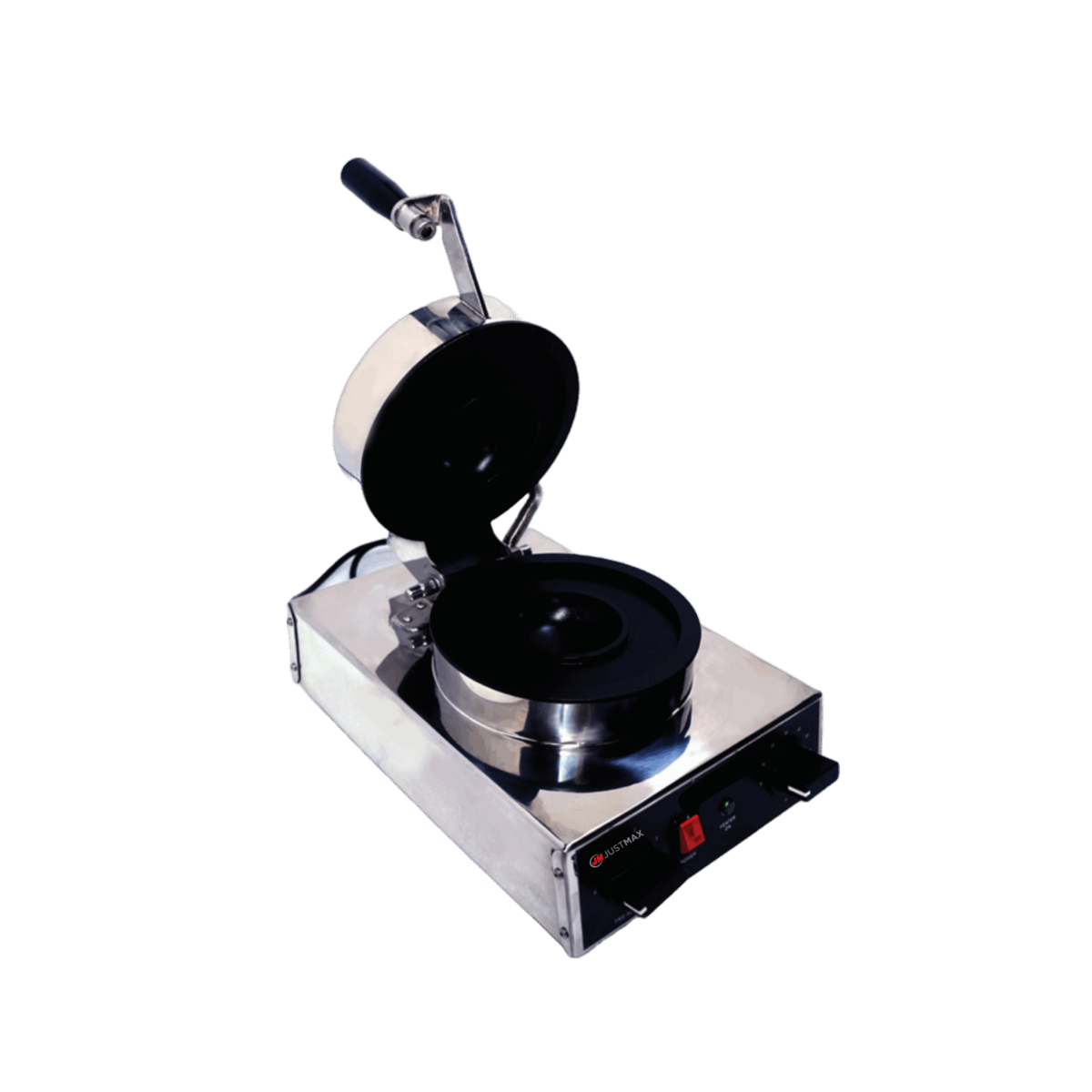
Just Max sealing unit works this way.

A patty press takes raw mince and forms it into uniform discs. The output is an uncooked component that still needs a
grill or griddle and still needs assembling into a burger afterwards. It solves portioning of the meat and nothing
else, which is genuinely useful but much narrower than buyers often assume.

A bun mould shapes dough before it is baked, so the output is a raw shaped bun. It belongs in a bakery rather than on
a service line. Interestingly, the
burger bun waffle plate sits in a fourth
category again, forming a bun shape on a multi waffle machine, which is a neat way to produce a distinctive bun
without running a bakery operation at all.

Three Machines, Three Different Outputs

Machine Acts on Output Heat
Sealing unit An assembled bun with filling inside Cooked, enclosed, crimped item ready to serve Yes
Patty press Raw mince Uniform raw discs that still need cooking and assembly No
Bun mould Unbaked dough Shaped raw bun for the oven No
Bun shaped waffle plate Batter on a waffle machine A distinctive bun form without a bakery operation Yes

Many kitchens need two of these. Very few need all of them, and almost none need all four.

Where each one sits in the process

Laid out in sequence the confusion disappears. A bun mould acts before baking. A patty press acts on raw filling
before cooking. A sealing unit acts last, on an assembled item, and cooks and closes it in the same step.

That sequencing is why the question is rarely which one, and often which two. A kitchen that bakes its own buns and
runs sealed items needs a mould and a sealing unit. A kitchen buying in buns and running sealed items with pre
portioned filling needs only the sealing unit. A conventional burger kitchen that wants consistent patties needs a
press and no sealing equipment at all.

The single most useful diagnostic is to ask where your inconsistency currently comes from. If finished burgers vary in
size, you have a portioning problem and a press or a weighed routine fixes it. If burgers arrive at customers in
pieces, you have a structural problem and only a sealed format fixes it. If your buns are ordinary and your
competitors’ are not, you have a differentiation problem and a mould or a shaped plate is the answer.

It is worth noting what none of them fix. None of these machines improves your recipe, your sourcing or your cooking
temperature. Kitchens that buy equipment hoping to solve a flavour problem are usually disappointed, because all three
of these tools address form and consistency rather than taste.

There is also a sequencing point. A burger sealing machine sits at the end of the process, so it inherits every
problem upstream of it. Buy one while your bun supply is unreliable or your fillings are inconsistent and it will
faithfully reproduce those problems in a neater shape. Fix the inputs first and the machine will do exactly what you
hoped.

Which one your kitchen actually needs

Work from your channel mix. Delivery led operations get the most from a sealing unit, because structural integrity in
transit is worth more to them than anything a press offers. Dine in operations with a grill already running usually
get more from a press, since their problem is consistency and speed on the meat rather than containment.

High volume operations frequently end up with both, using a press to portion and a sealing unit for a specific menu
line. That is a sensible endpoint but a poor starting point, because buying two machines before you know which line
sells is how equipment ends up unused in a store room. Start with the one that addresses your current bottleneck and
add later, once the menu has told you what customers repeat on.

Whichever route you take, check build and support the same way. A food grade stainless body, a properly specified
heating element where relevant, and a supplier who can provide a replacement mould in three years matter more than the
headline figure. Certification practice for commercial electrical appliances is set by the
Bureau of Indian Standards, and an unmarked heating appliance is a poor risk
whatever it costs. The full appliance range lists
specifications per model.

Diagnose the Problem Before You Buy

  • Finished burgers vary in size You have a portioning problem. A patty press or a weighed prep
    routine solves this. Sealing equipment will not.
  • Orders arrive in pieces You have a structural problem. Only a crimped, enclosed format fixes this.
    No press or mould will help.
  • Buns look like everyone else’s You have a differentiation problem. A bun mould, or a bun shaped
    plate on a multi waffle machine, is the answer.
  • The grill station is the bottleneck You have a throughput problem. Look at pressing and pre
    portioning first, before adding a new cooking format.
  • Customers say the burger tastes ordinary You do not have an equipment problem. Recipe, sourcing and
    cooking temperature drive flavour. No machine here fixes that.

Cleaning, wear parts and running life

The three differ sharply in upkeep, and this is worth knowing before you choose. A patty press is mechanical, has no
heating element, and cleans quickly, but it handles raw meat, so it carries the strictest hygiene requirement of the
three. A bun mould is the simplest of all, though it lives in a flour environment that needs its own routine.

A sealing unit is the most involved because it combines heat, pressure and food contact. Mould faces need wiping
through service and a full clean at close, or residue carbonises and starts marking the product. Its wear parts are
the mould set and the heating element, both of which should be treated as consumables on a machine running daily
rather than as components that should last forever.

Running life differs too. A press with no element and few moving parts will outlast almost anything in a commercial
kitchen. A heated sealing unit has a finite element life and a mould surface that degrades, so its economics depend on
whether replacement parts are actually available. That is a supplier question rather than a machine question, and it
is the one worth asking hardest.

None of this is difficult, but it must sit inside the closing routine rather than depend on goodwill. Whichever
machine you buy, hold your registration current through the
FSSAI portal and keep a cleaning log, because that record is what an
inspection actually examines.

Storage matters for all three. A press left on a wet surface will corrode at the joints, moulds stacked against each
other will damage their faces, and a bun mould stored in a flour environment without a cover becomes a pest risk. None
of these are dramatic failures, but they are the reason equipment that should last a decade sometimes lasts three
years.

One last piece of practical advice. Whichever of the three you buy, run it for a week before you put the resulting
item on the menu. Every machine here has a small learning curve, and the cheapest place to discover that your bun
cracks or your patties stick is in a quiet trial rather than in front of paying customers on a Friday night.

Conclusion

A burger sealing machine, a patty press and a bun mould are not competing purchases; they occupy different points in
the same process. Decide by asking what is going wrong now. Inconsistent portions point to a press, burgers arriving
in pieces point to a sealed format, and undifferentiated buns point to a mould or a shaped plate. Then judge the
supplier on parts availability rather than price.
Compare the machines available, or
describe your current bottleneck and we will tell you which of the three you
need first, including if the honest answer is none of them yet.

Categories
Uncategorized

Sealed Burger Startup Guide: Menu, SOP and Unit Economics

This sealed burger startup guide is written for the person opening a first outlet rather than the one running a chain.
The crimped format is unusually kind to new operators because it removes the skill variable from assembly, but it
still rewards planning. What follows covers a menu you can actually execute, a station routine that survives a rush,
the numbers to model before you sign a lease, and the paperwork you cannot skip.

Key Takeaways

  • Launch with four items, not fourteen. A short menu is the single biggest predictor of consistency in month one.
  • Write the station routine down before opening. Filling weights and clean points belong on a card, not in someone’s
    memory.
  • Model break even on covers per day, then check whether your location and channel mix can actually deliver it.

Designing a menu you can execute

The temptation with a new format is to show off its range. Resist it. Every extra filling adds a prep line, a storage
position and a chance to run out mid service, and none of that is visible on a menu board until it goes wrong.

A workable opening menu is four items. One chicken, one paneer or vegetable, one premium beef or mutton depending on
your market, and one sweet. That last one matters more than most operators expect, because the same machine runs a
spread filled dessert version at very healthy margin and gives you a second daypart. Build it from the
chocolate and nut spreads rather than trying to
make a filling in house at launch.

Keep the fillings dry enough to hold. Very wet gravies steam inside the seal and soften the crimp, which is the most
common reason a first attempt looks wrong. Thicken sauces more than you would for a stacked burger and the format
behaves. Our overview of
what the crimped format actually is covers the
mechanics if you are still specifying equipment.

Price the menu before you finalise it, not after. Because the mould fixes portion size, you can cost each item
exactly, which means you can check your intended price points actually deliver the margin you need. New operators
frequently set prices by looking at neighbours and then discover the numbers do not work; the crimped format lets you
avoid that entirely.

A Four Item Opening Menu That Holds Together

  • Mainstream savoury Chicken filling, thickened sauce, the volume seller. Prices the menu and carries
    most of your covers in the first quarter.
  • Vegetarian Paneer, potato or mixed vegetable, seasoned firmly. Holds its shape inside a crimped bun
    far better than in a stack.
  • Premium Beef or mutton depending on your market and local norms. Raises average ticket without
    adding a new technique to the station.
  • Sweet Chocolate or nut spread filling from the same mould set. Opens a second daypart at strong
    margin with no extra equipment.

Writing the station routine

A sealed burger station has one machine and four repeated actions, which makes it an easy place to enforce a written
routine. Do it before you open, not after your first bad shift.

The routine has three phases. Opening covers switching on and reaching temperature, checking the mould faces are clean
and unmarked, and laying out portioned fillings in the same positions every day. Service covers loading, filling to a
weighed portion, closing, timing and holding. Closing covers wiping the mould faces, a full clean of every food
contact surface, and logging it.

Two details do most of the work. Weigh the filling rather than eyeballing it, at least for the first month, because
the mould defines volume and an overfilled parcel splits at the crimp. And fix a rule for switching between savoury
and sweet, since carrying a savoury note into a chocolate item is a complaint you will only need to receive once.

Put the routine on a laminated card at the station rather than in a folder in the office. New outlets lose consistency
at handover far more often than they lose it through incompetence, and a card is what survives a staff change, a sick
day or a busy Saturday when the owner is not there. Include the filling weights, the cycle time, the switch rule and
the closing steps.

  • Reach working temperature fully before the first order rather than cooking into a warming machine.
  • Weigh fillings to a written gram figure for at least the first month of trading.
  • Wipe mould faces at every switch between savoury and sweet production.
  • Clean all food contact surfaces at close, then log the clean with a name and a time.
  • Keep one spare mould and one spare heating element if you trade daily.
  • Keep the routine on a card at the station so it survives a change of staff.

The numbers to model before you commit

Three figures decide whether the site works, and none of them is the machine price. Start with gross margin per item,
which is your menu price less bun, filling and packaging. Then set covers per day at a number you can defend from
footfall or delivery data rather than optimism. Multiply the two for daily contribution.

Against that, put your fixed monthly cost: rent, staff, power, licences and any finance. Divide fixed cost by daily
contribution and you have the covers per day you must hit to break even. This is the number to stress test. Ask what
happens at seventy percent of your forecast, because that is roughly where new outlets tend to land in their first
quarter.

Two adjustments make the model more honest. First, split the forecast by channel, because delivery and walk in behave
differently and delivery carries commission that eats directly into your margin per item. Second, phase the ramp. Very
few outlets hit steady state volume in month one, so model three months of building rather than assuming your average
from opening day.

Equipment finance is worth investigating properly before you fund a machine from working capital. Small food business
support is administered through the Ministry of MSME, and refinancing routes
for rural and semi urban enterprises run via NABARD. Both can change your
effective capital cost considerably more than a supplier discount would.

Numbers to Model Before You Sign Anything

  1. Gross margin per item: menu price less bun, filling and packaging
  2. Realistic covers per day, defended from footfall or delivery data rather than optimism
  3. Split the forecast by channel; delivery commission reduces margin per item
  4. Daily contribution: margin per item multiplied by covers per day
  5. Fixed monthly cost: rent, staff, power, licences and any finance
  6. Break even covers per day: fixed cost divided by daily contribution
  7. Rerun every figure at seventy percent of forecast and check the site still works
  8. Phase a three month ramp rather than assuming steady state from opening day

Licensing, hygiene and the paperwork you cannot skip

Every commercial food business in India needs the appropriate registration or licence, applied for through the
FSSAI licensing portal. Which tier you need depends on turnover and scale,
and getting this wrong is one of the more expensive administrative mistakes available to a new operator. The operating
standards themselves are published in the
Food Safety and Standards regulations.

Beyond the licence, three habits carry most of the compliance load at a small burger station. Keep hot holding within
a documented range and record it. Keep raw and cooked separated by both space and time, which is straightforward here
because the machine cooks and seals in one step. And keep a cleaning log, because it is the evidence an inspector will
actually ask to see.

If you are running both savoury and sweet from one machine, note your allergen position clearly on the menu. Nut based
spreads are common in dessert fillings and customers are entitled to know before they order rather than having to ask
a busy counter. Write it on the board, not just into staff training.

Finally, keep your supplier paperwork. Invoices and specifications for buns, fillings and spreads are part of
traceability, and a new outlet that cannot say where an ingredient came from has a real problem if a question is ever
raised. Filing them from day one costs nothing and reconstructing them later is close to impossible.

Insurance and local permissions sit alongside the food licence and are easy to overlook in the rush to open. Public
liability cover, any signage or shopfront permission your municipality requires, and a compliant electrical
certificate for the installation all take time to obtain. Start them in parallel with the fit out rather than in the
week before you plan to trade.

Conclusion

Treat this sealed burger startup guide as a sequence rather than a checklist. Narrow the menu, price it from real
portion costs, write the station routine, model break even on covers per day and stress test it, then get the
licensing and hygiene documentation in place before you trade. The format itself is forgiving; the business around it
is what needs the discipline.
Review the machine options or
tell us your site and forecast and we will help you size the equipment to
the covers you expect.

Categories
Uncategorized

Sealed Burger Machine Price in India: How to Judge the Cost

Anyone researching sealed burger machine price quickly finds the same problem: quoted figures vary enormously and
almost none of them explain what you are actually paying for. The number on a listing is only part of the decision.
This guide sets out what drives the difference between models, which running costs to add before you compare anything,
how to work out a payback period that survives contact with a real kitchen, and how to tell a serious vendor from a
listing.

Key Takeaways

  • Compare capacity, build and support, not headline figures. Two machines at similar cost can differ hugely in output.
  • Add buns, filling, power, labour and spares before you compare. The purchase is usually the smallest lifetime line.
  • Payback is driven by units sold per day, not by the size of the discount you negotiated.

What actually drives the cost between models

Four things separate a cheap unit from a serious one. Mould count and diameter set how many burgers you can seal per
cycle and how large each one is, which is the single biggest driver of both cost and useful output. Build quality
follows: food grade stainless construction, a properly specified heating element and a mould that stays flat under
repeated pressure all cost more and all last longer.

Third is control. Basic units give you a thermostat and a timer, while better ones hold temperature more tightly,
which shows up as consistency across a long shift rather than as a feature you notice on day one. If your complaint is
that hour six looks different from hour one, that is what you are paying for.

Fourth, and most often ignored, is who stands behind the machine. A manufacturer can supply a replacement mould or
element in year four; an importer with no parts position cannot, and that turns a cheap machine into a write off
rather than a saving. Just Max manufactures its own
sealing unit in Kerala, which is why spares and
service can be committed to in writing rather than assumed.

Four Things That Drive the Cost Difference

  • Mould capacity Count and diameter set burgers per cycle and finished item size. The largest single
    driver of both cost and useful output.
  • Build quality Food grade stainless body, specified element, a mould that stays flat. Costs more up
    front and lasts materially longer in daily service.
  • Temperature control How tightly the unit holds heat across a long shift. Shows up as consistency in
    hour six, not in the first ten units.
  • Parts and support Whether anyone can supply a mould or element in three years. A cheap machine with
    no parts position is a write off, not a saving.

The running costs to add before you compare

The purchase is a one off. Everything below repeats, and over three years the recurring lines almost always exceed the
capital cost, so a comparison that ignores them is not really a comparison at all.

Buns and filling are your dominant variable cost and scale directly with covers. Power is modest but real, since the
element holds temperature through the whole service rather than only during a cycle. Labour is lower than for a
stacked burger because the press is mechanical, and that saving is a genuine part of the case for the format. Cleaning
is a small daily labour line. Spares are the one people forget: budget for a mould and an element across the machine’s
life and you will never be caught out mid service.

If you plan to run a sweet line from the same machine, add the spread cost, though the margin on a dessert item
usually more than covers it. The
spread selection and the
wider supplies range are priced per kilogram on their own
listings, which is the right basis for a per unit filling cost.

Packaging deserves a line of its own if delivery is a real channel. A sealed parcel needs less protective packaging
than a stack, which is a small saving per unit that becomes visible at volume, and it is one of the few places where
this format is cheaper rather than merely better.

Working out a realistic payback

Payback on this category is refreshingly simple to model because the machine has one job. Take your gross margin per
sealed item, meaning the menu price less bun, filling and packaging. Multiply by units you genuinely expect to sell
per day, not the number the machine could theoretically produce. That gives daily contribution. Divide the total setup
cost, including delivery and electrical work, by that daily contribution and you have payback in days.

The sensitivity is almost entirely in units per day. Doubling volume halves the payback period; negotiating a modest
discount on the purchase barely moves it. That is why the useful question is not how cheaply you can buy but whether
your location and channel mix can actually move the volume. Delivery led kitchens tend to clear payback fastest
because the format is unusually well suited to that channel.

Stress test the result before you rely on it. Rerun the calculation at seventy percent of your forecast volume, which
is roughly where new lines tend to land in their first quarter, and see whether the purchase still makes sense. If it
only works at full forecast, it does not really work.

Operators funding a first machine should also look at institutional support. Equipment purchases by small food
businesses sometimes qualify under schemes administered through the
Ministry of MSME or refinanced via
NABARD, which changes the effective capital cost more than any supplier
negotiation will.

What Actually Moves Your Payback Period

Factor Influence
Units sold per day Dominant
Gross margin per item Strong
Labour saved per unit Moderate
Power and cleaning cost Minor
Discount on purchase Marginal

Model payback as setup cost divided by daily contribution, then rerun it at seventy percent of forecast volume.

Judging vendors and avoiding the common traps

The market has genuine manufacturers, legitimate distributors and a long tail of listings that are neither. Three
questions sort them quickly. Who made this machine? What parts can you supply in three years? What exactly does your
after sales cover, in writing?

Be wary of a quoted figure without a stated mould size, of stock photography that does not match the unit described,
and of any supplier who cannot name the material of the mould face. On the buying side, confirm what the price
includes, since delivery, electrical connection and initial spares are sometimes excluded and can meaningfully change
the total. Current figures for the Just Max unit sit on the
live product listing, which reflects the discount running at the time you look
rather than a number frozen into an article.

Finally, check the machine is built to a recognised standard. The
Bureau of Indian Standards is the reference for certification marks on
commercial electrical appliances, and an unmarked heating appliance is a poor risk in a working kitchen regardless of
what it costs.

Two further checks are worth making before money changes hands. Ask to see the machine running, in person or on video,
with the mould size you are actually buying; a supplier who cannot show you their own product working is telling you
something. And ask what the warranty specifically excludes, because moulds and heating elements are frequently carved
out of otherwise generous cover, which matters since those are the two parts most likely to need replacing.

Finally, treat delivery lead time as part of the decision rather than an afterthought. A machine that arrives six
weeks after you launched the menu has already cost you more than any discount saved, and imported units in particular
can slip. Get the committed date in writing alongside the price.

Conclusion

Judging sealed burger machine price properly means widening the frame. Compare mould capacity, build, temperature
control and the vendor’s parts position rather than headline numbers, add the recurring costs that will dwarf the
purchase over three years, and model payback from the volume you can realistically sell rather than the volume the
machine could theoretically produce. Then ask one final question of any quote: who supplies the mould in year three?
That answer separates a purchase from a write off more reliably than the number on the invoice does.
Check the current appliance listings for
specifications, or send us your expected daily covers and we will help you
size the right unit.

Categories
Uncategorized

What Is a Sealed Burger and Why Indian QSRs Are Adopting It

Ask what is a sealed burger and the short answer is a burger with its edges crimped shut, so the filling is fully
enclosed inside the bun rather than stacked between two halves. It looks a little like a large round pie and behaves
nothing like a conventional burger. That difference is why the format is spreading through delivery kitchens and quick
service menus in India, and this piece explains how it is made, what it solves, where it fits on a menu, and what to
check before you commit to it.

Key Takeaways

  • The bun is pressed and crimped closed in a heated mould, so nothing slides out during handling or delivery.
  • Portion control is exact, which makes food cost per unit predictable in a way stacking never allows.
  • The same machine runs sweet fillings, so one unit can serve both a savoury and a dessert line.

How the format is actually made

A sealing machine holds two heated moulds. A bun base goes into the lower mould, filling is added, a bun top goes on,
and the upper mould closes. Heat and pressure toast both faces while the mould rim crimps the bun edge into a
continuous seal. What comes out is a single closed parcel with a decorative crimped border and a compressed, slightly
denser bite than a stacked burger.

The whole cycle takes a couple of minutes and needs almost no knife skill, which is the operational point. A
dedicated sealing unit turns burger assembly into a
repeatable mechanical step, so output does not depend on which member of staff is on the station. Some operators also
call it a two in one machine, because the same mould set handles both savoury and sweet fillings.

Two details determine whether the finished item looks right. The first is fill volume, because the mould defines the
internal space and an overfilled parcel splits at the crimp under pressure. The second is filling moisture. A very wet
gravy steams inside the seal and softens the crimp from within, so sauces need reducing further than they would for a
stacked burger. Neither is difficult, but both need fixing on paper before service rather than discovering them during
one.

What the sealed format solves

Three problems disappear the moment the bun is closed. First, delivery integrity. A stacked burger arrives
disassembled, with sauce in the bag and salad on the lid, and that generates refunds and poor reviews. A crimped
parcel arrives intact because there is no plane for the filling to slide along.

Second, portion control. The mould defines the internal volume, so every unit carries the same filling weight. Food
cost per item becomes a fixed number rather than an average, which matters enormously once you are running promotions
on thin margins. It also makes the menu easier to cost accurately when you are pricing a new item for the first time.

Third, holding. A sealed unit retains heat and moisture noticeably longer than an open stack, so a short hold during a
rush does not ruin the product. Together these make the format a natural fit for cloud kitchens, mall kiosks and any
menu where the customer eats somewhere other than where you cooked. There is a labour benefit as well, since the press
replaces the slowest and most variable part of burger assembly.

Sealed Format Against a Conventional Stack

Criterion Sealed and crimped Conventional stack
Delivery integrity Arrives intact; nothing can slide out Filling shifts, sauce escapes, salad separates
Portion control Mould fixes internal volume, so cost per unit is exact Varies by whoever assembled it
Heat and moisture holding Enclosed parcel holds noticeably longer Dries and cools quickly once assembled
Operator skill needed Low; the press is a timed mechanical step Moderate; consistency depends on the person
Sweet menu use Same mould runs spread fillings Not a natural fit

Test your bun supply before committing. A bun that cracks at the crimp is the most common early failure.

Where it fits on an Indian menu

The format has quietly found several homes. Delivery led kitchens use it because the product survives the journey.
College canteens and food courts use it because the cycle is fast and the price per unit can be held low. Event
caterers use it because a hot item that holds for twenty minutes without collapsing is genuinely useful on a buffet
line.

The most underused application is dessert. Fill the same mould with a chocolate or nut spread and you have a hot,
enclosed sweet item that no local competitor is likely to be running. Pair the machine with the
spread range and one unit covers two menu
sections. Venues already building a broader sweet counter will find the wider
dessert appliance range worth reviewing at the same
time.

Indian vegetarian menus adapt well too, since paneer, potato and mixed vegetable fillings hold their shape inside a
sealed bun far better than they do in a stack. That makes the format easier to localise than most imported equipment
categories, and it removes the awkward problem of a vegetarian patty that falls apart when a customer picks it up.

One positioning note. The crimped shape is unfamiliar enough that it needs naming on the menu and ideally showing in a
photograph. Customers who have never seen the format do not know what they are ordering, and a single line of
description converts noticeably better than the product name alone.

Where it fits less well is worth saying too. A dine in venue with a grill already running and customers eating at the
table gains much less, because the containment advantage is worth little when the food travels three metres.
Similarly, a menu built around visible layering and height loses its main selling point once everything is enclosed.
The format is strongest wherever the food has to survive a journey and weakest wherever the customer is watching it
being built.

Portion size also deserves a thought at menu design stage. Because the mould fixes the dimensions, you cannot offer a
larger version of the same item without a second mould or a second machine. Venues that rely on a size ladder to lift
average ticket need to find that uplift somewhere else, usually in sides, a drink or a premium filling.

What to check before you add it

Two practical constraints decide whether this works in your kitchen. Bun supply comes first. The format needs a bun
that is soft enough to crimp without cracking and sturdy enough to hold filling, and not every local bakery supplies
one consistently. Test with your actual supplier before you commit to the menu, and test across a full week rather
than a single delivery, because bakery consistency is exactly what varies.

Cleaning is second. Mould faces need wiping between sweet and savoury runs, and a proper clean at the end of service,
or residue carbonises onto the surface and begins marking the product. Neither is difficult, but both need to be in
the closing routine rather than left to goodwill.

On the regulatory side, the usual duties apply: hold the correct registration through the
FSSAI licensing portal and follow standard hot holding and hygiene
practice. If you run nut based sweet fillings, state the allergen position on the menu, since guidance published under
Eat Right India is clear that customers should be able to see it
before they order rather than having to ask.

Checklist for Adding the Format

  1. Trial buns from your actual supplier across a week and confirm they crimp without cracking
  2. Fix filling weights against the mould volume and write them into the recipe card
  3. Reduce sauces further than you would for a stacked burger so the crimp does not soften
  4. Decide the sweet and savoury schedule, and the clean between them
  5. Confirm the electrical connection with an electrician before first service
  6. Add mould wiping and end of service cleaning to the closing routine
  7. Name and photograph the format on the menu; customers do not recognise it yet
  8. Check your food business registration is current and covers the service type

Conclusion

So what is a sealed burger, in commercial terms? It is a way of making burger assembly mechanical, portioning exact,
and delivery survivable, with a dessert line available from the same machine at no extra equipment cost. For Indian
quick service and delivery kitchens looking for a format that is not already on every neighbouring menu, it is one of
the easier wins available. The two things to settle before you order are a bun that crimps reliably and a filling dry
enough to hold, and both are cheap to test in a quiet week.
See the machine specification or
talk to us about your kitchen and menu mix.

Categories
Uncategorized

Dessert and Snack Equipment Beyond Waffles: A Buyer’s Guide

Most dessert menus in India are built around two machines, a waffle iron and a fountain, and then stop. That is a
missed opportunity, because the categories nobody is talking about are the ones with room left in them. This guide
covers the dessert and snack equipment that sits beyond waffles: sealed burger machines, chocolate kebab rotisseries,
crepe plates, churros extruders, pancake machines, bottle warmers and dispensing gear. For each one it sets out what
the machine is for, which venue it suits, and what to check before you buy. Everything here is manufactured or
supplied by a company that has built this category since 2002.

Key Takeaways

  • Novelty formats earn their margin from being unusual. The window is widest in categories your competitors have not
    entered.
  • Buy against a menu, not against a machine. Every unit here needs a matching consumable and a trained operator to
    make money.
  • Footprint, power draw and cleaning time decide whether a machine survives its first busy month.
  • Check the consumable supply before the equipment. A machine with no reliable mix behind it is a very expensive
    ornament.

Why the categories beyond waffles are worth entering

Waffle equipment in India is now competitive. Almost every mall kiosk and dessert cafe has an iron, mixes are widely
available, and the format no longer surprises anyone. That is fine for a reliable base line, but it is a poor place to
look for growth.

The formats in this guide are in a different position. Sealed burgers, chocolate kebabs and churros are established
elsewhere in the world and still thinly served in most Indian cities. A venue that adds one of them is not competing
on price against ten neighbours, it is offering something a customer has to come to you for. That is where dessert and
snack equipment earns a premium rather than a discount.

The commercial logic is well supported at a sector level. The Indian food processing and foodservice market has been
expanding for years, with sector overviews published by
Invest India and industry summaries from
IBEF both pointing to sustained growth in packaged
and out of home eating. Novelty formats ride that growth harder than commodity ones do.

It also helps that the dessert and snack equipment in this category tends to be visually distinctive. Customers do not
need to understand a machine to be curious about it, and curiosity at a counter converts far more reliably than a
discount does. That is a marketing asset built into the capital purchase, which is unusual and worth valuing when you
compare options.

There is a second, quieter reason to look here. Differentiated equipment is defensible in a way that recipes are not.
A competitor can copy your topping combination in a week, but they cannot copy a machine they have not bought, and the
ones in this guide have long enough lead times that a first mover keeps a genuine head start.

The risk, and it is a real one, is buying novelty for its own sake. A format only earns a premium if customers can
understand it, staff can execute it consistently, and the consumable behind it is reliably available. Novelty without
those three becomes an expensive machine gathering dust behind a counter, which is a common enough outcome that it is
worth naming before we look at individual categories.

The test to apply to anything in this guide is whether you can answer four questions without guessing. What exactly
will you sell from it, at what price, to whom, and who on your team can make it consistently at eight in the evening
on a Saturday? If any of those four is vague, the purchase is premature rather than wrong.

Sealed burger machines

A sealed burger machine presses a filled bun between two heated moulds and crimps the edge, producing a round, closed,
self contained burger with nothing able to fall out. It is a genuinely different product from a stacked burger, and it
solves problems that stacking cannot.

What the format solves

Sealed burgers travel. The filling cannot slide, the sauce cannot escape, and the shape survives a delivery bag
intact, which is why the format performs well for cloud kitchens and delivery led menus. They also portion precisely,
so food cost per unit is predictable in a way that a hand stacked burger never is. The
sealed burger unit is one of the more straightforward
machines to train a new operator on, because the press is a timed mechanical step rather than a skill.

Who it suits

Quick service outlets, delivery kitchens, mall kiosks, college canteens and event caterers who need a hot item that
holds. It also works as a dessert machine, since a sealed bun filled with a chocolate or nut spread is a strong sweet
item. Pair it with the spread range if you plan to
run both savoury and sweet from the same unit, and keep separate utensils for each.

What to check first

Bun supply is the constraint that catches people out. The format needs a bun soft enough to crimp without cracking and
firm enough to hold filling, and not every local bakery supplies that consistently. Trial your actual supplier before
you build a menu around the machine, because a bun that splits at the crimp makes the whole format look like a
failure.

Filling moisture is the second check. Very wet gravies steam inside the closed bun and soften the crimp from within,
so sauces need reducing further than they would for a stacked burger. This is quick to solve on paper and expensive to
discover during a Friday service.

Chocolate kebab and shawarma machines

This is the least contested category in the entire catalogue. A chocolate kebab machine is a vertical rotisserie that
turns a block of chocolate against a heat source, and staff shave warm chocolate off the face to order, exactly as a
doner is served. The theatre is the product.

It works because it inverts a familiar image. Guests recognise the mechanism instantly and have never seen it used for
dessert, which makes it a photograph before it is a purchase. For malls, food courts, dessert cafes and event catering
it is the closest thing available to a guaranteed queue stopper, and the
chocolate kebab equipment has almost no
published competition in the Indian market.

Operationally it is simpler than it looks. There is one consumable, the chocolate block, and one skill, shaving
cleanly and consistently. The main planning points are heat management in an already warm kitchen, a spatter guard
behind the machine, and a clear rule about how long a partially used block may stay mounted.

Position it as a topping generator rather than a standalone dessert. Shaved chocolate sold on its own in a cup rarely
justifies the counter space, but the same chocolate shaved over a waffle, a crepe or an ice cream lifts the price of
something you already sell. That is the economics that makes the machine work.

The staffing implication is worth stating plainly, because it is the reason some venues should not buy one. A machine
that earns its keep by being watched needs somebody standing at it whenever it is running. If your constraint is
people rather than counter space, a format that can be loaded and left will serve you better than one that demands an
operator, however impressive it looks.

Block supply is the other check that decides whether this is sustainable rather than merely possible. The machine runs
on one specialised consumable, so confirm lead times, minimum order quantities and storage requirements before you
build a menu around it. Unlike most equipment here there is no fallback product you can substitute in a hurry, so a
supply gap becomes a very visible piece of idle counter space.

Crepe, churros and pancake machines

These three are the workhorses of a sweet snack counter. None of them is novel, but all three are underexploited in
India relative to how well they perform.

Crepe plates

A crepe plate is a flat circular griddle held at even temperature. Plate diameter is the main variable, because it
sets both portion size and cycle time. Just Max lists an energy conscious model alongside a
larger forty centimetre plate, and the
choice between them is mostly a question of whether you are serving a queue or a table. Crepes carry very high gross
margin because the batter cost is trivial against the ticket, which makes this one of the safest purchases in the
whole category.

Churros extruders

A churros machine extrudes ridged dough directly into hot oil. The format sells extremely well as a shareable item and
pairs naturally with warm chocolate, which is why it belongs next to a fountain or dispenser rather than on its own.
The churros unit needs a dedicated fryer position and an oil
management routine, which is the main reason venues hesitate and also the main reason the category stays uncontested.
Oil is the hidden cost here: filter it, track how many batches it has done, and change it on a schedule rather than on
appearance, because tired oil is the fastest way to make a good product taste cheap.

Pancake machines

A multi cavity pancake machine produces dozens of uniform mini pancakes per cycle, which turns a skill dependent item
into a throughput item. The pancake machine is the right
answer once volume makes hand cooking the bottleneck, and it pairs with ready mixes so output stays consistent across
shifts. Uniform mini pancakes also stack and box in ways that hand poured ones do not, which opens up dessert cups and
delivery formats that would otherwise be impractical to build.

Which Snack Format Fits Which Venue

Format Strongest venue Main constraint
Sealed burger Cloud kitchen, QSR, kiosk, canteen Bun supply and mould cleaning between sweet and savoury
Chocolate kebab Mall, food court, dessert cafe, events Heat in the service area and a spatter guard
Crepe plate Hotel banquet, cafe, dessert counter Operator skill and plate cycle time
Churros extruder Mall kiosk, cinema, event catering A dedicated fryer position and oil management
Pancake machine Breakfast service, cloud kitchen, canteen Batter consistency across shifts

Formats that depend on theatre lose most of their value in a delivery only kitchen. Choose accordingly.

Holding, dispensing and finishing equipment

Cooking equipment gets the attention and holding equipment decides the guest experience. A warm dessert served with a
cold sauce is a worse product than a slightly plainer dessert served properly, and this is the cheapest category to
get right.

Bottle warmers hold sauces and spreads at pouring temperature so service is fast and the consistency does not fight
the operator. The bottle warmer range runs
from single up to quadruple capacity, and the sizing question is simply how many distinct sauces your menu carries at
once, plus one spare well for refills. A dipping station extends the same idea to dry toppings and keeps the counter
tidy.

For controlled chocolate portions, a dispensing unit is more useful than most kitchens expect, because it makes
chocolate a measured ingredient rather than a ladled guess. Together these three pieces are what separate a counter
that looks professional from one that looks improvised, and they cost a fraction of any cooking machine in this guide.

There is a plating argument as well as a speed one. A cold spread dragged out of a bottle sits on a plate as a lump
rather than a line, so presentation suffers alongside service time. For any venue whose customers photograph their
dessert before eating it, which is now most of them, holding equipment does visible work well out of proportion to
what it costs.

Sizing holding equipment is simple: count the distinct sauces live at your busiest service and add one spare well for
refills. Buying one well short is the commonest regret in this category, because it quietly caps how many topping
options you can offer at the same time.

Choosing by venue rather than by machine

The most reliable way to shortlist is to start from your venue type and work backwards, because footprint, staffing
and dwell time constrain the answer more than menu ambition does.

A mall kiosk needs a small footprint, fast cycle times and high visual appeal, which favours chocolate kebab, churros
and sealed burger units. A cloud kitchen needs items that survive delivery, which favours sealed burgers and pancake
machines and rules out anything that depends on theatre. A hotel banquet needs volume and presentation, which favours
crepe plates and larger holding equipment. A college canteen needs price per unit and speed above all.

Whatever the venue, three checks decide whether a machine survives. Confirm the electrical load against the circuit
you actually have, not the one on the drawing. Measure the counter space including clearance for the operator’s hands
and any upward opening lid. And time the cleaning routine before you buy, because a machine that takes forty minutes
to break down will quietly stop being used. The full
appliance catalogue lists specifications per model.

Staffing deserves its own thought. Some of these formats are genuinely one person stations and some are not. An open
rotisserie facing guests needs someone present whenever it is running, whereas a pancake machine can be loaded and
left on a timer. If your constraint is people rather than space, that difference matters more than any specification.

Checks Before You Buy Any Unit

  1. Confirm the electrical load against the circuit you actually have, verified by an electrician
  2. Measure counter space including operator hand clearance and any upward opening lid
  3. Time the full cleaning routine; anything over thirty minutes tends to get skipped
  4. Identify and price the consumable before the machine, not after it arrives
  5. Confirm the spares position for that specific model, not for the range in general
  6. Ask whether you are buying from the manufacturer or from a reseller
  7. Get the after sales service terms in writing rather than as a verbal assurance
  8. Decide whether the station needs a dedicated operator whenever it is running

Compliance, standards and consumable supply

Two things need to be in place before a new machine earns anything: the paperwork and the consumable behind it.

On paperwork, any commercial food operation in India needs the appropriate registration or licence via the
FSSAI portal, and the applicable operating standards are published in the
Food Safety and Standards regulations. Equipment carrying electrical heating elements should also match Indian standards practice; the
Bureau of Indian Standards is the reference point for the certification marks to
look for on any commercial appliance.

On consumables, the failure pattern is consistent. A venue buys an interesting machine, runs it on whatever mix is
available locally, gets inconsistent output, and blames the equipment. Sort the supply line first. Just Max
manufactures its own premixes and spreads, which is the reason equipment and consumable performance can be matched
rather than guessed, and buyers ordering at volume should read the
bulk buying guide
before placing a first order.

Storage is the part of consumable planning that gets skipped. Bulk mixes need a dry, cool, pest secure position and
stock rotation that somebody actually owns, and spreads need temperature appropriate storage away from the heat the
machines throw out. A venue that buys at volume without solving storage simply converts a purchasing saving into
spoilage.

Allergen labelling is the compliance detail most often missed on novelty formats. Nut based spreads are common in
dessert fillings and toppings, and a customer is entitled to know before ordering. Put the position on the menu rather
than leaving it to a verbal answer at a busy counter.

Compliance and Supply Basics Before Launch

  • Licensing Hold the correct FSSAI registration or licence for the premises and service type. The
    licence attaches to the business and the site, not to individual machines.
  • Equipment standards Look for recognised certification marks on any electrically heated appliance.
    Bureau of Indian Standards practice is the reference point for commercial equipment.
  • Consumable supply Lock the mix, spread or dough supply down before the equipment arrives.
    Inconsistent output is far more often a consumable problem than a machine problem.
  • Allergen labelling State nut, milk, wheat and soya positions on the menu itself. Novelty dessert
    fillings carry allergens customers do not expect.
  • Operator training Brief every person who may cover the station, not only the regular operator.
    Novelty formats fail on inconsistent execution more often than on weak demand.

Buying, service and support

Equipment in this category is bought once and lived with for years, so the support model matters as much as the
specification. Ask three questions of any supplier before you commit.

First, are they the manufacturer or a reseller? A manufacturer can supply wear parts years later and can tell you why
a machine behaves the way it does. Second, what is the spares position for the specific model, since heating elements,
motors and moulds are consumables on any machine running daily. Third, what does after sales service actually cover,
and is it written down rather than promised?

Two further practical points belong in the same conversation. Ask to see the machine running with the configuration
you intend to buy, in person or on video, because a supplier who cannot show you their own product working is telling
you something useful. And treat the committed delivery date as part of the price, since a machine that arrives six
weeks after you launched the menu has already cost more than any discount saved. Imported units in particular slip,
and a written date is worth more than an optimistic verbal one.

Just Max manufactures from a plant in Kerala and supplies hospitality, entertainment and retail operators in India and
internationally through appointed partners, which is set out on the
partner network page. For a specification conversation about a
particular venue, contact the team with your footprint, your circuit rating
and your intended menu.

One closing thought on sequencing. The temptation is to buy the most exciting machine first and work out the rest
later. The venues that do well with this category do the opposite: they fix the menu, then the consumable, then the
staffing, and buy the machine last, once all three are settled. It is a slower route to a new format and a
considerably more profitable one.

If you are early in that process and unsure which category fits, start by walking your own service at peak and
identifying where the queue forms and what customers ask for that you cannot currently make. Those two observations
narrow this guide to one or two options far faster than any specification comparison will, and they cost nothing but
an hour of attention on a busy evening.

Bought that way, dessert and snack equipment stops being a gamble on novelty and becomes a considered response to
something you have already observed about your own customers. That is the difference between the venues where these
machines earn steadily for years and the ones where they end up advertised second hand within eighteen months.

Conclusion

The honest summary is that the crowded part of this market is waffles and the opportunity is everything next to it.
Sealed burgers travel, chocolate kebabs draw a crowd, crepes and churros carry margin, and pancake machines remove a
bottleneck. Choosing well means matching dessert and snack equipment to your venue shape, confirming power and
cleaning realities before purchase, and locking down the consumable supply at the same time as the machine. Above all,
buy against a decided menu rather than against an interesting machine, and give the format a quiet trial week before
it meets a Saturday queue. Browse the full appliance range or
send us your venue details for a shortlist built around your counter rather
than our catalogue.


Categories
Uncategorized

Commercial Chocolate Fountains: The Complete Buyer’s Guide

A chocolate fountain is one of the few pieces of dessert equipment that pays for itself twice, once in margin and once
in attention. It draws a queue, it photographs well, and it turns a cheap ingredient into a premium ticket item. It
also punishes bad buying decisions faster than almost anything else on a dessert counter. This guide covers what the
machine actually does, how to size one, what to pour into it, what it costs to run across a season, and what Indian
food safety rules expect from you.
Just Max has manufactured this category since 2002, so the guidance here
reflects installed machines rather than catalogue theory.

Key Takeaways

  • Size to your busiest realistic service window, not your average one. Undersizing shows up as a queue and a cold
    basin.
  • The chocolate matters more than the machine. Fountain grade product with the right fat content flows; ordinary
    couverture seizes.
  • Budget for consumables, labour and cleaning time, not just the purchase. Those three decide whether the unit is
    profitable.
  • Public dessert service in India carries real hygiene duties. Register, document your cleaning, and train whoever
    runs the counter.

What a commercial fountain actually does

Strip away the theatre and a chocolate fountain is a heated basin, a vertical auger, and a set of tiers. Melted
chocolate sits in the basin, the auger lifts it up the central column, and it falls back down over the tiers in a
continuous curtain. Everything that makes the difference between a beautiful curtain and a stuttering dribble happens
in three variables: temperature, viscosity and flow rate. Get those right and the unit runs unattended for hours. Get
them wrong and you spend the evening apologising.

That is why buying decisions should start with the service you want to run rather than with the shape of the machine.
A boutique cafe adding a weekend dessert feature has a completely different problem from a banquet hall serving eight
hundred covers. Both can be solved, but not by the same unit. The full
range of appliances is organised around exactly that
distinction.

It is worth being clear about what the machine is not. A chocolate fountain is not a melting device. It is designed to
hold already melted product at a working temperature and keep it moving, and asking it to melt solid chocolate from
cold is the fastest way to scorch the base and produce a burnt note that never leaves the batch. Melting happens
somewhere else, in a bain marie or a dedicated melter, and the basin receives product that is already fluid.

The auger and basin, and why they set your limits

The auger determines how much chocolate can be in motion at once, and the basin determines how long you can run before
a refill. A larger basin is not simply better. More chocolate in the basin means more product at risk if service is
cancelled, and a longer warm up before the first guest. Think in terms of your service window. If you run ninety
minutes of heavy dessert service, you want a basin that comfortably covers ninety minutes plus a margin, not one that
covers four hours.

Auger design also explains why some units tolerate a thicker product than others. A larger diameter auger moves more
volume per rotation and copes better with a slightly heavier chocolate, which is one reason the bigger machines in a
range feel more forgiving in practice than their specifications suggest.

Viscosity is the variable most buyers ignore

Chocolate flows because of fat, not because of heat alone. Push the temperature up to compensate for a product that is
too thick and you scorch it. The correct answer is a product formulated to fall in a sheet at normal working
temperature. This is the single most common cause of a disappointing first event, and it is an ingredient problem
wearing an equipment costume.

The diagnostic is simple. If the curtain looks thin and ragged, the product is usually too cool or too thick. If it
looks glossy but tastes flat and slightly burnt, the product has been held too hot for too long. If the sheet breaks
into strands halfway down, check the basin level before anything else, because a falling level starves the auger.

The Three Variables That Control Fountain Flow

  • Temperature Holds the chocolate at working consistency in the basin and up the auger. Too low and
    the sheet thickens and splits. Too high and the product scorches and tastes flat.
  • Viscosity Set by fat content in the product, not by the machine. This is the usual culprit behind a
    disappointing first event. Fix it with the right chocolate, not more heat.
  • Flow rate How much chocolate the auger keeps in motion against basin level. A falling basin breaks
    the curtain before anything else does. Top up early rather than late.

The four Just Max fountain families

The catalogue splits into four families. They are not quality tiers. They are different service shapes, and choosing
across families is a bigger decision than choosing a size within one. A venue that gets the family right and the size
slightly wrong will still have a workable machine. A venue that buys the wrong family will not.

Standard tiers

The classic conical silhouette, with chocolate falling evenly around a central column. It is the most forgiving family
to operate and the easiest to clean, which matters when the person breaking it down at midnight is not the person who
bought it. The
standard tier models run
from the compact SQ1 up to the SQ3, which suits boutique cafes, small private functions and dessert counters that need
presence without a large footprint.

Cascade tiers

Cascade units break the curtain into distinct falling steps, which reads as more dramatic under lights and gives
guests more surface to dip against. The
cascade selection covers SQ1
through SQ3 plus a leaf profile that is popular for weddings. Cascades reward good chocolate and punish thin product,
because every break in the fall is a chance for the sheet to split. They also take slightly longer to clean, since
there are more surfaces for product to set on.

Multi flow tiers

Multi flow units are built for continuous service at volume. Instead of one curtain they present several flow paths,
so more guests can dip simultaneously without crowding a single face. The
multi flow models scale
from SQ2 up to SQ6, including a tall SQ4 variant for venues where the unit needs to be seen across a room. This is the
family for theme parks, malls, large banquets and any counter with a genuine queue. The practical advantage is queue
geometry: three people can serve themselves at once without anyone reaching across anyone else.

Tap dispensing

The CF15 tap unit is the outlier and often the
smartest buy. It holds chocolate at temperature and dispenses on demand through a tap rather than running an open
curtain. There is no spectacle, but there is also almost no waste, no exposure and far less cleaning. For kitchens
that want warm chocolate as an ingredient rather than as a show, it is usually the correct answer, and many venues
eventually own one of these alongside an open unit.

Sizing to guest count and service window

Sizing is where most money is lost. The instinct is to buy for the biggest event you can imagine, which leaves a large
unit running half empty at every normal service, wasting chocolate and warm up time. The better method is to size for
your busiest realistic window and accept that a genuinely exceptional booking can be served with two smaller units
placed apart, which also shortens queues.

Work through three numbers before you shortlist anything. First, peak concurrent guests, meaning how many people will
be at the counter in the same ten minutes rather than across the whole night. Second, service duration, because a two
hour window needs refill planning that a forty minute window does not. Third, whether the fountain is a self service
feature or staffed, since a staffed counter moves roughly twice as many covers through the same footprint.

As a planning rule rather than a specification, treat compact standard units as suited to intimate counters, mid range
standard and cascade units as suited to weddings and corporate functions, and multi flow units as the only sensible
choice where a queue is expected to persist. Confirm the figures for any specific model against its own product page
before you commit, because basin capacity and tier count vary within each family.

One sizing mistake deserves its own warning. Buying a large unit and running it below its minimum working level does
not give you a small fountain, it gives you a broken looking one. Below a certain basin level the auger cannot sustain
an even sheet, so the curtain stutters and the machine reads as faulty to every guest who sees it. If your normal
service is small and your occasional service is large, two appropriately sized units genuinely beat one oversized one.

A final point on sizing that applies to every family. A chocolate fountain is judged by guests on whether the curtain
looks full, not on how large the machine is. A modest unit running a perfect sheet reads as premium; a large unit
running a broken one reads as neglected. If you are choosing between a bigger machine at the edge of your budget and a
smaller one you can afford to run properly with good chocolate, take the smaller one every time. The same logic
applies to hire: a rented chocolate fountain that arrives without enough product to fill it properly will disappoint
more than no dessert feature at all.

Sizing Guidance by Service Shape

Service shape Typical venue Suited family Staffing
Intimate counter Boutique cafe, small private function Compact standard Often self service
Mid size function Wedding, corporate event, hotel banquet Standard or cascade Staffed at peak
Persistent queue Theme park, mall kiosk, large banquet Multi flow Dedicated attendant
Ingredient use Commercial kitchen, plated dessert service Tap dispensing Kitchen staff only

Two smaller units placed apart usually beat one oversized unit: shorter queues, less chocolate at risk, faster warm
up.

Chocolate, consumables and the equipment around the unit

The machine is the smaller half of the system. What you pour matters more, and so does the equipment that gets
chocolate into and out of the basin.

Use a product formulated for fountains. It carries enough cocoa butter to fall in a sheet without thinning agents, and
it holds at working temperature without scorching. Ordinary bar chocolate and most standard couverture will need oil
added to flow, which dulls the taste and leaves a greasy mouthfeel that guests notice even when they cannot name it.
The saving on product is almost always smaller than the cost of a dessert counter that underwhelms.

Around the basin, two accessories change the operating experience more than anything else. A
filling pump moves melted chocolate from a
melting vessel into the basin without ladles, which cuts refill time and spillage during service. A
chocolate dispenser gives you controlled portions for
plated desserts and takeaway, so the open unit is not the only way chocolate reaches a guest. Many venues end up
running both, using the fountain as the feature and the dispenser as the workhorse.

If the counter also serves dry toppings and sauces, a
dipping station keeps the accompaniments at the right
temperature and stops the surround becoming a mess of open bowls. Kitchens already building a broader dessert counter
should read our
catering equipment checklist
alongside this guide. Dippables matter too: firm fruit, marshmallow, biscuit and cake cubes all work, while anything
very wet or very oily will contaminate the basin and should be kept off the counter entirely.

What ownership really costs across a season

A chocolate fountain has four cost lines and only one of them appears on the invoice. Buyers who model all four make
better decisions and quote events more accurately.

The machine itself is a capital cost spread across its life, and these units are built to run for many years, so the
per event share of the purchase falls quickly once you are past the first season. Chocolate is the recurring cost and
the one that scales directly with service. Labour is the cost most operators forget, covering setup, attending the
counter and breakdown. Cleaning is the fourth, and it is mostly labour plus a small consumables line.

Set against those four lines, the revenue case is usually strong. A chocolate fountain lets you charge a dessert price
for an ingredient cost measured in rupees per portion, and it does so while drawing attention that no other item on
the counter can buy. That is why the category survives every fashion cycle in dessert catering.

The useful discipline is to build a per event cost sheet rather than a per unit one. Take the purchase, divide by a
conservative number of events across the machine’s life, then add chocolate for that event, staff hours at your real
rate, and a fixed allowance for cleaning. Event caterers who do this find they have been underquoting the labour and
overquoting the chocolate. Note that figures on this page are planning frameworks, not price quotes. Current pricing
for any specific model sits on the product listings, which carry live
discounts.

There is a fifth line that is easy to miss, which is waste. Product left in a basin at the end of service that cannot
be recovered is a real cost, and it scales with basin size rather than with covers served. This is another argument
for sizing tightly, and a strong argument for tap dispensing wherever the spectacle is not earning revenue.

For venues weighing whether to own at all, the honest answer depends on frequency. Below roughly one event a month,
hiring usually wins. Above that, ownership starts to look better, and above weekly service it is rarely close.
Government support for food processing and small enterprise capital purchases is worth checking too, since schemes
listed by the Ministry of Food Processing Industries and the
Ministry of MSME periodically cover equipment of this type.

The Cost Lines of Fountain Ownership

  • Capital The purchase, spread across a conservative event count for the machine’s life. Falls
    quickly per event once you are past the first season.
  • Chocolate The recurring cost, scaling directly with covers served. Fountain grade product costs
    more per kilo and wastes far less than thinned alternatives.
  • Labour Setup, attending the counter during service, and breakdown. The line most operators
    underquote. Cost it at your real hourly rate.
  • Cleaning Same night strip down, wash and reassembly, plus consumables. Budget a fixed allowance per
    event. Deferring it costs more, not less.
  • Unrecoverable waste Product left in the basin that hygiene rules will not let you reuse. Scales
    with basin size rather than covers, which is another argument for sizing tightly.

Running the unit: service SOP, cleaning and spares

Reliability is a process, not a product feature. Venues that run these machines for a decade all do roughly the same
five things.

Before service, melt separately and fill the basin already warm, because melting in the basin is slow and risks
scorching the base. Run the auger briefly before guests arrive to confirm the curtain is even. During service, top up
before the basin drops rather than after, since a low basin is what causes the flow to break. After service, strip and
wash every part that touched chocolate on the same night, not the next morning, because set chocolate is far harder to
remove and forces abrasive cleaning that shortens the life of the finish.

Keep a small spares position. Augers, motors and heating elements are wear parts on any machine that runs weekly, and
a venue that keeps one spare set turns a dead evening into a ten minute swap. Just Max supplies post sales service on
its own units, which is worth confirming in writing for whichever model you buy. Readers choosing between models
should also see
how to pick a unit for a specific event.

One more habit separates professional operations from amateur ones: a written station card. It names the model, the
product, the working temperature, the refill trigger level and the cleaning steps, and it lives at the counter.
Machines fail on handover far more often than they fail mechanically, and a card is what survives a change of staff.

  • Melt off the machine, fill warm, and confirm an even curtain before the first guest.
  • Top up early rather than late; a falling basin level is the usual cause of a broken sheet.
  • Strip and wash on the night of service, never the following morning.
  • Hold one spare auger and one spare element if you run weekly or more.
  • Log every clean. It is your evidence if a hygiene inspection ever asks.
  • Keep a station card at the counter so the routine survives a change of staff.

Food safety and compliance for public dessert service

An open chocolate fountain is, in regulatory terms, unpackaged ready to eat food on public display with shared
utensils. That is a higher risk category than a sealed dessert, and it deserves more than an afterthought.

Any commercial food business in India needs the appropriate registration or licence, obtained through the
FSSAI licensing portal, and the operating standards that apply are set out
in the
Food Safety and Standards regulations. The practical obligations that matter at a dessert counter are straightforward: hold product at a documented
temperature, prevent guests reintroducing used skewers into the flow, provide single use dipping tools, keep a sneeze
guard or adequate distance where the layout allows, and record your cleaning schedule.

Two operational habits carry most of the risk reduction. First, never return chocolate that has been in contact with
guests to a storage vessel for reuse, however clean it looks. Second, brief whoever staffs the counter, because the
failure mode is almost always a well meaning member of staff topping up a basin with recovered product. General
guidance from the
World Health Organization on food safety is
a useful training primer for teams that have not covered this formally.

Allergens deserve a specific mention. Chocolate products commonly carry milk and soya, and dippables frequently
introduce nuts, wheat and egg. A single shared basin means cross contact is effectively guaranteed, so the honest
position is to state clearly that the counter is not suitable for guests with those allergies rather than implying a
separation you cannot deliver. Consumer facing material published under
Eat Right India is a reasonable basis for staff briefing notes.

Hygiene Routine for Open Dessert Service

  1. Hold the appropriate FSSAI registration or licence for the premises and the service type
  2. Record basin holding temperature at the start of service and at intervals through it
  3. Provide single use dipping tools and remove any route for a used skewer to re enter the flow
  4. Fit a guard, or design the counter layout so guests cannot lean over the open curtain
  5. Never return guest contact chocolate to storage or to the next service, whatever it looks like
  6. State the allergen position plainly; a shared basin cannot offer separation
  7. Strip, wash and dry every chocolate contact part on the night of service
  8. Log each clean with a date, a time and the name of the person who did it
  9. Brief every member of staff who may cover the counter, not only the regular operator

Custom builds and centrepiece installations

Beyond the catalogue sit the pieces that are commissioned rather than bought. Just Max has built wall mounted
installations and oversized centrepieces for venues where the dessert feature is part of the architecture rather than
a machine on a table, including a wall fountain in Macau and a gold finished centrepiece for a palace venue in Dubai.

Commissioned work changes the conversation from model selection to engineering. Flow path, structural mounting,
serviceability behind a fixed facade, cleaning access and the finish specification all have to be designed together,
and lead times are measured in months rather than days. The same manufacturing capability supplies hospitality and
entertainment operators including hotel groups and theme park venues.

If you are specifying a permanent installation, start the conversation early and bring your service model with you.
The most common failure in commissioned dessert features is a beautiful object that nobody can clean in under an hour.
Ask, at design stage, who will strip it, how long that will take, and whether the parts that need weekly attention can
be reached without dismantling the surround.

For most venues, though, a commissioned piece is the wrong answer and a catalogue chocolate fountain is the right one.
A standard machine can be moved when the room layout changes, replaced when it wears out, and serviced with parts that
already exist. A fixed installation gives you drama and takes away every one of those options, so it should be a
deliberate choice rather than an upgrade you drift into.

Conclusion

Buying well in this category comes down to honesty about your own service. Size to the window you actually run, spend
properly on fountain grade product, model the labour and cleaning alongside the purchase, and treat hygiene as a
documented routine rather than a good intention. Do those four things and a chocolate fountain becomes one of the most
dependable margin lines on a dessert menu.
Browse the appliance catalogue to compare families and sizes, or
talk to the team with your guest numbers and service window and ask for a
sizing recommendation before you commit.

Categories
Uncategorized

Best Chocolate for Chocolate Fountains: Liquid Chocolate Buying Guide

A chocolate fountain only looks as good as the chocolate running through it. Choosing the right
liquid chocolate for fountains
is what separates a smooth, glossy cascade from a clogged pump and a frustrated event team. Whether you run a
standard fountain, a
cascade model, or a large
multi flow fountain, this guide explains what fountain grade chocolate actually means, how to buy it in bulk, and how to keep it flowing
all event long.

Key Takeaways

  • Fountain grade chocolate needs enough cocoa butter to stay fluid, unlike baking chocolate or chips.

  • Couverture chocolate performs best in a fountain, but well formulated compound chocolate is a practical, lower
    cost option for daily commercial use.

  • Consistent viscosity, not just flavor, determines whether your fountain flows evenly or clogs mid event.

What Makes Chocolate Fountain Grade

Not every chocolate bar or chip is built to flow. Fountain grade chocolate is formulated with a higher percentage of
cocoa butter, the natural fat that keeps chocolate fluid at a stable serving temperature. Standard baking chocolate is
designed to hold its shape, so it seizes and thickens the moment it hits a
chocolate fountain
auger. When you shop the
standard fountain range
or a
cascade fountain
on Justmax, always pair the machine with chocolate rated specifically for fountain use rather than a general purpose
bar. This single decision affects presentation more than almost any other purchase you make for the event.

Fountain grade formulations are built around three properties working together: enough fat content to stay liquid, a
melting point suited to room temperature service, and a smooth particle structure that will not clog the pump. Cheaper
substitutes often fail on one of these even when the flavor tastes fine off the spoon. A chocolate that eats well at
room temperature can still separate or thicken once it circulates through a
multi flow fountain
for two or three hours, so it is worth testing any new supplier on a small batch before committing to a full event
order. Ask the supplier directly whether the product is formulated for fountains rather than assuming a general
purpose couverture will behave the same way once it is pumped continuously.

Couverture vs Compound Chocolate for Fountains

Real
couverture chocolate
contains a high proportion of pure cocoa butter and delivers the richest flavor and glossiest finish, but it must be
tempered
correctly to hold its sheen. Compound chocolate replaces some cocoa butter with vegetable fat, which trades a little
flavor depth for a chocolate that flows reliably without tempering, making it a practical choice for high volume
commercial use. Many caterers running a
multi flow fountain
at a busy venue prefer compound chocolate specifically because it holds consistent viscosity for hours, as covered in
our guide on
how to choose the right chocolate fountain for your event.

Neither option is universally right. A premium hotel banquet or a wedding reception often justifies the extra handling
that
couverture chocolate
demands, because guests notice the difference in gloss and taste. A busy street food counter or a theme park kiosk
running a
chocolate fountain
for hours at a stretch usually gets more value from compound chocolate, since it holds its texture without the
operator monitoring temperature every few minutes. Many venues keep both on hand and choose based on the event, rather
than committing one way for every booking.

Multi flow chocolate fountain suited to high volume commercial service

Infographic comparing couverture and compound chocolate for chocolate fountain use

Viscosity, Tempering and Flow Consistency

Viscosity, how thick or thin the melted chocolate is, is the real variable that determines whether a
chocolate dispenser
or fountain runs smoothly. Chocolate that is too thick strains the
chocolate filling pump
and produces an uneven cascade, while chocolate that is too thin looks watery and separates. Most fountain grade
chocolate is designed to be thinned slightly with a neutral oil rather than water, since water causes chocolate to
seize. If you already own a
CF15 tap chocolate fountain, check the manufacturer guidance on oil ratio before your first commercial run, and always test viscosity at serving
temperature rather than straight out of the packaging.

Temperature control matters just as much as the recipe. Chocolate that is held too hot loses its temper and turns dull
or streaky, while chocolate that cools even slightly thickens enough to slow the cascade. Most commercial fountains
hold a steady serving range, but the chocolate itself should be brought up to that range gradually rather than melted
on high heat and poured in immediately. Rushing this step is one of the most common reasons a fountain that worked
perfectly the week before suddenly struggles at a new event.

Sourcing Chocolate in Bulk for Commercial Use

Event caterers and hotels running fountains regularly should think about chocolate sourcing the same way they think
about
wholesale catering premix
or
bulk premix ordering: buying in volume lowers cost per event and keeps supply predictable. Look for a liquid chocolate supplier who can
confirm cocoa butter content on request, ships in fountain ready packaging, and can support the batch sizes your venue
actually uses. Storage matters too. Keep bulk chocolate in a cool, dry space away from strong odors, since chocolate
absorbs surrounding smells easily, a basic
food safety
principle worth building into your kitchen SOP alongside guidance from bodies like
FHRAI.

Before committing to a supplier, ask for a sample batch large enough to run through your actual equipment, not just a
taste sample. Confirm shelf life once opened, whether the product needs refrigeration in transit, and how consistent
the viscosity is from batch to batch. Suppliers who cannot answer these questions directly are a risk for any venue
running fountains on a regular schedule, since a single inconsistent batch can affect an entire event.

Cascade chocolate fountain with smooth flowing tempered chocolate

Checklist infographic for buying fountain grade liquid chocolate

Matching Chocolate to Your Justmax Equipment

The right chocolate depends partly on which machine you run it through. A small
standard fountain
for an intimate gathering can handle a slightly thicker pour than a tall
multi flow fountain
feeding several tiers at once. If your setup uses a separate
chocolate dispenser
for topping stations rather than a full fountain, as outlined in our
catering equipment checklist, you have more flexibility on viscosity since there is no multi tier cascade to maintain. Pair your chocolate choice
with the right
chocolate filling pump
capacity and, for events also serving warm beverages or sauces, complementary gear like a
bottle warmer
rounds out a complete dessert station. For guidance tailored to your exact setup,
contact the Justmax team.

It helps to think of chocolate and equipment as one purchasing decision rather than two separate ones. A venue
building out a full dessert station, similar to the setups covered in our
catering equipment checklist, should plan chocolate sourcing at the same time as ordering
waffle plates
or a
double multi waffle
machine, since chocolate is often the ingredient that ties the whole counter together. Ordering chocolate as an
afterthought, once the equipment has already arrived, is a common reason new dessert stations underperform in their
first few events.

Conclusion

Choosing the right
liquid chocolate for fountains
is not just a flavor decision, it is an operational one. Cocoa butter content, tempering, and viscosity together
decide whether your fountain runs beautifully or needs constant troubleshooting mid event. Start with fountain grade
chocolate rated for your machine, buy in a volume that matches your event calendar, and store it properly between
uses. Ready to pair the right chocolate with the right equipment?
Browse the Justmax shop or
get in touch for a recommendation
suited to your venue. A little extra care at the sourcing stage pays off in every event that follows.

DEALERSHIP ENQUIRY