Commercial Pancake Machine: When Volume Justifies Automation
A pancake machine is not a labour saving gadget; it is a bottleneck removal tool, and that distinction decides whether
buying one makes sense. If pancakes are a small side line, a griddle and a skilled hand are fine. If your breakfast
service or dessert counter is losing covers because someone is cooking four pancakes at a time, automation changes the
arithmetic entirely. This guide covers the point at which that switch happens and what has to be in place for it to
work.
Key Takeaways
- Automate when hand cooking is the constraint on covers served, not simply when volume feels high.
- A multi cavity plate turns a skill dependent task into a timed one, so output stops depending on who is rostered.
- Batter consistency is the real dependency. Automation amplifies an inconsistent mix rather than fixing it.
How a multi cavity machine changes the maths
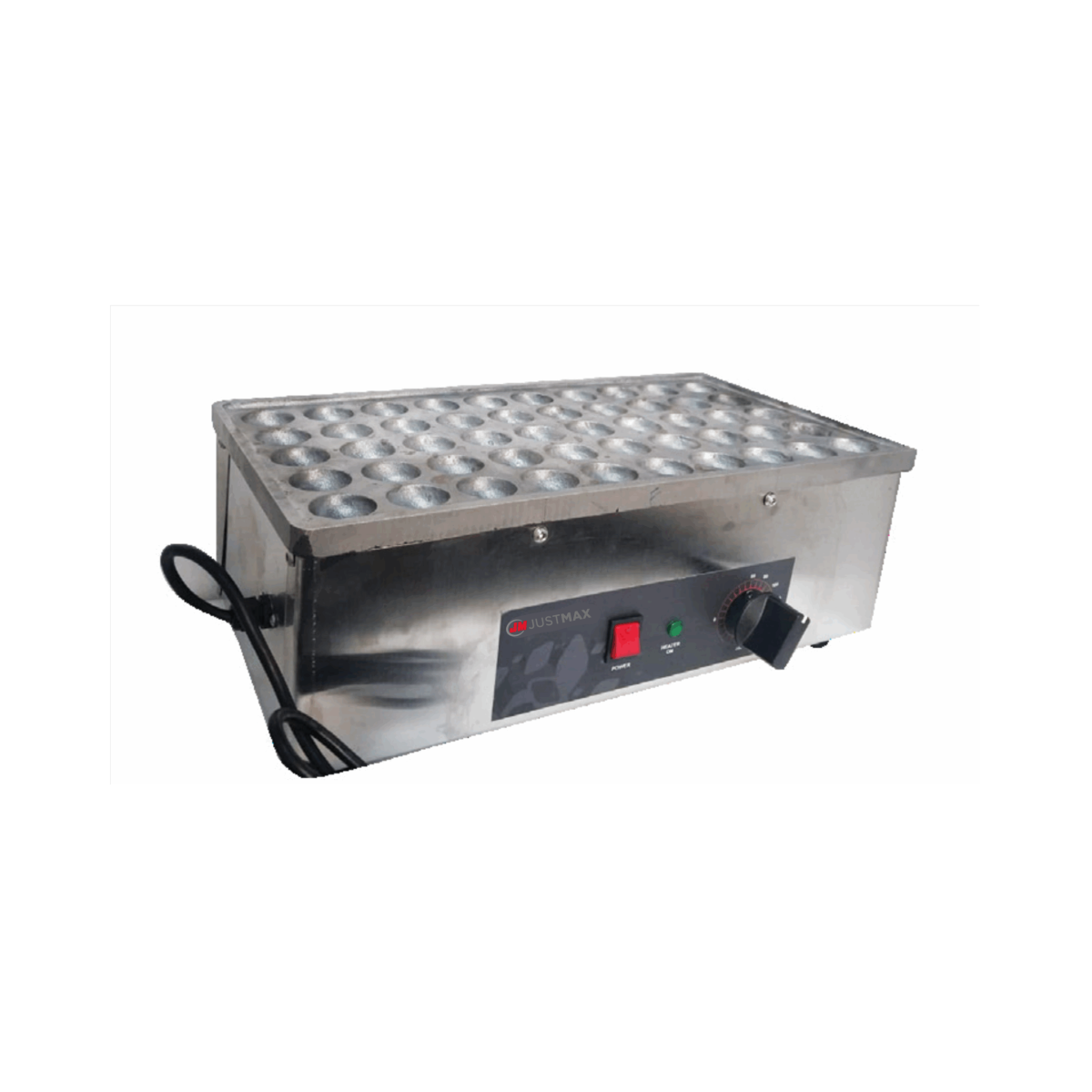
A commercial unit is a heated plate with dozens of shallow round cavities. Batter is filled across the plate, cooked
on a timer, and released as a tray of uniform mini pancakes. Instead of cooking in ones and fours, you cook in
batches, and the operator’s job shifts from technique to timing.
That shift is where the value sits. Hand cooking scales linearly with staff hours and varies with skill, so a busy
service either slows down or gets inconsistent. A
multi cavity machine produces the same output per cycle
regardless of who is on the station, which is what makes it possible to promise a service speed to a delivery platform
or a banquet client.
The output is also a different product. Uniform mini pancakes stack, portion and plate in ways that irregular hand
poured ones do not, which opens up formats like stacked cups, dessert boxes and shareable platters that are hard to
build otherwise. Several venues find the format change matters more commercially than the speed gain.
It is worth being precise about what a pancake machine does not do. It does not improve flavour, it does not reduce
your ingredient cost, and it does not remove the need for a trained operator. What it removes is variance and waiting.
If your current problem is that pancakes taste inconsistent because the recipe drifts, or that food cost is too high,
this purchase will not help and something upstream needs fixing first.
Hand Cooking Against Batch Production
-
Output Hand cooking scales with staff hours. Batch production scales with cycle time. A busy
service either slows down or loses consistency when cooking one at a time. -
Consistency Hand results vary by operator. Cavity results vary only with batter. This is what lets
you promise a service speed and a plate appearance. -
Operator role Technique becomes timing, which is far quicker to train. Output stops depending on
who happens to be rostered that shift. -
Product format Uniform mini pancakes stack, portion and box predictably. Opens up cups, dessert
boxes and platters that irregular pancakes cannot support.
When automation actually pays
The honest test is whether hand cooking is currently costing you covers. Three signals suggest it is: orders queue
behind the griddle at peak, pancake quality visibly varies between shifts, or you have stopped promoting a pancake
item because you cannot execute it at volume.
If none of those are true, a machine will sit idle and you should spend the money elsewhere. If two or three are true,
the calculation is straightforward. Estimate covers you currently turn away or slow down at peak, multiply by gross
margin per item, and compare with the setup cost. Most venues that genuinely have the bottleneck find the payback
period is short.
Be careful not to count the same benefit twice. The machine removes a cooking constraint, but if your real constraint
is order taking, packing or seating, automating the griddle will not release any covers at all. Walk your own service
at peak and identify where the queue actually forms before you buy anything.
Sector level support for equipment purchases by small food businesses is worth checking before funding from working
capital, with schemes administered through the Ministry of MSME and food
processing specific programmes listed by the
Ministry of Food Processing Industries.
Batter consistency is the real dependency
Automation removes operator variation from cooking and does nothing about variation in the batter. In fact it makes
batter problems more obvious, because dozens of identical cavities reveal inconsistency that irregular hand poured
pancakes hide.
Batter that is too thin spreads and produces thin, pale results; too thick and cavities fill unevenly and centres stay
raw. The variable is usually not the recipe but who mixed it and how long ago. This is precisely why high volume
kitchens standardise on a ready mix: it removes the person from the equation. Just Max manufactures its own
waffle and pancake mixes in vanilla, chocolate
and red velvet, and our note on
how Indian cafes hold pancake consistency
covers the practical routine.
Whichever route you take, fix a written water or milk ratio and a resting time, and measure rather than judging by
eye. An automated machine running well mixed batter is genuinely hands off; the same machine running guesswork
produces sixty identical mistakes per cycle instead of four different ones.
Measure by weight rather than by volume where you can. A cup of flour varies considerably depending on how it was
scooped, and that variation is exactly what a multi cavity plate makes visible. Weighing takes no longer once it is
the habit and removes a whole category of inconsistency from the station.
Resting time is the detail most often skipped. Batter that goes onto the plate immediately after mixing behaves
differently from batter that has stood, because the flour has not fully hydrated. Fix a standing time and stick to it,
or your first cycle of the day will never match the rest.
Fitting it into a real kitchen
Three practical checks decide whether the unit works where you intend to put it. Power comes first, because a large
heated plate holds temperature continuously and the load is steady rather than intermittent. Have an electrician
confirm the circuit before first service.
Second, counter space including working clearance. The plate itself is only part of the footprint; you need room to
fill across the whole plate and to land a tray of finished pancakes without reaching across a hot surface. Third,
cleaning time, which for a multi cavity plate is longer than for a flat griddle because every cavity needs attention.
Build it into the closing routine rather than hoping somebody finds time.
On placement, automation is not theatre, so this machine does not need to face guests. Put it where the workflow is
efficient, ideally close to where the pancakes get finished and packed. If you also want a visible dessert feature,
that is a different purchase from the
wider appliance range. Standard hygiene duties apply as
usual, with registration held through the FSSAI portal.
Think about what happens to output between cooking and serving. A tray of sixty mini pancakes is only an advantage if
you have somewhere to hold them at the right condition and a plan for how quickly they must be used. Pancakes held too
long go leathery, so a machine that removes a cooking bottleneck can quietly create a holding one if nobody has
thought it through.
Finally, decide who owns the machine day to day. Automated equipment tends to fall between roles, because nobody feels
responsible for a plate that cooks by itself. Name a person for filling, timing, cleaning and reporting faults, and
write it into the station routine, or you will find the cavities gradually degrading with nobody having noticed.
Before You Automate, Check These
- Confirm hand cooking is genuinely limiting covers, not merely feeling busy
- Walk your peak service and check the queue forms at the griddle, not at ordering or packing
- Estimate covers currently slowed or turned away, and value them at gross margin
- Standardise the batter with a written liquid ratio and a fixed resting time
- Have an electrician verify the circuit against the machine’s stated load
- Measure counter space including fill access and a landing area for finished trays
- Time the full cavity cleaning routine and add it to the closing checklist
- Check equipment support schemes before funding the purchase from working capital
Conclusion
A commercial pancake machine is the right purchase at the point where hand cooking limits how many covers you can
serve, and the wrong one before that. If you are genuinely at that point, confirm the queue forms at the griddle
rather than elsewhere, standardise the batter first, verify the circuit and the counter clearance, and budget the
cleaning time honestly. Then name the person who owns the machine day to day, because a pancake machine with no owner
degrades quietly until somebody finally notices the cavities are no longer releasing cleanly.
See the machine and mix options or
share your peak covers for a sizing view.