

Bottle Warmer for Parties and Dessert Service: Sizing Guide
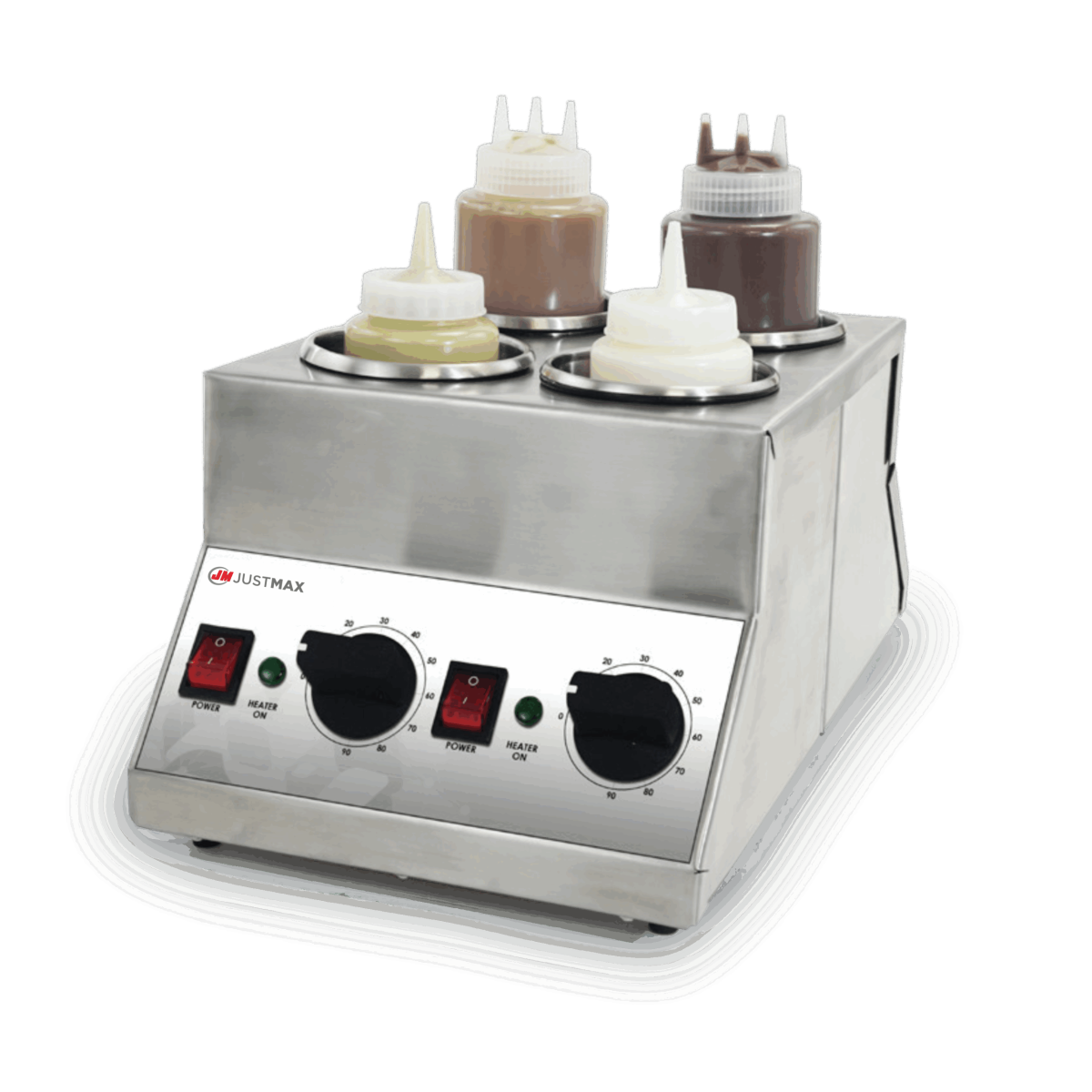
Choosing a bottle warmer for parties and dessert counters looks like the least interesting decision on an equipment
list, and it is quietly one of the most consequential. A warm waffle finished with a cold, stiff sauce is a worse
product than a plain one served properly, and guests notice without being able to explain why. This guide covers how
many wells you actually need, what holding temperature does to a sauce, and how to size the unit to your menu rather
than to your counter.
Key Takeaways
-
Count your distinct sauces at peak, then add one well. That is your capacity, not the number you use on a quiet
Tuesday. - Holding temperature changes viscosity, which changes pour speed and portion consistency during a rush.
- This is the cheapest piece of equipment on a dessert counter and one of the most visible in the finished plate.
What the unit does and why it matters
A warmer is a heated block with wells that hold squeeze bottles at a steady serving temperature. That is the whole
machine. What it changes is pour behaviour: a chocolate or nut spread at room temperature is thick, slow and
inconsistent out of a nozzle, while the same product held warm flows evenly and portions the same way every time.
The knock on effects are larger than they sound. Consistent pour means consistent portion, which means predictable
food cost per dessert. Faster pour means shorter service time at the finishing step, which is usually the actual
bottleneck on a dessert counter rather than the cooking. And warm sauce on warm food simply tastes better, which is
the part that brings customers back. The
warmer range covers single up to quadruple
capacity.
There is a presentation argument too. A cold spread dragged out of a bottle tends to sit on the plate as a lump rather
than a line, so plating suffers as well as speed. Anyone building a dessert counter around photographs, which most now
are, will find this piece of equipment does more visible work than its cost suggests.
For mobile and event work the case is stronger still, which is why a bottle warmer for parties is usually the first
thing an experienced caterer packs. Outdoor service is where ambient temperature works hardest against you, and a
sauce that pours perfectly in a warm kitchen turns solid in an evening breeze. Holding equipment is what makes the
same menu deliverable in both settings.
Sizing by menu, not by counter space
The sizing question is not how much room you have. It is how many distinct sauces your menu carries at the same time,
at your busiest service, plus one spare well for a seasonal item or a refill bottle waiting to come up to temperature.
Work it through honestly. A counter running one chocolate sauce needs a single well unit. A counter with chocolate and
a nut spread needs a double. Add a white chocolate or caramel and you are at a triple. Menus running a full spread
selection, which is common once a venue starts upselling toppings, need the
quadruple unit and will still occasionally
wish for a fifth well.
The spare well matters more than operators expect. Without one, refilling means either running a sauce out mid service
or dropping a cold bottle into a well and waiting, and the second option produces exactly the inconsistent pour the
machine exists to prevent.
Size for the menu you intend to sell rather than the one you have today. Warmers are cheap relative to almost
everything else on a dessert counter, and buying one well short is the commonest regret, because it silently caps how
many topping options you can offer at once.
Well Count by Topping Menu
| Live sauces at peak | Unit to specify | Typical menu |
|---|---|---|
| One | Single well | A single chocolate sauce on waffles or crepes |
| Two | Double well | Chocolate plus one nut spread |
| Three | Triple well | Chocolate, nut spread and a white or caramel option |
| Four or more | Quadruple well | A full spread selection with active topping upsell |
Without a spare well, refilling means either running a sauce out mid service or waiting on a cold bottle.
Holding temperature and product behaviour
Different products want different holding conditions, and treating them identically is the commonest mistake.
Chocolate based spreads become fluid and pour cleanly when held warm but scorch and separate if held too hot for too
long. Nut based spreads such as hazelnut and pistachio tolerate warmth well and benefit noticeably from it, since they
are stiff at room temperature.
Two operating rules cover most of it. Bring bottles up to temperature before service rather than during it, and do not
hold product warm overnight or across multiple days, because repeated warm and cool cycles degrade both texture and
flavour. Decant what you will use in a service and keep the bulk container cool.
Which products you hold is a menu decision as much as an equipment one. The
spread selection behaves differently by type, and
venues building a topping menu will find our note on
dessert spread boards and counter design
a useful companion to this piece.
Watch for separation as your early warning sign. A spread that has been held too hot for too long starts to show oil
at the surface, and once that happens the texture will not recover in the bottle. Treat it as a signal to lower the
holding setting rather than to stir harder.
Hygiene, cleaning and event use
Because warm product sits in an open bottle for hours, this is a genuine food safety touchpoint rather than a trivial
one. The standard duties apply: hold current registration through the
FSSAI licensing portal, and follow the hot holding and hygiene practice set
out in the
Food Safety and Standards regulations.
Practically, three habits carry the risk. Empty and wash bottles at the end of every service rather than topping up a
part used bottle the next day. Wipe nozzles regularly through service, since a crusted nozzle both looks poor and
holds residue. And keep the wells themselves dry and clean, because spills that bake onto a heated block are difficult
to remove later.
For event and outdoor party use, add one more consideration: power. A warmer needs a reliable circuit for the whole
event, and a unit that loses power halfway through service leaves you with four bottles of cooling sauce and no quick
recovery. Confirm the supply at the venue rather than assuming, and read our
event equipment checklist
when planning a full mobile setup.
Allergens deserve a mention in a multi well unit. Nut and milk based spreads sit side by side, and while each stays in
its own bottle, shared nozzles or a wiped cloth passed between them will transfer traces. Keep cloths and utensils
separate per bottle and state the position on the menu.
Event work adds a transport consideration as well. Bottles travel better empty than full, and filling on site from a
sealed bulk container is both safer and less messy than carrying warm product across town. Build that into the pack
down routine rather than improvising it at the venue.
Bottle choice is a small decision that affects everything downstream. Use bottles rated for the temperature you are
holding at, with nozzles sized for the product rather than whatever came in the box. A nozzle too narrow for a nut
spread turns every portion into a struggle, and a nozzle too wide makes portion control impossible.
Label every bottle, including the date it was filled. In a four well unit running similar looking dark spreads, an
unlabelled bottle is a guaranteed mistake at some point during a busy service, and a date lets anyone on the team see
at a glance whether something should have been emptied at the last close.
Service and Cleaning Routine
- Bring bottles to temperature before service opens, never during it
- Decant only what the service needs and keep bulk containers cool
- Check each nozzle flows cleanly before the first order
- Wipe nozzles at intervals through service to stop residue building
- Keep a spare well free so a refill can warm without interrupting service
- Watch for oil separating at the surface; lower the setting rather than stirring harder
- Keep cloths and utensils separate per bottle to avoid allergen transfer
- Never hold product warm overnight or across multiple days
- Empty and wash every bottle at close rather than topping up tomorrow
- Keep wells dry and clean; baked on spills are hard to remove later
Conclusion
Specifying a bottle warmer for parties or a permanent dessert counter comes down to one honest count: how many sauces
are live at your busiest service, plus one. Get that right, hold each product at a sensible temperature, wash bottles
nightly, keep utensils separate per bottle, label everything with a fill date, and confirm your power supply for
events. It is a small purchase that shows up in every plate you serve, and it is almost always the cheapest way to
make an existing dessert menu look and taste more professional.
Compare the capacities available or
tell us your topping menu and we will recommend a well count that fits it.