Dessert and Snack Equipment Beyond Waffles: A Buyer’s Guide
Most dessert menus in India are built around two machines, a waffle iron and a fountain, and then stop. That is a
missed opportunity, because the categories nobody is talking about are the ones with room left in them. This guide
covers the dessert and snack equipment that sits beyond waffles: sealed burger machines, chocolate kebab rotisseries,
crepe plates, churros extruders, pancake machines, bottle warmers and dispensing gear. For each one it sets out what
the machine is for, which venue it suits, and what to check before you buy. Everything here is manufactured or
supplied by a company that has built this category since 2002.
Key Takeaways
-
Novelty formats earn their margin from being unusual. The window is widest in categories your competitors have not
entered. -
Buy against a menu, not against a machine. Every unit here needs a matching consumable and a trained operator to
make money. - Footprint, power draw and cleaning time decide whether a machine survives its first busy month.
-
Check the consumable supply before the equipment. A machine with no reliable mix behind it is a very expensive
ornament.
Why the categories beyond waffles are worth entering
Waffle equipment in India is now competitive. Almost every mall kiosk and dessert cafe has an iron, mixes are widely
available, and the format no longer surprises anyone. That is fine for a reliable base line, but it is a poor place to
look for growth.
The formats in this guide are in a different position. Sealed burgers, chocolate kebabs and churros are established
elsewhere in the world and still thinly served in most Indian cities. A venue that adds one of them is not competing
on price against ten neighbours, it is offering something a customer has to come to you for. That is where dessert and
snack equipment earns a premium rather than a discount.
The commercial logic is well supported at a sector level. The Indian food processing and foodservice market has been
expanding for years, with sector overviews published by
Invest India and industry summaries from
IBEF both pointing to sustained growth in packaged
and out of home eating. Novelty formats ride that growth harder than commodity ones do.
It also helps that the dessert and snack equipment in this category tends to be visually distinctive. Customers do not
need to understand a machine to be curious about it, and curiosity at a counter converts far more reliably than a
discount does. That is a marketing asset built into the capital purchase, which is unusual and worth valuing when you
compare options.
There is a second, quieter reason to look here. Differentiated equipment is defensible in a way that recipes are not.
A competitor can copy your topping combination in a week, but they cannot copy a machine they have not bought, and the
ones in this guide have long enough lead times that a first mover keeps a genuine head start.
The risk, and it is a real one, is buying novelty for its own sake. A format only earns a premium if customers can
understand it, staff can execute it consistently, and the consumable behind it is reliably available. Novelty without
those three becomes an expensive machine gathering dust behind a counter, which is a common enough outcome that it is
worth naming before we look at individual categories.
The test to apply to anything in this guide is whether you can answer four questions without guessing. What exactly
will you sell from it, at what price, to whom, and who on your team can make it consistently at eight in the evening
on a Saturday? If any of those four is vague, the purchase is premature rather than wrong.
Sealed burger machines
A sealed burger machine presses a filled bun between two heated moulds and crimps the edge, producing a round, closed,
self contained burger with nothing able to fall out. It is a genuinely different product from a stacked burger, and it
solves problems that stacking cannot.
What the format solves
Sealed burgers travel. The filling cannot slide, the sauce cannot escape, and the shape survives a delivery bag
intact, which is why the format performs well for cloud kitchens and delivery led menus. They also portion precisely,
so food cost per unit is predictable in a way that a hand stacked burger never is. The
sealed burger unit is one of the more straightforward
machines to train a new operator on, because the press is a timed mechanical step rather than a skill.
Who it suits
Quick service outlets, delivery kitchens, mall kiosks, college canteens and event caterers who need a hot item that
holds. It also works as a dessert machine, since a sealed bun filled with a chocolate or nut spread is a strong sweet
item. Pair it with the spread range if you plan to
run both savoury and sweet from the same unit, and keep separate utensils for each.
What to check first
Bun supply is the constraint that catches people out. The format needs a bun soft enough to crimp without cracking and
firm enough to hold filling, and not every local bakery supplies that consistently. Trial your actual supplier before
you build a menu around the machine, because a bun that splits at the crimp makes the whole format look like a
failure.
Filling moisture is the second check. Very wet gravies steam inside the closed bun and soften the crimp from within,
so sauces need reducing further than they would for a stacked burger. This is quick to solve on paper and expensive to
discover during a Friday service.
Chocolate kebab and shawarma machines
This is the least contested category in the entire catalogue. A chocolate kebab machine is a vertical rotisserie that
turns a block of chocolate against a heat source, and staff shave warm chocolate off the face to order, exactly as a
doner is served. The theatre is the product.
It works because it inverts a familiar image. Guests recognise the mechanism instantly and have never seen it used for
dessert, which makes it a photograph before it is a purchase. For malls, food courts, dessert cafes and event catering
it is the closest thing available to a guaranteed queue stopper, and the
chocolate kebab equipment has almost no
published competition in the Indian market.
Operationally it is simpler than it looks. There is one consumable, the chocolate block, and one skill, shaving
cleanly and consistently. The main planning points are heat management in an already warm kitchen, a spatter guard
behind the machine, and a clear rule about how long a partially used block may stay mounted.
Position it as a topping generator rather than a standalone dessert. Shaved chocolate sold on its own in a cup rarely
justifies the counter space, but the same chocolate shaved over a waffle, a crepe or an ice cream lifts the price of
something you already sell. That is the economics that makes the machine work.
The staffing implication is worth stating plainly, because it is the reason some venues should not buy one. A machine
that earns its keep by being watched needs somebody standing at it whenever it is running. If your constraint is
people rather than counter space, a format that can be loaded and left will serve you better than one that demands an
operator, however impressive it looks.
Block supply is the other check that decides whether this is sustainable rather than merely possible. The machine runs
on one specialised consumable, so confirm lead times, minimum order quantities and storage requirements before you
build a menu around it. Unlike most equipment here there is no fallback product you can substitute in a hurry, so a
supply gap becomes a very visible piece of idle counter space.
Crepe, churros and pancake machines
These three are the workhorses of a sweet snack counter. None of them is novel, but all three are underexploited in
India relative to how well they perform.
Crepe plates
A crepe plate is a flat circular griddle held at even temperature. Plate diameter is the main variable, because it
sets both portion size and cycle time. Just Max lists an energy conscious model alongside a
larger forty centimetre plate, and the
choice between them is mostly a question of whether you are serving a queue or a table. Crepes carry very high gross
margin because the batter cost is trivial against the ticket, which makes this one of the safest purchases in the
whole category.
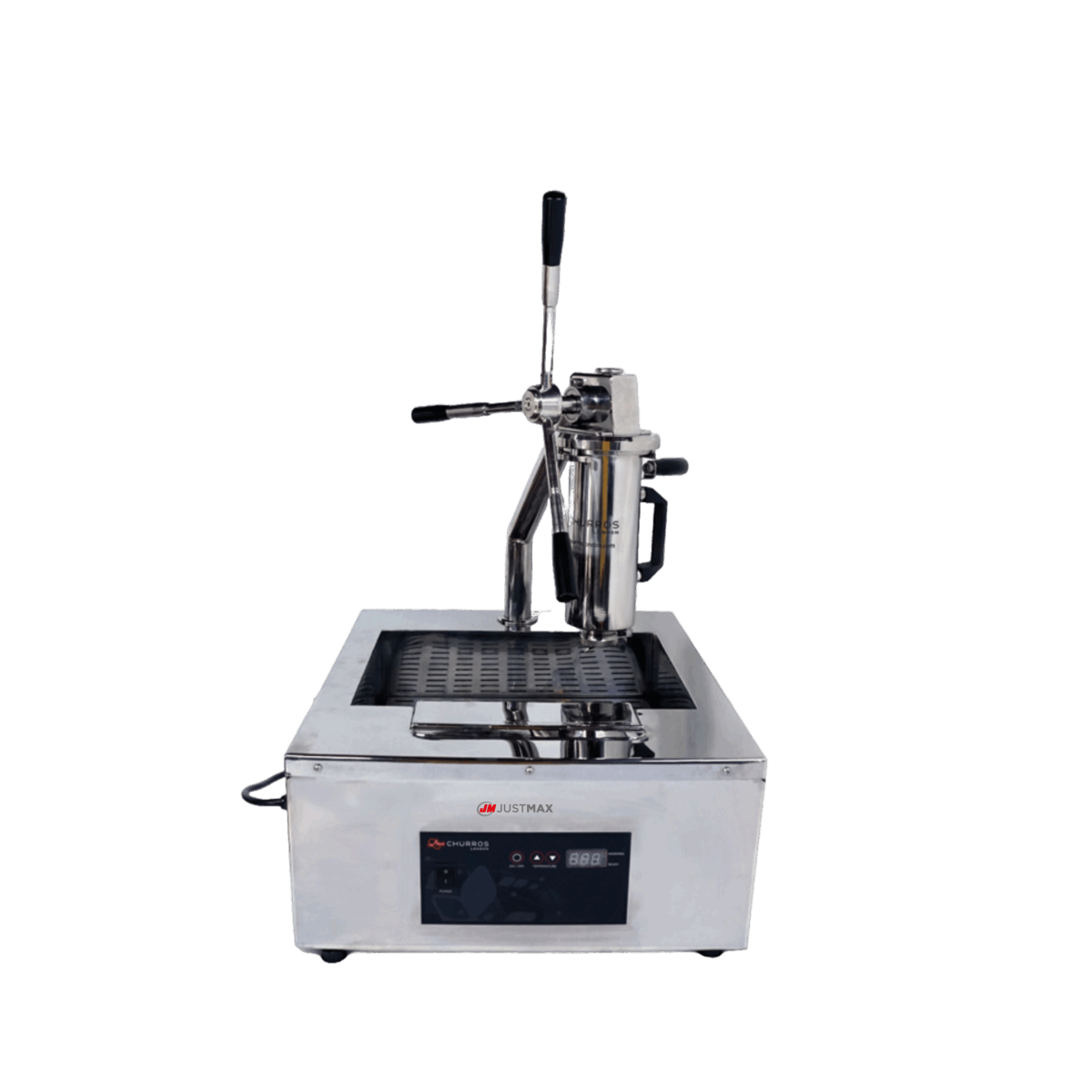
Churros extruders
A churros machine extrudes ridged dough directly into hot oil. The format sells extremely well as a shareable item and
pairs naturally with warm chocolate, which is why it belongs next to a fountain or dispenser rather than on its own.
The churros unit needs a dedicated fryer position and an oil
management routine, which is the main reason venues hesitate and also the main reason the category stays uncontested.
Oil is the hidden cost here: filter it, track how many batches it has done, and change it on a schedule rather than on
appearance, because tired oil is the fastest way to make a good product taste cheap.
Pancake machines
A multi cavity pancake machine produces dozens of uniform mini pancakes per cycle, which turns a skill dependent item
into a throughput item. The pancake machine is the right
answer once volume makes hand cooking the bottleneck, and it pairs with ready mixes so output stays consistent across
shifts. Uniform mini pancakes also stack and box in ways that hand poured ones do not, which opens up dessert cups and
delivery formats that would otherwise be impractical to build.
Which Snack Format Fits Which Venue
| Format | Strongest venue | Main constraint |
|---|---|---|
| Sealed burger | Cloud kitchen, QSR, kiosk, canteen | Bun supply and mould cleaning between sweet and savoury |
| Chocolate kebab | Mall, food court, dessert cafe, events | Heat in the service area and a spatter guard |
| Crepe plate | Hotel banquet, cafe, dessert counter | Operator skill and plate cycle time |
| Churros extruder | Mall kiosk, cinema, event catering | A dedicated fryer position and oil management |
| Pancake machine | Breakfast service, cloud kitchen, canteen | Batter consistency across shifts |
Formats that depend on theatre lose most of their value in a delivery only kitchen. Choose accordingly.
Holding, dispensing and finishing equipment
Cooking equipment gets the attention and holding equipment decides the guest experience. A warm dessert served with a
cold sauce is a worse product than a slightly plainer dessert served properly, and this is the cheapest category to
get right.
Bottle warmers hold sauces and spreads at pouring temperature so service is fast and the consistency does not fight
the operator. The bottle warmer range runs
from single up to quadruple capacity, and the sizing question is simply how many distinct sauces your menu carries at
once, plus one spare well for refills. A dipping station extends the same idea to dry toppings and keeps the counter
tidy.
For controlled chocolate portions, a dispensing unit is more useful than most kitchens expect, because it makes
chocolate a measured ingredient rather than a ladled guess. Together these three pieces are what separate a counter
that looks professional from one that looks improvised, and they cost a fraction of any cooking machine in this guide.
There is a plating argument as well as a speed one. A cold spread dragged out of a bottle sits on a plate as a lump
rather than a line, so presentation suffers alongside service time. For any venue whose customers photograph their
dessert before eating it, which is now most of them, holding equipment does visible work well out of proportion to
what it costs.
Sizing holding equipment is simple: count the distinct sauces live at your busiest service and add one spare well for
refills. Buying one well short is the commonest regret in this category, because it quietly caps how many topping
options you can offer at the same time.
Choosing by venue rather than by machine
The most reliable way to shortlist is to start from your venue type and work backwards, because footprint, staffing
and dwell time constrain the answer more than menu ambition does.
A mall kiosk needs a small footprint, fast cycle times and high visual appeal, which favours chocolate kebab, churros
and sealed burger units. A cloud kitchen needs items that survive delivery, which favours sealed burgers and pancake
machines and rules out anything that depends on theatre. A hotel banquet needs volume and presentation, which favours
crepe plates and larger holding equipment. A college canteen needs price per unit and speed above all.
Whatever the venue, three checks decide whether a machine survives. Confirm the electrical load against the circuit
you actually have, not the one on the drawing. Measure the counter space including clearance for the operator’s hands
and any upward opening lid. And time the cleaning routine before you buy, because a machine that takes forty minutes
to break down will quietly stop being used. The full
appliance catalogue lists specifications per model.
Staffing deserves its own thought. Some of these formats are genuinely one person stations and some are not. An open
rotisserie facing guests needs someone present whenever it is running, whereas a pancake machine can be loaded and
left on a timer. If your constraint is people rather than space, that difference matters more than any specification.
Checks Before You Buy Any Unit
- Confirm the electrical load against the circuit you actually have, verified by an electrician
- Measure counter space including operator hand clearance and any upward opening lid
- Time the full cleaning routine; anything over thirty minutes tends to get skipped
- Identify and price the consumable before the machine, not after it arrives
- Confirm the spares position for that specific model, not for the range in general
- Ask whether you are buying from the manufacturer or from a reseller
- Get the after sales service terms in writing rather than as a verbal assurance
- Decide whether the station needs a dedicated operator whenever it is running
Compliance, standards and consumable supply
Two things need to be in place before a new machine earns anything: the paperwork and the consumable behind it.
On paperwork, any commercial food operation in India needs the appropriate registration or licence via the
FSSAI portal, and the applicable operating standards are published in the
Food Safety and Standards regulations. Equipment carrying electrical heating elements should also match Indian standards practice; the
Bureau of Indian Standards is the reference point for the certification marks to
look for on any commercial appliance.
On consumables, the failure pattern is consistent. A venue buys an interesting machine, runs it on whatever mix is
available locally, gets inconsistent output, and blames the equipment. Sort the supply line first. Just Max
manufactures its own premixes and spreads, which is the reason equipment and consumable performance can be matched
rather than guessed, and buyers ordering at volume should read the
bulk buying guide
before placing a first order.
Storage is the part of consumable planning that gets skipped. Bulk mixes need a dry, cool, pest secure position and
stock rotation that somebody actually owns, and spreads need temperature appropriate storage away from the heat the
machines throw out. A venue that buys at volume without solving storage simply converts a purchasing saving into
spoilage.
Allergen labelling is the compliance detail most often missed on novelty formats. Nut based spreads are common in
dessert fillings and toppings, and a customer is entitled to know before ordering. Put the position on the menu rather
than leaving it to a verbal answer at a busy counter.
Compliance and Supply Basics Before Launch
-
Licensing Hold the correct FSSAI registration or licence for the premises and service type. The
licence attaches to the business and the site, not to individual machines. -
Equipment standards Look for recognised certification marks on any electrically heated appliance.
Bureau of Indian Standards practice is the reference point for commercial equipment. -
Consumable supply Lock the mix, spread or dough supply down before the equipment arrives.
Inconsistent output is far more often a consumable problem than a machine problem. -
Allergen labelling State nut, milk, wheat and soya positions on the menu itself. Novelty dessert
fillings carry allergens customers do not expect. -
Operator training Brief every person who may cover the station, not only the regular operator.
Novelty formats fail on inconsistent execution more often than on weak demand.
Buying, service and support
Equipment in this category is bought once and lived with for years, so the support model matters as much as the
specification. Ask three questions of any supplier before you commit.
First, are they the manufacturer or a reseller? A manufacturer can supply wear parts years later and can tell you why
a machine behaves the way it does. Second, what is the spares position for the specific model, since heating elements,
motors and moulds are consumables on any machine running daily. Third, what does after sales service actually cover,
and is it written down rather than promised?
Two further practical points belong in the same conversation. Ask to see the machine running with the configuration
you intend to buy, in person or on video, because a supplier who cannot show you their own product working is telling
you something useful. And treat the committed delivery date as part of the price, since a machine that arrives six
weeks after you launched the menu has already cost more than any discount saved. Imported units in particular slip,
and a written date is worth more than an optimistic verbal one.
Just Max manufactures from a plant in Kerala and supplies hospitality, entertainment and retail operators in India and
internationally through appointed partners, which is set out on the
partner network page. For a specification conversation about a
particular venue, contact the team with your footprint, your circuit rating
and your intended menu.
One closing thought on sequencing. The temptation is to buy the most exciting machine first and work out the rest
later. The venues that do well with this category do the opposite: they fix the menu, then the consumable, then the
staffing, and buy the machine last, once all three are settled. It is a slower route to a new format and a
considerably more profitable one.
If you are early in that process and unsure which category fits, start by walking your own service at peak and
identifying where the queue forms and what customers ask for that you cannot currently make. Those two observations
narrow this guide to one or two options far faster than any specification comparison will, and they cost nothing but
an hour of attention on a busy evening.
Bought that way, dessert and snack equipment stops being a gamble on novelty and becomes a considered response to
something you have already observed about your own customers. That is the difference between the venues where these
machines earn steadily for years and the ones where they end up advertised second hand within eighteen months.
Conclusion
The honest summary is that the crowded part of this market is waffles and the opportunity is everything next to it.
Sealed burgers travel, chocolate kebabs draw a crowd, crepes and churros carry margin, and pancake machines remove a
bottleneck. Choosing well means matching dessert and snack equipment to your venue shape, confirming power and
cleaning realities before purchase, and locking down the consumable supply at the same time as the machine. Above all,
buy against a decided menu rather than against an interesting machine, and give the format a quiet trial week before
it meets a Saturday queue. Browse the full appliance range or
send us your venue details for a shortlist built around your counter rather
than our catalogue.